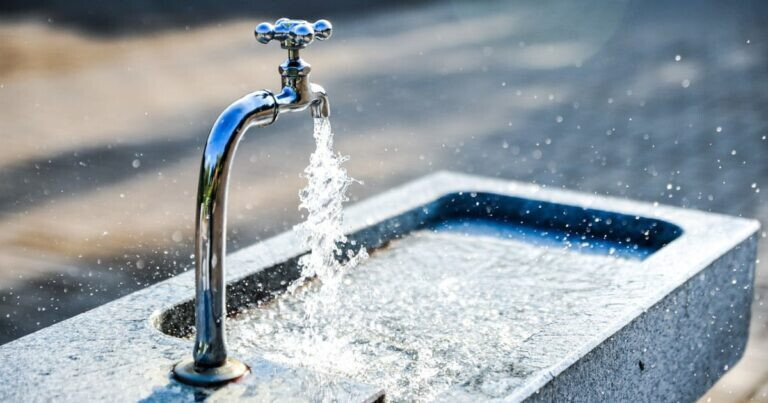
Turn on any faucet in South Korea, and a steady stream of clean, potable water pours out. High-grade drinking water is easily accessible to virtually everyone, anywhere in the country. For a long time, this seamless service masked a startling claim: South Korea was once officially labeled by some as a "water-scarce country"—a term frequently used by government bodies to promote water conservation.
However, that classification was debunked around 2006 when it was revealed that the label did not actually originate from the United Nations. The phrase quickly faded from public discourse. But was the notion entirely false?
Recent evaluations from the Organisation for Economic Co-operation and Development (OECD) suggest otherwise, delivering a surprising twist.
The OECD Verdict: High Stress Despite High Infrastructure
In a recent environmental outlook report for South Korea, the OECD explicitly categorized the nation as "water-poor." The report revealed that South Korea has one of the lowest amounts of renewable freshwater resources per capita among all OECD member countries.
According to the OECD, “Korea is Water-poor,” citing high per capita water abstraction rates and a medium-to-high level of water stress.
Water stress measures how heavily a nation draws upon its available water resources. According to United Nations Sustainable Development Goals (SDG) data, South Korea's water stress index reached 85.2% in 2023, indicating that the country withdraws a substantial amount of water relative to what is naturally available.
Why is Water Scarcity a Problem Here?
At first glance, South Korea does not look like a desert or a parched region; its average annual rainfall actually exceeds the global average. However, abundant rain does not automatically equal abundant usable water. Two key factors drive this paradox:
High Population Density: South Korea packs a dense population into a relatively small geographic area.
Seasonal Concentration: Rainfall is heavily concentrated during specific monsoon periods, meaning that despite high overall precipitation, the per capita share of renewable freshwater remains low.
World Bank figures based on UN Food and Agriculture Organization (FAO) data show that in 2022, South Korea’s annual renewable freshwater resources per capita stood at 1,255 cubic meters—roughly 36% of Japan’s and just 15% of the United States’.
Why Citizens Don’t Feel the Crunch
Despite these tight margins, everyday citizens rarely notice any shortage. This is due to world-class water management and supply infrastructure. According to the UN, 99% of the population had access to safely managed drinking water services as of 2024.
Essentially, while South Korea lacks natural water abundance, its robust delivery and treatment systems shield citizens from daily shortages. But experts warn that relying solely on infrastructure will not insulate the country forever, especially as climate change accelerates.
Climate Change and the Threat of Recurrent Droughts
Global warming is fundamentally altering precipitation patterns, replacing steady seasonal rainfall with unpredictable extremes: short bursts of localized torrential downpours contrasted with prolonged dry spells.
The consequences are already hitting local economies and daily life:
*Gangneung (Gangwon Province): From April to August last year, cumulative rainfall plummeted to just 32.6% of historical averages. The Obong Reservoir—which supplies about 87% of Gangneung’s municipal water—saw its water level drop to a critical 11.5%, forcing strict rationing. Restaurants struggled to operate, and some cafes even had to purchase bottled water to brew drinks.
*Gyeongsang Province: Extreme heat and droughts forced authorities to deploy emergency water supply trucks in Cheongdo, while Pohang and Gyeongju scrambled to secure alternative water sources.
*Nationwide Impacts: Government data from October showed meteorological droughts gripping 97 regions across the country, with national cumulative rainfall over the preceding six months lingering at just 72.5% of normal levels, and agricultural reservoir storage dropping to 48.3%.
Meteorological data indicates that rainy days are becoming less frequent, but when rain does fall, it comes down in heavier, more destructive volumes. This makes capturing and storing water during dry windows an escalating challenge.
The Rising Demand: High-Tech Industries Need More Water
The need to secure stable water supplies is becoming even more urgent with the rapid expansion of advanced industries, such as AI data centers and semiconductors.
For instance, two massive upcoming semiconductor clusters in Yongin, Gyeonggi Province, are projected to require up to 1.337 million tons of industrial water daily at peak operation.
While supporting high-tech economic growth is vital, feeding these massive industrial pipelines amid shrinking natural resources places an immense burden on the nation. Municipalities, farms, and factories will increasingly have to compete for the same limited pool of water.
Looking Ahead: A Call for Long-Term Strategy
International bodies have long warned South Korea about these systemic vulnerabilities. In a past resource management report, the OECD urged the country to look beyond crisis-driven responses, noting that historical climate records are no longer reliable predictors of future weather patterns.
Because South Korea faces high water stress alongside soaring future demands, the OECD recommended a comprehensive overhaul of water use efficiency, inter-sector coordination (balancing agricultural, industrial, and municipal needs), and water allocation frameworks.
Ultimately, maintaining the luxury of turning on a faucet and watching crystal-clear water pour out will require proactive, long-term national planning to secure and distribute South Korea's most precious liquid asset.
[Copyright (c) Global Economic Times. All Rights Reserved.]