
![[등록] 2026-09-01 15:48:31](/support/_updata/banner2/tl181982910_6749.png)


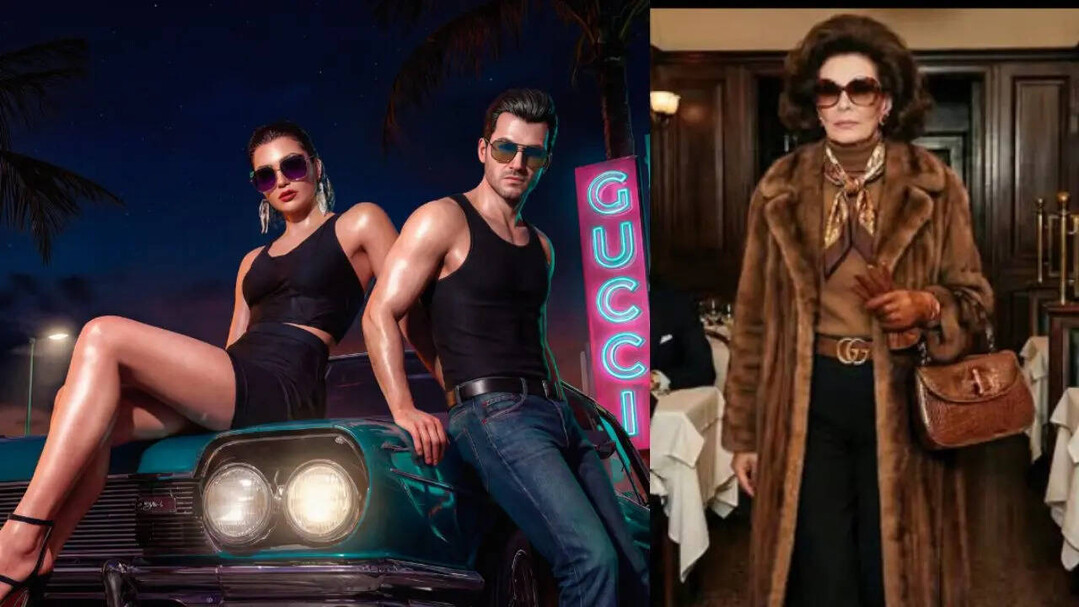
(C) Times Now
MILAN — In an era where "Made in Italy" stands as a bastion of human craftsmanship, Gucci, one of the world’s most storied luxury houses, finds itself in the crosshairs of a digital-age controversy. Just days before the kick-off of Milan Fashion Week, the brand’s decision to pivot from human models to artificial intelligence has ignited a firestorm of criticism across social media and the fashion industry.
The Spark of Controversy
On February 24, Gucci unveiled a series of images on its official social media platforms, explicitly labeled as "AI-generated." The campaign featured a surreal mix of subjects: an elderly woman in a fur coat strutting through a restaurant, couples in ornate attire, and even avant-garde imagery like a gold-embellished satellite orbiting in space.
While the brand aimed to showcase a futuristic fusion of heritage and technology, the public response was swift and largely negative. Critics argued that by removing the human element—the models, the photographers, the stylists—Gucci has stripped away the very soul of luxury.
"AI Slop" and the Death of Craftsmanship
The backlash centers on the perceived quality of the images. On platforms like X (formerly Twitter) and Instagram, users have labeled the campaign as "AI slop"—a term used to describe low-effort, mass-produced synthetic content.
"Is the world so bleak that we can't even hire a real Milanese grandmother to model anymore?" wrote one viral commenter, highlighting a specific image of an elderly woman that many felt looked uncanny and "tacky."
Industry analysts are equally puzzled. Luxury marketing typically relies on the aspiration of human perfection and the tangible sweat of artistry. By opting for algorithms over actors, Gucci risks alienating its core demographic which pays a premium for authenticity.
Why AI? The Cost vs. Creativity Debate
The motive behind Gucci’s AI pivot remains unclear. Traditionally, AI is utilized by mid-market brands to slash production budgets. For a house like Gucci, where profit margins are high and "craftsmanship" is the primary selling point, the cost-saving argument feels like a strategic misstep.
Financial Efficiency: Eliminating location shoots, travel, and high-profile talent fees.
Creative Freedom: The ability to render impossible scenarios (e.g., the golden satellite).
The Risk: A "cheapened" brand perception that could take years to repair.
Conclusion
As Milan Fashion Week begins, the shadow of this digital controversy looms large. Whether this was a bold experimental failure or a sign of a grim trend in luxury remains to be seen. For now, the consensus among the fashion elite is clear: AI might be able to mimic the look of Gucci, but it has yet to capture its heart.
[Copyright (c) Global Economic Times. All Rights Reserved.]














