• 2026.05.08 (Fri)
  • All articles
  • LOGIN
  • JOIN
Global Economic Times
fashionrunwayshow2026
  • Synthesis
  • World
  • Business
  • Industry
  • ICT
  • Distribution Economy
  • Well+Being
  • Travel
  • Eco-News
  • Education
  • Korean Wave News
  • Opinion
  • Arts&Culture
  • Sports
  • People & Life
    • International Student Report
    • With Ambassador
  • Column
    • Cho Kijo Column
    • Cherry Garden Story
    • Ko Yong-chul Column
    • Kim Seul-Ong Column
    • Lee Yeon-sil Column
  • Photo News
  • New Book Guide
MENU
 
Home > Well+Being

Shared Spoons, Silent Threat: Communal Dining and the 6-Fold Spike in Gastric Cancer Risk

Min Gyu Mi Reporter / Updated : 2026-02-28 05:35:40
  • -
  • +
  • Print

(C) Insight


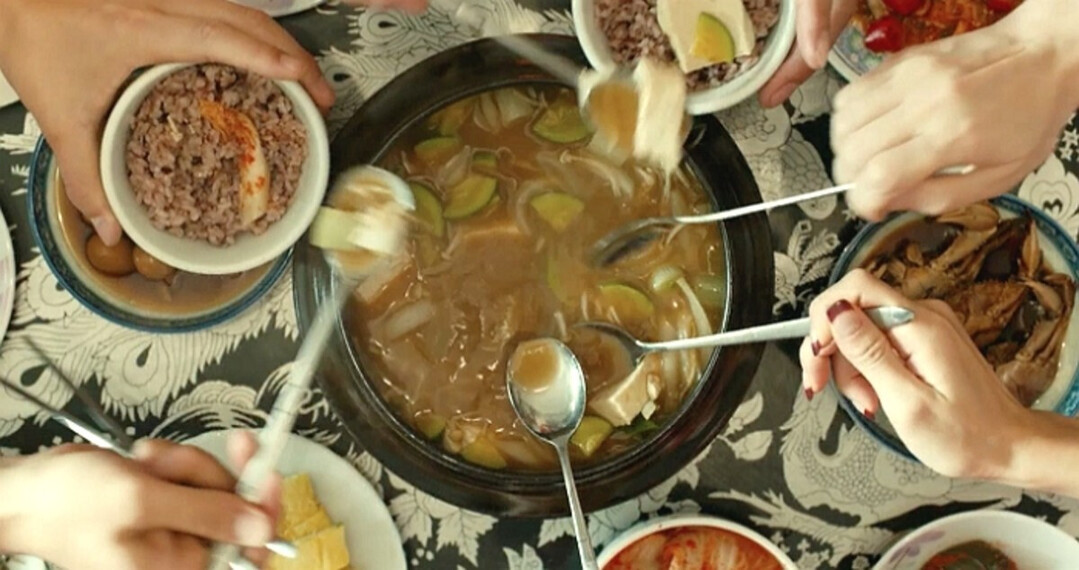
SEOUL — For generations, the act of sharing a single pot of jjigae (stew) has been a symbol of Korean jeong (affection) and communal bonding. However, a groundbreaking large-scale study suggests that this cherished culinary tradition may be a silent contributor to South Korea's high rates of gastric cancer by facilitating the spread of Helicobacter pylori.

The 6.8 Million Person Deep-Dive
A research team led by the Department of Preventive Medicine at Chung-Ang University College of Medicine recently published a definitive study in the international journal BMC Cancer (December 2025/January 2026 issue). Analyzing health insurance data from over 6.86 million adults (aged 40–74) who participated in the 2018 National Cancer Screening Program, the team found that H. pylori infection increases the risk of developing gastric cancer by a staggering 6.40 times compared to non-infected individuals.

Gastric cancer remains the fifth most common cancer in South Korea, with approximately 29,000 new cases reported annually. Notably, the incidence rate in men is nearly double that of women, a gap researchers attribute to higher rates of smoking, alcohol consumption, and exposure to infection.

Quantifying the 'Correa Pathway'
The study is the first of its scale to quantify the "Correa Pathway"—the stepwise progression where H. pylori triggers chronic inflammation, leading to atrophic gastritis, intestinal metaplasia, adenoma, and finally, adenocarcinoma.

Key findings from the causal mediation analysis include:

Precancerous Risk: Infected individuals had a 1.41-fold higher risk of atrophic gastritis/intestinal metaplasia and a 5.81-fold higher risk of gastric adenoma.
The Adenoma Connection: Approximately 36% of the total effect of H. pylori on gastric cancer was found to be mediated specifically through adenoma.
Progression: Among those already suffering from precancerous lesions, adenomas explained 44% of the subsequent progression to full-blown cancer.

The "Spoon-Sharing" Cultural Factor
H. pylori is classified as a Group 1 carcinogen by the World Health Organization (WHO). It thrives in the stomach lining and is primarily transmitted through oral-to-oral or fecal-to-oral routes.

"In Korea, the habit of multiple people dipping their spoons into a shared stew or side dish is a major vector for transmission," the researchers noted. While the infection rate among Koreans over 16 has dipped to about 44% in recent years, it remains significantly higher than in many Western nations, where individual plating is the norm.

Early Detection: The Best Defense
Because early-stage gastric cancer often mimics common indigestion or heartburn, it is frequently ignored. Experts warn that by the time severe symptoms like weight loss, anemia, or upper abdominal pain appear, the cancer may have already progressed.

To mitigate risk, medical professionals recommend:

Hygienic Dining: Using serving ladles and individual plates to prevent saliva exchange.
Dietary Discipline: Reducing intake of highly salted, processed, or charred foods.
Regular Screening: Participating in biennial upper endoscopies for those over 40, even in the absence of symptoms.
As South Korea continues to grapple with its status as a high-incidence zone for gastric cancer, this study underscores that preventing H. pylori infection—and treating it early—is not just a medical necessity, but a cultural shift waiting to happen.

[Copyright (c) Global Economic Times. All Rights Reserved.]

  • #Korea
  • #Seoul
  • #Hallyu
  • #USA
  • #Economy
  • #Busoness
  • #Global
  • #World
  • #Consumer
  • #Export
  • #Import
  • #Hanguel
  • #Travel
  • #Tour
  • #Food
Min Gyu Mi Reporter
Min Gyu Mi Reporter

Popular articles

  • K-Beauty Dominates U.S. Market, Poised for Third Consecutive Year as Top Importer

  • "Sit by My Bed for 2 Hours Instead of Delivering Food": An Ambitious Relay of Compassion for a Young Cancer Patient

  • 11th Street Launches 'Grand 11th Day' Shopping Festival: A Strategic Move to Dominate South Korea's Mid-Year Retail Market

I like it
Share
  • Facebook
  • X
  • Kakaotalk
  • LINE
  • BAND
  • NAVER
  • https://www.globaleconomictimes.kr/article/1065558772502251 Copy URL copied.
Comments >

Comments 0

Weekly Hot Issue

  • South Korea’s KOSPI Surges to 7th in Global Market Cap, Overtaking Canada and UK
  • Global Pay Parity Demands Shaking Tech Giants: Samsung and SK Hynix Face Rising Labor Unrest in China
  • the 28th Overseas Koreans Literary Awards
  • Ambassador Hyuk-sang Sohn attended the "2026 Educational Community Sports Day" held at the Korean School of Paraguay on Friday, May 1.
  • Official Presentation of Credentials in Paraguay
  • U.S. World Cup "Host City Boom" Fizzles: Hotel Bookings Slump One Month Before Kickoff

Most Viewed

1
Korea and Vietnam Forge Strategic Partnership in Science, Technology, and Innovation
2
80% of Enterprises Hit by 'AI Agent Anomalies': SailPoint Calls for Integrated Identity Governance
3
Iran Imposes Transit Fees on Strait of Hormuz Amid Escalating Maritime Tensions
4
Tradition Meets the Public: Chungju’s Gugak Busking
5
Kurly Abandons 'All-Paper' Packaging Strategy Amid Rising Cost Pressures
광고문의
임시1
임시3
임시2

Hot Issue

Hyundai Motor Group Bets $700 Million on Mexico Amid Trade Policy Volatility

Honda Halts $15B Canada EV Plant Plans Amid Strategic Pivot to Hybrids

Digital Ghosts: The Rise of AI Ex-Partner Replicas and the Ethics of "Technological Mourning"

Kakao Hits Record Q1 Performance: Operating Profit Surges 66% as Focus Shifts to "Agentic AI"

Fashion Runway Show 2026

Global Economic Times
korocamia@naver.com
CEO : LEE YEON-SIL
Publisher : KO YONG-CHUL
Registration number : Seoul, A55681
Registration Date : 2024-10-24
Youth Protection Manager: KO YONG-CHUL
Singapore Headquarters
5A Woodlands Road #11-34 The Tennery. S'677728
Korean Branch
Phone : +82(0)10 4724 5264
#304, 6 Nonhyeon-ro 111-gil, Gangnam-gu, Seoul
Copyright © Global Economic Times All Rights Reserved
  • 에이펙2025
  • APEC2025가이드북TV
  • 반달곰 프로젝트
Search
Category
  • All articles
  • Synthesis
  • World
  • Business
  • Industry
  • ICT
  • Distribution Economy
  • Well+Being
  • Travel
  • Eco-News
  • Education
  • Korean Wave News
  • Opinion
  • Arts&Culture
  • Sports
  • People & Life 
    • 전체
    • International Student Report
    • With Ambassador
  • Column 
    • 전체
    • Cho Kijo Column
    • Cherry Garden Story
    • Ko Yong-chul Column
    • Kim Seul-Ong Column
    • Lee Yeon-sil Column
  • Photo News
  • New Book Guide
  • Multicultural News
  • Jobs & Workers