• 2026.09.26 (Sat)
  • All articles
  • LOGIN
  • JOIN
Global Economic Times
[등록] 2026-09-01 15:48:31
  • Synthesis
  • World
  • Business
  • Industry
  • ICT
  • Distribution Economy
  • Well+Being
  • Travel
  • Eco-News
  • Education
  • Korean Wave News
  • Opinion
  • Arts&Culture
  • Sports
  • People & Life
    • International Student Report
    • With Ambassador
  • Column
    • Cho Kijo Column
    • Cherry Garden Story
    • Ko Yong-chul Column
    • Kim Seul-Ong Column
    • Lee Yeon-sil Column
  • Photo News
  • New Book Guide
MENU
 
Home > Well+Being

The U.S. Battles "Lettuce Parasite" Outbreak Amid Climate Change Pressures on Dining Tables

Eugenio Rodolfo Sanabria Reporter / Updated : 2026-08-27 09:23:09
  • -
  • +
  • Print


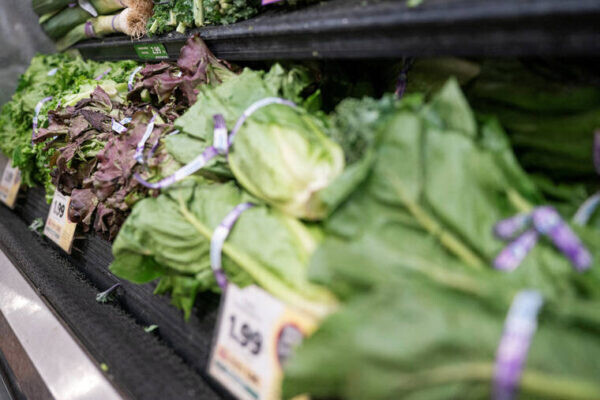
The United States is currently grappling with widespread public anxiety and economic strain following a massive foodborne parasite outbreak linked to fresh produce. Known colloquially as the "lettuce phobia," this crisis has disrupted everyday dining habits, severely impacted restaurant and retail sales, and added fresh complexity to broader economic and political challenges. 

Anatomy of the Outbreak and the "Lettuce Phobia"

The core driver of this health scare is Cyclospora, a single-celled intestinal parasite that causes severe symptoms such as watery diarrhea, cramps, nausea, and fatigue, lingering for weeks if left untreated. Federal health agencies, including the Centers for Disease Control and Prevention (CDC) and the Food and Drug Administration (FDA), reported tens of thousands of suspected and confirmed cases across dozens of states, resulting in hundreds of hospitalizations and tragic fatalities. 

Epidemiological investigations traced the primary source of the multi-state outbreak to shredded iceberg lettuce imported from central Mexico and distributed by major agricultural suppliers like Taylor Farms de Mexico. Popular fast-food chains and casual dining restaurants—such as Taco Bell and Chipotle—alongside iconic street food vendors like New York’s Halal Guys, experienced sharp declines in customer foot traffic as a result. Major distributors halted Mexican lettuce imports entirely, and suppliers initiated massive product recalls. However, the anxiety quickly generalized beyond specific brands, creating a broad "lettuce phobia" that drove consumers away from fresh vegetables, pre-packaged salads, and raw herbs altogether. 

Economic Fallout and Shifting Consumer Behavior

The psychological impact of the outbreak has visibly altered consumer behavior. Grocery store aisles featuring pre-packaged greens have remained unusually full, while prices for salad vegetables plummeted. According to consumer price index data, fresh vegetable and lettuce prices experienced record monthly declines as demand evaporated.

Conversely, alternative food sources have flourished. Local farmers' markets and community-supported agriculture stands have enjoyed a notable surge in sales as anxious shoppers seek locally grown, transparently sourced produce to bypass perceived risks associated with industrial cross-border supply chains. Meanwhile, affected salad chains and fast-food franchises have reported sliding quarterly revenues, with some smaller restaurant businesses even filing for bankruptcy protection amid the prolonged slump.

Climate Change, Salmonella, and Policy Scrutiny

Public health experts emphasize that abnormal weather patterns are exacerbating these biological threats. Cyclospora and other pathogens like Salmonella thrive in hot, humid conditions. As climate change drives prolonged heatwaves and extreme weather further north and inland across North America, the geographic zones vulnerable to parasite incubation and bacterial proliferation continue to expand. Furthermore, heavy downpours and floods facilitate the spread of agricultural contaminants into farming soils and water systems. 

The crisis has also intensified political debate surrounding federal oversight and food safety budgets. Critics and political analysts have pointed out that recent administrative budget reductions and cuts to state-level food safety monitoring grants have strained the operational capacities of the FDA and CDC. These institutional hurdles contributed to delays in tracking contamination sources, renewing calls from lawmakers and industry experts for strengthened surveillance networks and modernized food safety infrastructure to protect public health against compounding environmental threats.

[Copyright (c) Global Economic Times. All Rights Reserved.]

  • #\ormuz Impasse
  • #globaleconomictimes
  • #micorea
  • #mykorea
  • #nammidonganews
  • #singaporenewsk
  • #Samsung
  • #Daewoo
  • #Hyos
Eugenio Rodolfo Sanabria Reporter

Popular articles

  • OpenAI Claims Breakthrough on Millennium Prize Problem: Navier-Stokes Existence and Smoothness Solved in 88 Hours

  • Kim Jae-joong Unveils His Luxury Tokyo Detached House for the First Time: Featuring a 4-Meter High Ceiling and a Private Elevator 

  • White House Inquires About Recovery of US Remains in North Korea Ahead of Potential North Korea-US Summit

I like it
Share
  • Facebook
  • X
  • Kakaotalk
  • LINE
  • BAND
  • NAVER
  • https://www.globaleconomictimes.kr/article/1065572517064212 Copy URL copied.
Comments >

Comments 0

Weekly Hot Issue

  • Geoje, Still Scarred by Flood Damage, Receives 'Chuseok Warmth' from Across the Country Over 2 Billion Won Donated Since Disaster; 380,000 Items Worth 1.1 Billion Won in Relief Supplies
  • Season-Over Lee Jung-hoo: Only the Burden of a 33.5 Billion Won Price Tag Remains for the 2026 Season
  • Public Criticism on Stage... The Dignity of a Senior Singer Missed by Shim Soo-bong 
  • 'Slump in Results Followed by Asylum Scandal' – North Korean Delegation Shaken in Nagoya
  • Xi Jinping Arrives in Washington… Begins 3-Day State Visit to the U.S.
  • “18 Years as a North Defector… ‘I Wish I Could Offer a Bowl of Rice at My Parents’ Grave’” Yu Sun-hee, a North Korean defector ahead of Chuseok

Most Viewed

1
Desperate Pursuit of HBM: China’s AI Chip Sector Faces Crippling Bottlenecks as Gray Market Prices Soar
2
Chuncheon to Light Up the "Lights of Ethiopia": The 16th Ethiopia Road World Coffee Festival & Meskel Festival Opens on September 25
3
The Era of "Working AI" Has Arrived: Why OpenAI's GPT-6 Astra is a Blessing for Samsung Electronics and SK Hynix
4
 Iran and Gulf Nations to Hold First Ministerial Meeting in Salalah for Hormuz Navigation
5
Surging LNG Prices Forebode a Freezing Winter amid Middle East Conflict
광고문의
임시1
임시3
임시2

Hot Issue

South Korea and U.S. Leaders Hold Pivotal Summit in New York

From a Symbol of Security to a Space for Healing... Walking Paju's Veiled 'Re:DMZ' Forest

Pocheon Hantan River Garden Festa

A Different Side of Gyeonggi Province Seen While Running… Autumn Running Courses Recommended by 'Run Gyeonggi'

Fashion Runway Show 2026

Global Economic Times
korocamia@naver.com
CEO : LEE YEON-SIL
Publisher : KO YONG-CHUL
Registration number : Seoul, A55681
Registration Date : 2024-10-24
Youth Protection Manager: KO YONG-CHUL
Singapore Headquarters
5A Woodlands Road #11-34 The Tennery. S'677728
Korean Branch
Phone : +82(0)10 4724 5264
#304, 6 Nonhyeon-ro 111-gil, Gangnam-gu, Seoul
Copyright © Global Economic Times All Rights Reserved
  • 향기네무료급식
  • BCB부천방송
  • 반달곰 프로젝트
Search
Category
  • All articles
  • Synthesis
  • World
  • Business
  • Industry
  • ICT
  • Distribution Economy
  • Well+Being
  • Travel
  • Eco-News
  • Education
  • Korean Wave News
  • Opinion
  • Arts&Culture
  • Sports
  • People & Life 
    • 전체
    • International Student Report
    • With Ambassador
  • Column 
    • 전체
    • Cho Kijo Column
    • Cherry Garden Story
    • Ko Yong-chul Column
    • Kim Seul-Ong Column
    • Lee Yeon-sil Column
  • Photo News
  • New Book Guide
  • Overseas Koreans
  • Multicultural News