• 2026.07.06 (Mon)
  • All articles
  • LOGIN
  • JOIN
Global Economic Times
fashionrunwayshow2026
  • Synthesis
  • World
  • Business
  • Industry
  • ICT
  • Distribution Economy
  • Well+Being
  • Travel
  • Eco-News
  • Education
  • Korean Wave News
  • Opinion
  • Arts&Culture
  • Sports
  • People & Life
    • International Student Report
    • With Ambassador
  • Column
    • Cho Kijo Column
    • Cherry Garden Story
    • Ko Yong-chul Column
    • Kim Seul-Ong Column
    • Lee Yeon-sil Column
  • Photo News
  • New Book Guide
MENU
 
Home > New Book Guide

The Unyielding History of Women Readers: How Women Claimed the Joy of Reading Against Centuries of Prohibition

Global Economic Times Reporter / Updated : 2026-07-04 09:25:50
  • -
  • +
  • Print


For centuries, a woman reading a book was often viewed with suspicion, if not outright hostility. While today’s cultural landscape—often defined by trends like "text-hip"—celebrates women as the primary drivers of book culture, the historical reality was starkly different. For a long time, the image of a "reading woman" was perceived as a threat to social order, a source of fear that women would neglect their domestic duties or challenge patriarchal hierarchies.

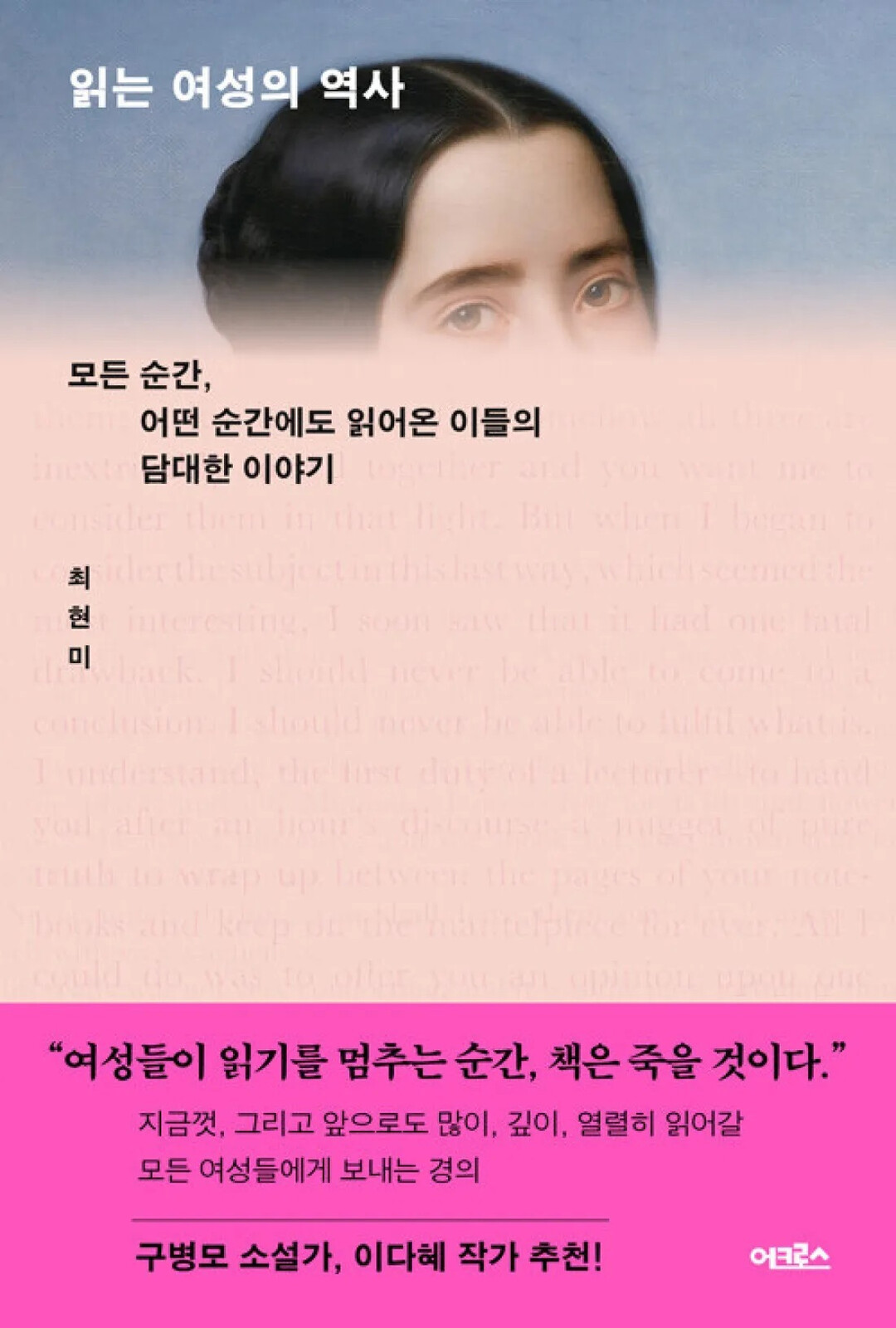
In her compelling new book, The History of Reading Women (published by Across), author Choi Hyun-mee, a veteran culture journalist with three decades of experience, meticulously traces this long, arduous journey. She explores how women, despite relentless taboos and systemic suppression, persistently read, wrote, and expanded their intellectual worlds.

From Ancient Scribes to Secret Book Clubs

Choi’s narrative spans thousands of years, traversing geography and culture to restore the erased voices of female readers. She begins with the female scribes of Babylonian temples, moves through medieval nuns who sought solitude to pursue learning, and highlights the Joseon Dynasty’s women scholars who were only acknowledged for their intellectual prowess after their deaths.

The book documents the ingenious ways women circumvented barriers. In medieval times, the "Book of Hours" opened the era of private reading for women. In the late Joseon Dynasty, women famously pawned their hairpins just to rent and read novels from sechaekjeom (commercial book-lending shops). During the Japanese colonial period, clandestine women’s reading groups served as intellectual sanctuaries. These are not merely historical footnotes; they are enduring testaments to women’s refusal to be silenced.

A History of Conflict and Empowerment

The history of women's reading is defined by the constant collision between "forces of exclusion" and "forces of progression." Choi shares the story of Nawojka, a 15th-century Polish woman who, barred from university education, attended lectures under the name of her deceased brother. In the United States, Jane Cunningham Croly, a journalist denied entry to a banquet for Charles Dickens, responded by founding "Sorosis," an all-women’s club that evolved into a powerful social movement advocating for women's suffrage.

Choi argues that the history of women reading is more than a branch of intellectual history; it is a fundamental part of the history of human rights and resistance. For women throughout the ages, reading was not just a pastime—it was a form of self-reflection and a tool for social evolution. Every book read in secret and every intellectual connection made through a reading group contributed to the slow, steady process of claiming agency in a world that tried to define them by their domestic silence.

Reading as a Daily Act of Liberation

Ultimately, The History of Reading Women is a tribute to the ordinary readers of the past and present. It honors the daily, quiet act of reading—a practice that allowed women to look inward, reclaim their identities, and strive for a better future.

By recovering these erased narratives, Choi reminds us that the history of reading is, at its core, a history of liberation. Women did not just read books; they read themselves into existence, using words to dismantle the walls that kept them from the world. As we look at the thriving community of women readers today, we are witnessing the culmination of a struggle that began long ago, in the hidden corners of libraries and the hushed spaces of secret meetings. This book is a profound reminder that the simple act of turning a page has always been, and continues to be, a radical act of courage.

[Copyright (c) Global Economic Times. All Rights Reserved.]

  • #Hormuz Impasse
  • #globaleconomictimes
  • #micorea
  • #mykorea
  • #nammidonganews
  • #singaporenewsk
  • #Samsung
  • #Daewoo
  • #Hyos
Global Economic Times Reporter
Reporter Page

Popular articles

  • [Interview] From Radiant Actor to Warm Companion… Actor Han Ji-il’s Great Second Act of Life

  • Asking about the Future of ‘Hangeul City Ulsan’… Special Lecture by Novelist Kim Jin-myung to be Held

  • KOSPI Hits Historic 9,300 Milestone as Market Cap Surpasses 8,000 Trillion Won

I like it
Share
  • Facebook
  • X
  • Kakaotalk
  • LINE
  • BAND
  • NAVER
  • https://www.globaleconomictimes.kr/article/1065572656916077 Copy URL copied.
Comments >

Comments 0

Weekly Hot Issue

  • 4 Botanical Gardens in the Seoul Metropolitan Area for a Perfect Summer Escape
  • South Korea Unveils Bold Space Ambitions: Aiming for Sovereign Low-Orbit Satellite Network by 2035
  • Regular Coffee Consumption Linked to Lower Risk of Liver Disease: Study
  • LG Energy Solution-Honda Joint Venture Commences ESS Battery Cell Mass Production in the U.S.
  • Actress Oh Yoon-ah Announces Remarriage After 11 Years: "I Will Continue to Live Happily"
  • Jensen Huang’s Iconic Leather Jacket to be Auctioned at Sotheby’s; Estimated Price Up to $60,000

Most Viewed

1
The Rediscovery of Pakistan: Mediating Between the United States and Iran
2
Masayoshi Son: AI-Driven Cyber Threats Pose "Worst Crisis for Japan Since the Black Ships"
3
Government Slashes Petroleum Price Caps by 150 Won per Liter amid Easing Middle East Tensions
4
Taiwan Launches 'Instant War Readiness Drill' Amidst China's Maritime Exercises
5
Incheon Port Authority Overhauls Incentive Program to Boost Cargo Throughput
광고문의
임시1
임시3
임시2

Hot Issue

South Korea Unveils Bold Space Ambitions: Aiming for Sovereign Low-Orbit Satellite Network by 2035

NATO Declares European Allies Have Largely Offset US Troop Reductions

German Prosecutors Accuse Ukrainian Government of Orchestrating Nord Stream Pipeline Bombing

Fashion Runway Show 2026

Let’s recycle the old blankets in Jeju Island’s closet instead of incinerating them.

Global Economic Times
korocamia@naver.com
CEO : LEE YEON-SIL
Publisher : KO YONG-CHUL
Registration number : Seoul, A55681
Registration Date : 2024-10-24
Youth Protection Manager: KO YONG-CHUL
Singapore Headquarters
5A Woodlands Road #11-34 The Tennery. S'677728
Korean Branch
Phone : +82(0)10 4724 5264
#304, 6 Nonhyeon-ro 111-gil, Gangnam-gu, Seoul
Copyright © Global Economic Times All Rights Reserved
  • 향기네무료급식
  • BCB부천방송
  • 반달곰 프로젝트
Search
Category
  • All articles
  • Synthesis
  • World
  • Business
  • Industry
  • ICT
  • Distribution Economy
  • Well+Being
  • Travel
  • Eco-News
  • Education
  • Korean Wave News
  • Opinion
  • Arts&Culture
  • Sports
  • People & Life 
    • 전체
    • International Student Report
    • With Ambassador
  • Column 
    • 전체
    • Cho Kijo Column
    • Cherry Garden Story
    • Ko Yong-chul Column
    • Kim Seul-Ong Column
    • Lee Yeon-sil Column
  • Photo News
  • New Book Guide
  • Multicultural News
  • Jobs & Workers