• 2026.05.08 (Fri)
  • All articles
  • LOGIN
  • JOIN
Global Economic Times
fashionrunwayshow2026
  • Synthesis
  • World
  • Business
  • Industry
  • ICT
  • Distribution Economy
  • Well+Being
  • Travel
  • Eco-News
  • Education
  • Korean Wave News
  • Opinion
  • Arts&Culture
  • Sports
  • People & Life
    • International Student Report
    • With Ambassador
  • Column
    • Cho Kijo Column
    • Cherry Garden Story
    • Ko Yong-chul Column
    • Kim Seul-Ong Column
    • Lee Yeon-sil Column
  • Photo News
  • New Book Guide
MENU
 
Home > Business

Soaring Exchange Rate Sends Shockwaves Through South Korea's Industries

Desk / Updated : 2024-12-28 09:28:51
  • -
  • +
  • Print


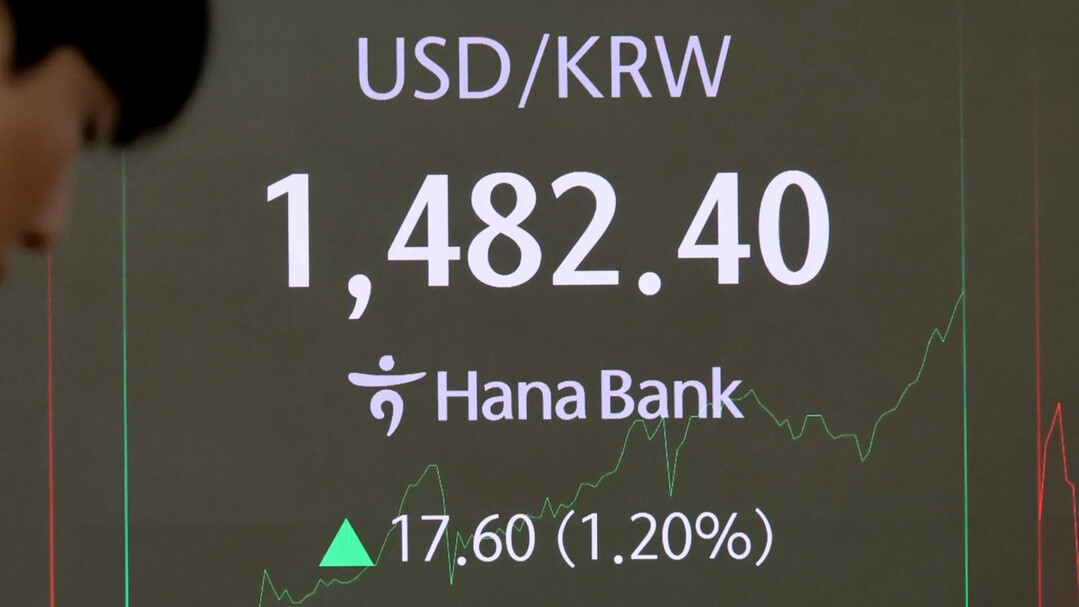
Seoul, South Korea – The won-dollar exchange rate has surged to unprecedented levels following the December 3rd emergency decree, sending shockwaves through South Korea's industrial sector. The soaring costs of imported raw materials and overseas investments due to the high exchange rate have forced businesses to reconsider their plans for the coming year.

On Monday, the won-dollar exchange rate breached the 1,480 won mark, sparking concerns of it surpassing the 1,500 won threshold. This growing uncertainty has intensified the crisis faced by South Korea's industries.   

"While a rising won-dollar exchange rate may provide short-term benefits for companies with a high proportion of dollar-denominated exports, many businesses are facing increased burdens due to higher raw material costs and overseas investment expenses," said an industry official.

Traditionally, a stronger dollar was beneficial for exporting companies that sold products in dollars. However, with the diversification of export markets and a growing reliance on local currencies in non-US markets, this advantage has diminished. Moreover, as major corporations increasingly focus on overseas investments and production rather than exports, the rising costs of dollar-denominated imported raw materials have become a significant burden.

Semiconductors and automobiles are among the industries most affected by the soaring exchange rate.

Samsung Electronics, SK Hynix, Hyundai Motor, and Kia are closely monitoring the situation. While a higher exchange rate may initially boost product prices for the semiconductor industry, the long-term impact of increased costs for imported wafers and raw materials could erode profitability.

Samsung Electronics and SK Hynix, which are constructing large-scale factories in the United States, are expected to face substantially higher investment costs due to the surging exchange rate.   

The battery industry, with companies like LG Energy Solution, Samsung SDI, and SK On actively building new and expanded battery factories in the United States, is also anticipated to experience increased investment burdens as a result of the strong dollar.   

The automotive industry, which previously benefited from a higher exchange rate due to its high domestic production, is now less affected as over half of its production occurs overseas. Gains from the exchange rate are often offset by increased costs for components, raw materials, and local marketing.   

Import car brands, which settle payments for imported vehicles in the currency of the exporting country, are also grappling with the risks associated with the rising exchange rate. Companies like Chevrolet, Stellantis, and Tesla, which are scheduled to launch new models next year, are facing difficulties in determining prices. "The rising exchange rate could lead to higher prices for imported cars," said an automotive industry official.

The airline industry, with its significant foreign exchange costs, is directly impacted by exchange rate fluctuations. Airlines pay for most of their expenses, including lease payments, fuel, maintenance, and airport fees, in dollars. A stronger dollar increases their burden. If fuel prices rise and fuel surcharges increase, consumers may postpone or cancel overseas trips, further exacerbating the situation.   

Industry officials warn that the political turmoil caused by the impeachment proceedings could lead to further increases in the exchange rate, making it a major risk for businesses. 

[Copyright (c) Global Economic Times. All Rights Reserved.]

  • #globaleconomictimes
  • #koyongchul
  • #cherrylee
  • #seoulkorea
  • #periodicoeconomico
  • #글로벌이코노믹타임즈
  • #GET
  • #GETtv
  • #liderdel
Desk
Desk

Popular articles

  • ASML Sees Surge in South Korean Revenue as Samsung and SK Hynix Accelerate Next-Gen Fab Operations

  • “Printing Lenses Like Newspapers”: Korean Researchers Unveil Game-Changing Mass Production for Metalenses

  • South Korea Leads World in AI Patents per Capita, Narrowing Gap with U.S. and China 

I like it
Share
  • Facebook
  • X
  • Kakaotalk
  • LINE
  • BAND
  • NAVER
  • https://www.globaleconomictimes.kr/article/1065572850917594 Copy URL copied.
Comments >

Comments 0

Weekly Hot Issue

  • Samsung Electronics Shifts Strategy in China: Moving from Hardware Sales to Platform-Based Business
  • Banking War 2.0: South Korean Banks Race to Transition into 'AI-First' Institutions
  • Tesla Model Y Becomes First to Pass Grueling New U.S. Autonomous Safety Tests
  • Celltrion’s Zymfentra Sees Explosive 300% Growth, Hits Record Quarterly Prescriptions in the U.S.
  • BMW Korea Ignites May with Exclusive 9-Model Online Limited Edition Lineup
  • Hyundai Mobis Completes Independent EV 'Heart' Lineup: A Major Leap Toward Global Leadership in Power Electric Systems

Most Viewed

1
Iran Imposes Transit Fees on Strait of Hormuz Amid Escalating Maritime Tensions
2
Korea and Vietnam Forge Strategic Partnership in Science, Technology, and Innovation
3
80% of Enterprises Hit by 'AI Agent Anomalies': SailPoint Calls for Integrated Identity Governance
4
Kurly Abandons 'All-Paper' Packaging Strategy Amid Rising Cost Pressures
5
University of Utah Asia Campus Hosts ‘2026 Film Festival,’ Showcasing Student Cinematic Excellence
광고문의
임시1
임시3
임시2

Hot Issue

Tensions Flare in Strait of Hormuz: U.S.-Iran Clashes Threaten Fragile Truce

Tesla Model Y Becomes First to Pass Grueling New U.S. Autonomous Safety Tests

U.S. Trade Court Strikes Down Trump’s ‘Global 10% Tariff,’ Citing Executive Overreach

Hyundai Motor Group Bets $700 Million on Mexico Amid Trade Policy Volatility

Fashion Runway Show 2026

Global Economic Times
korocamia@naver.com
CEO : LEE YEON-SIL
Publisher : KO YONG-CHUL
Registration number : Seoul, A55681
Registration Date : 2024-10-24
Youth Protection Manager: KO YONG-CHUL
Singapore Headquarters
5A Woodlands Road #11-34 The Tennery. S'677728
Korean Branch
Phone : +82(0)10 4724 5264
#304, 6 Nonhyeon-ro 111-gil, Gangnam-gu, Seoul
Copyright © Global Economic Times All Rights Reserved
  • 에이펙2025
  • APEC2025가이드북TV
  • 반달곰 프로젝트
Search
Category
  • All articles
  • Synthesis
  • World
  • Business
  • Industry
  • ICT
  • Distribution Economy
  • Well+Being
  • Travel
  • Eco-News
  • Education
  • Korean Wave News
  • Opinion
  • Arts&Culture
  • Sports
  • People & Life 
    • 전체
    • International Student Report
    • With Ambassador
  • Column 
    • 전체
    • Cho Kijo Column
    • Cherry Garden Story
    • Ko Yong-chul Column
    • Kim Seul-Ong Column
    • Lee Yeon-sil Column
  • Photo News
  • New Book Guide
  • Multicultural News
  • Jobs & Workers