• 2026.03.22 (Sun)
  • All articles
  • LOGIN
  • JOIN
Global Economic Times
fashionrunwayshow2026
  • Synthesis
  • World
  • Business
  • Industry
  • ICT
  • Distribution Economy
  • Well+Being
  • Travel
  • Eco-News
  • Education
  • Korean Wave News
  • Opinion
  • Arts&Culture
  • Sports
  • People & Life
    • International Student Report
    • With Ambassador
  • Column
    • Cho Kijo Column
    • Cherry Garden Story
    • Ko Yong-chul Column
    • Kim Seul-Ong Column
    • Lee Yeon-sil Column
  • Photo News
  • New Book Guide
MENU
 
Home > ICT

Samsung to Revolutionize Health Tracking: Galaxy Watch to Adopt Contact-Based Temperature Sensors for Enhanced Precision

Desk / Updated : 2026-03-08 09:31:41
  • -
  • +
  • Print


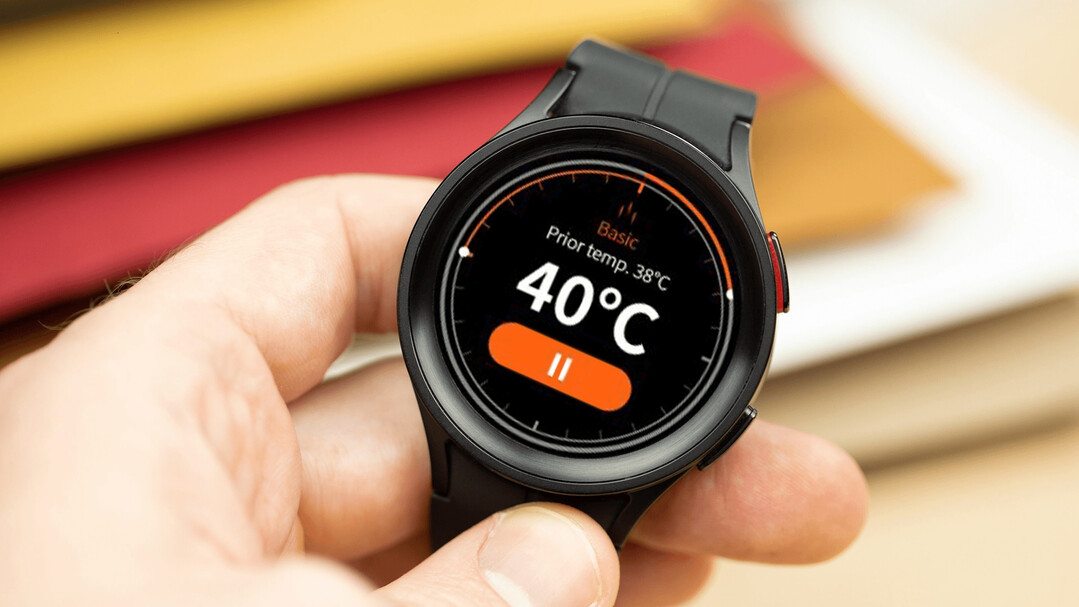
SEOUL — Samsung Electronics is set to significantly upgrade the body temperature measurement capabilities of its Galaxy Watch lineup. According to industry sources on March 8, 2026, the tech giant plans to transition from the existing infrared (IR) non-contact sensors to contact-based temperature sensors starting with the next generation of the Galaxy Watch series, expected to be unveiled in the third quarter of this year.

This strategic pivot marks the first major overhaul of the device's thermal sensing technology since the temperature sensor was first introduced four years ago with the Galaxy Watch 5 series.

The Shift from IR to Contact Sensors
Since 2022, Samsung has utilized IR-based non-contact sensors to monitor skin temperature. While IR sensors allow for data collection without needing a perfect seal against the skin, they are inherently susceptible to "noise" from the external environment, such as ambient air temperature or moisture.

In contrast, contact-based sensors are designed to sit directly against the skin, minimizing external interference and allowing for high-precision biometrical tracking. Historically, manufacturers avoided contact sensors due to the difficulty of maintaining a consistent connection during vigorous movement or exercise. However, industry analysts suggest that Samsung’s decision reflects a newfound confidence in its hardware design.

"Samsung redesigned the rear sensor structure starting with the Galaxy Watch 8, focusing on reducing thickness and improving the curvature to ensure a tighter fit," said an industry insider. "The upcoming model will leverage this advanced fit to implement contact-based sensing, which offers much higher data reliability."

Expanding the Horizons of Health Data
Currently, the Galaxy Watch utilizes temperature data primarily for sleep tracking and predicting menstrual cycles. By enhancing the accuracy through contact sensors, Samsung aims to expand the utility of this data into "Intelligent Care."

The goal is to provide real-time monitoring that can detect early signs of fever, track thermal recovery after intense workouts, and assist in general illness management, such as the early detection of colds or flu. This aligns with Samsung’s broader vision of moving from reactive health monitoring to proactive wellness management.

A Growing Market for Smart Wearables
The timing of this technological leap coincides with a booming global market. According to recent data from Mordor Intelligence, the smart wearable market is projected to grow from $99.36 billion in 2025 to $118.89 billion in 2026. Experts predict the market will reach a staggering $254.31 billion by 2031, with a compound annual growth rate (CAGR) of 16.42%.

As smartwatches evolve into sophisticated medical-grade devices, the competition between industry leaders like Samsung, Apple, and Garmin is increasingly focused on sensor accuracy. Samsung’s move to contact-based sensing is seen as a direct effort to capture a larger share of the health-conscious consumer base.

Upcoming Launch and Outlook
The new Galaxy Watch, likely to be revealed alongside Samsung's latest foldable smartphones during the Galaxy Unpacked event in Q3 2026, is expected to be a cornerstone of the company’s "AI-driven health ecosystem."

While a Samsung spokesperson stated that the company "cannot confirm specific details of unreleased products," the shift toward high-precision contact sensors signals a major milestone in the evolution of wearable technology. If successful, the Galaxy Watch could become an even more indispensable tool for users seeking clinical-grade health insights from their wrists.

[Copyright (c) Global Economic Times. All Rights Reserved.]

  • #globaleconomictimes
  • #micorea
  • #mykorea
  • #nammidonganews
  • #singaporenewsk
  • #Samsung
  • #Daewoo
  • #Hyosung
  • #Apple
  • #korea
Desk
Desk

Popular articles

  • The Coronation of a New Queen: Kim Gil-li Clinches Double Gold, While a Tearful Farewell Marks the End of an Era

  • US House Probes Coupang Over ‘Discriminatory’ Korean Regulations: Potential Catalyst for Section 301 Investigation?

  • South Korea’s Bakery Giants Slash Prices as Government Ramps Up Pressure on Food Inflation

I like it
Share
  • Facebook
  • X
  • Kakaotalk
  • LINE
  • BAND
  • NAVER
  • https://www.globaleconomictimes.kr/article/1065573006374853 Copy URL copied.
Comments >

Comments 0

Weekly Hot Issue

  • Appellate Court Begins Review of Kakao Founder’s Acquittal in SM Entertainment Stock Rigging Case
  • AI Supercycle Propels Global Semiconductor Market Toward $1 Trillion Milestone
  • Naver Suspends Election Comments to Combat Cyberbullying and Misinformation Ahead of June Polls
  • Lotte Town Myeongdong Lights Up with 'Welcome Light' to Greet Global K-Pop Fans
  • K-Beauty SMEs Join Forces with Distributors: A New Paradigm for Global Expansion through Strategic Consortiums
  • BMW ‘The New i3’ Next-Gen EV: 900km Range 

Most Viewed

1
An Open Letter to BTS On the Eve of a Historic Performance
2
From Industrial Capital to Tourism Mecca... Ulsan Makes a Bold Move with ‘Experiential Content’ in 2026
3
Ko Sang-goo, President of World Federation of Korean Associations, Elected as First Private Sector Chair of World Korean Community Leaders Convention
4
It is Time for BTS’s Fandom, ARMY, to Step Forward
5
Korean Stock Market Plunges: Circuit Breaker and Sidecar Triggered Amid Geopolitical Crisis
광고문의
임시1
임시3
임시2

Hot Issue

Netflix Declares BTS Comeback Live “ARIRANG” as the Year’s Biggest Global Event

AI Medical Ecosystem in Focus: KIMES 2026 Opens in Seoul as Global Healthcare Hub

Netanyahu Declares Decisive Blow to Iran’s Nuclear and Missile Programs, Signals Early End to War

Intel Announces 10% Price Hike on CPUs: PC Manufacturers Bracing for Massive Production Cost Spikes

Let’s recycle the old blankets in Jeju Island’s closet instead of incinerating them.

Global Economic Times
korocamia@naver.com
CEO : LEE YEON-SIL
Publisher : KO YONG-CHUL
Registration number : Seoul, A55681
Registration Date : 2024-10-24
Youth Protection Manager: KO YONG-CHUL
Singapore Headquarters
5A Woodlands Road #11-34 The Tennery. S'677728
Korean Branch
Phone : +82(0)10 4724 5264
#304, 6 Nonhyeon-ro 111-gil, Gangnam-gu, Seoul
Copyright © Global Economic Times All Rights Reserved
  • 에이펙2025
  • APEC2025가이드북TV
  • 독도는우리땅
Search
Category
  • All articles
  • Synthesis
  • World
  • Business
  • Industry
  • ICT
  • Distribution Economy
  • Well+Being
  • Travel
  • Eco-News
  • Education
  • Korean Wave News
  • Opinion
  • Arts&Culture
  • Sports
  • People & Life 
    • 전체
    • International Student Report
    • With Ambassador
  • Column 
    • 전체
    • Cho Kijo Column
    • Cherry Garden Story
    • Ko Yong-chul Column
    • Kim Seul-Ong Column
    • Lee Yeon-sil Column
  • Photo News
  • New Book Guide
  • Multicultural News
  • Jobs & Workers