• 2026.09.10 (Thu)
  • All articles
  • LOGIN
  • JOIN
Global Economic Times
[등록] 2026-09-01 15:48:31
  • Synthesis
  • World
  • Business
  • Industry
  • ICT
  • Distribution Economy
  • Well+Being
  • Travel
  • Eco-News
  • Education
  • Korean Wave News
  • Opinion
  • Arts&Culture
  • Sports
  • People & Life
    • International Student Report
    • With Ambassador
  • Column
    • Cho Kijo Column
    • Cherry Garden Story
    • Ko Yong-chul Column
    • Kim Seul-Ong Column
    • Lee Yeon-sil Column
  • Photo News
  • New Book Guide
MENU
 
Home > ICT

Memory Chips Emerge as the True Kings of the AI Era, Driving Semiconductor Industry Growth

Hannah Yeh Reporter / Updated : 2026-09-10 09:33:53
  • -
  • +
  • Print


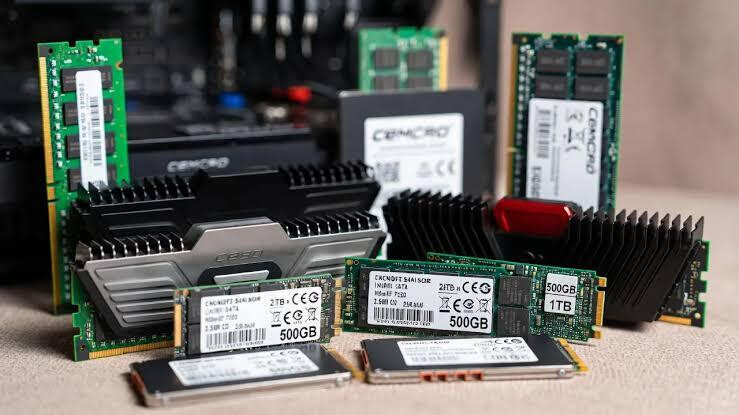
NEW YORK — As the artificial intelligence (AI) boom continues to reshape the global technology landscape, memory semiconductors have firmly established themselves as the undisputed rulers of the chip industry. Recent market analysis indicates that memory chips are not only spearheading an unprecedented market expansion but are also commanding a historic share of total semiconductor revenues, a dominance that experts project will persist for the foreseeable future. 

According to a recent client note from Mehdi Hosseini, an analyst at prominent U.S. investment firm Susquehanna (SIG), the global semiconductor industry’s total revenue is on track to reach an astonishing $1.5 trillion this year—roughly double the figures recorded in previous cycles. Hosseini pointed out that the memory sector has acted as the primary engine behind this exponential growth. 

Data compiled from the Semiconductor Industry Association (SIA) highlights a paradigm shift in market composition. Historically, memory chips accounted for a modest 20% to 30% of total semiconductor industry revenues. However, fueled by intense data center investments and soaring AI computational demands, memory chips now represent an unprecedented 50% to 55% of the market. 

The explosive demand for AI infrastructure has triggered severe supply constraints and a meteoric rise in chip pricing. Hosseini noted that without the robust performance of the memory segment, overall price growth across the broader semiconductor industry would have been significantly more subdued. Supply-chain checks reveal that average selling prices (ASPs) for DRAM are projected to surge by 50% in the current quarter, followed by an additional 20% jump in the fourth quarter. Meanwhile, NAND flash memory prices are anticipated to climb by 60% this quarter, with a further 25% increase expected in the subsequent period. 

This structural upswing has triggered a massive rally in memory-related equities on Wall Street. In recent trading sessions, Micron Technology advanced 2.8% to close at $1,027.77, boasting a year-to-date surge of approximately 250%. SanDisk, a key player specializing in NAND flash solutions, climbed 1.5% to $1,764.17, marking an extraordinary 632% gain since the beginning of the year. International bellwethers also shared in the momentum, as SK 하이닉스's American Depositary Receipts (ADRs) jumped 7.1% to finish at $198.63. 

Industry experts emphasize that the current market cycle is fundamentally different from historical, highly cyclical downturns. As advanced AI workloads increasingly require massive volumes of both high-bandwidth DRAM—such as HBM variants utilized alongside premier AI accelerators—and high-capacity NAND for data caching, memory has transitioned from a cyclical commodity into the indispensable strategic infrastructure of the digital age.

[Copyright (c) Global Economic Times. All Rights Reserved.]

  • #globaleconomictimes
  • #micorea
  • #mykorea
  • #Lifeplaza
  • #nammidonganews
  • #singaporenewsk
  • #Taiwanpost
  • #Samsung
  • #Doosa
Hannah Yeh Reporter
Hannah Yeh Reporter

Popular articles

  • LG and NVIDIA Forge "Physical AI" Alliance to Lead Future Robotics and AI Infrastructure

  • Singer John Park Emphasizes Global Expansion of Indie Music for the Sustainable Future of K-Pop in New York

  • Catastrophic Flash Floods Strike Nepal and Tibet: Climate-Induced Glacier Collapses Trigger a Humanitarian Crisis

I like it
Share
  • Facebook
  • X
  • Kakaotalk
  • LINE
  • BAND
  • NAVER
  • https://www.globaleconomictimes.kr/article/1065573168160161 Copy URL copied.
Comments >

Comments 0

Weekly Hot Issue

  • South Korea Considers Expanding Life-Sustaining Treatment Discontinuation from 'Dying Phase' to 'Terminal Stage'
  • ROK-U.S. Military Leadership Jointly Inspects Eastern Frontline Amid Frequent North Korean Violations of the Military Demarcation Line 
  • South Korea’s Uninsured Medical Expenses Approach 9 Trillion Won Amid Persistent Overuse of Non-Benefit Services
  • Oil Nears $100: How Long Can South Korea’s Fuel Price Ceiling Withstand Middle East Strains?
  • National Pension Retroactive Contributions Surge in South Korea Amid Exploitation Concerns
  • Apple’s 19-Year Design Innovation: The "iPhone Duo" and Its Muted Market Reception

Most Viewed

1
Bridging Nations, Building Futures: Reflections of Ethiopia's Ambassador to the Republic of Korea
2
Connecting Generations and Cultures through the Sound of Drums: Master Lee Kyung-hwa Holds Successful Jindo Buk-chum Workshop in Berlin
3
Bridging Hearts and Horizons: Celebrating 30 Years of the Korean Association in Cambodia
4
Seoul's Average Apartment Prices Surpass 1.6 Billion Won as Real Estate Surge Spreads from Gangnam to Outlying Districts
5
Diplomatic Efforts Intensify as Nine Out of Ten Isolated South Koreans Evacuated to Safety Following Devastating Floods in Nepal
광고문의
임시1
임시3
임시2

Hot Issue

ROK-U.S. Military Leadership Jointly Inspects Eastern Frontline Amid Frequent North Korean Violations of the Military Demarcation Line 

South Korea’s Uninsured Medical Expenses Approach 9 Trillion Won Amid Persistent Overuse of Non-Benefit Services

South Korea Considers Expanding Life-Sustaining Treatment Discontinuation from 'Dying Phase' to 'Terminal Stage'

OpenAI Claims Breakthrough on Millennium Prize Problem: Navier-Stokes Existence and Smoothness Solved in 88 Hours

Fashion Runway Show 2026

Global Economic Times
korocamia@naver.com
CEO : LEE YEON-SIL
Publisher : KO YONG-CHUL
Registration number : Seoul, A55681
Registration Date : 2024-10-24
Youth Protection Manager: KO YONG-CHUL
Singapore Headquarters
5A Woodlands Road #11-34 The Tennery. S'677728
Korean Branch
Phone : +82(0)10 4724 5264
#304, 6 Nonhyeon-ro 111-gil, Gangnam-gu, Seoul
Copyright © Global Economic Times All Rights Reserved
  • 향기네무료급식
  • BCB부천방송
  • 반달곰 프로젝트
Search
Category
  • All articles
  • Synthesis
  • World
  • Business
  • Industry
  • ICT
  • Distribution Economy
  • Well+Being
  • Travel
  • Eco-News
  • Education
  • Korean Wave News
  • Opinion
  • Arts&Culture
  • Sports
  • People & Life 
    • 전체
    • International Student Report
    • With Ambassador
  • Column 
    • 전체
    • Cho Kijo Column
    • Cherry Garden Story
    • Ko Yong-chul Column
    • Kim Seul-Ong Column
    • Lee Yeon-sil Column
  • Photo News
  • New Book Guide
  • Overseas Koreans
  • Multicultural News