![[등록] 2026-09-01 15:48:31](/support/_updata/banner2/tl181982910_6749.png)


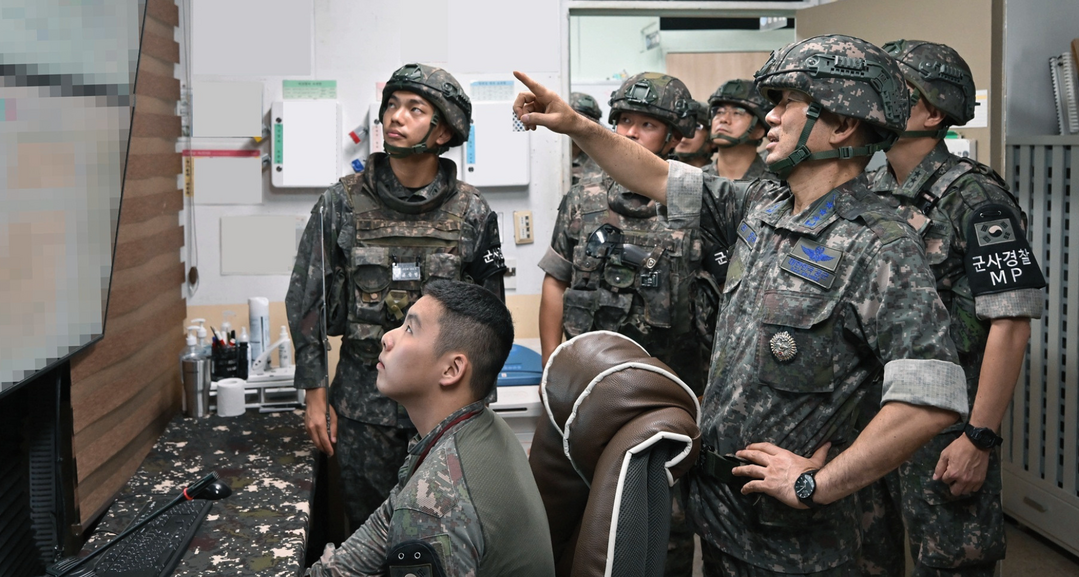
SEOUL — Amid growing security concerns as North Korean troops repeatedly cross the Military Demarcation Line (MDL), the top military leadership of South Korea and the United States conducted a joint inspection of the eastern frontline on September 9, 2026.
According to the Joint Chiefs of Staff (JCS), JCS Chairman Gen. Jin Young-seung and Gen. Xavier Brunson—who serves concurrently as the commander of the United Nations Command, the ROK-U.S. Combined Forces Command, and U.S. Forces Korea—visited General Outpost (GOP) and Guard Post (GP) units along the eastern front. The high-level visit was designed to evaluate the operational conditions within the Demilitarized Zone (DMZ), examine immediate readiness postures, and reinforce deterrence against potential enemy provocations.
Military authorities reported that North Korean forces have frequently crossed the MDL more than 20 times over the past month, beginning with initial border penetrations in the inland areas of Gangwon Province. Experts attribute this trend to the Kim Jong-un regime's aggressive "borderization" efforts, which intensified after Pyongyang officially designated inter-Korean relations as hostile ties between "two separate states" in late 2023. Since April 2024, North Korean troops have continuously engaged in barrier installations, landmine placement, and tactical road construction near the MDL.
During the frontline visit, the units inspected by the joint leadership were precisely those tasked with securing the sectors most affected by these repeated North Korean incursions. Inspecting the operational status firsthand, Gen. Jin expressed deep concern over the persistent activities near the MDL. He noted that dense foliage and seasonal fog during this time of year can significantly hinder surveillance and security operations. Consequently, he instructed frontline troops to closely analyze even the most minor indicators to prevent surprise attacks, emphasizing that any enemy provocation must be met with a decisive response to conclude operations immediately on-site.
Gen. Brunson echoed these sentiments, underscoring the enduring significance of the armistice framework. “The Armistice has preserved stability on the Korean Peninsula for more than seven decades, but maintaining that stability requires a robust preparedness posture,” Brunson stated. He added that their joint presence on the frontline highlights the ironclad strength of the ROK-U.S. alliance and a shared, unwavering commitment to defending South Korea and securing regional peace. Both leaders reaffirmed that their combined defense posture remains rock-solid, anchored by credible deterrence.
As the head of the United Nations Command, Gen. Brunson holds overarching responsibility for managing the armistice agreement south of the MDL. Observers note that this joint inspection likely provided an opportunity for Gen. Jin and Gen. Brunson to coordinate responses regarding recent armistice violations, investigate ongoing border incidents, and streamline operational standards between the South Korean military and the UN Command.
In addition to inspecting DMZ monitoring systems, Gen. Jin visited a GOP battalion to evaluate general defense and response frameworks. This inspection follows recent controversies regarding operational discipline within select front-line units, where units reportedly conducted border monitoring without live ammunition loaded into personal and crew-served weapons. Stressing the gravity of active threats, Gen. Jin urged all personnel to uphold strict command structures, maintain high operational discipline, and cultivate real-world tactical capabilities to act instantly as a unified team.
[Copyright (c) Global Economic Times. All Rights Reserved.]