• 2026.11.11 (Wed)
  • All articles
  • LOGIN
  • JOIN
Global Economic Times
[등록] 2026-09-01 15:48:31
  • Synthesis
  • World
  • Business
  • Industry
  • ICT
  • Distribution Economy
  • Well+Being
    • Pet Life
    • Halal Horizon
  • Travel
  • Eco-News
  • Education
  • Korean Wave News
  • Opinion
  • Arts&Culture
  • Sports
  • People & Life
    • International Student Report
    • With Ambassador
  • Column
    • Cho Kijo Column
    • Cherry Garden Story
    • Ko Yong-chul Column
    • Kim Bong-seon's Photo Column
    • Kim Seul-Ong Column
    • Lee Yeon-sil Column
  • Photo News
  • New Book Guide
MENU
 
Home > Synthesis

Iran and Oman Agree on Temporary Maritime Corridor in the Strait of Hormuz Amid Ongoing Regional Tensions

Ana Fernanda Reporter / Updated : 2026-08-27 09:42:28
  • -
  • +
  • Print


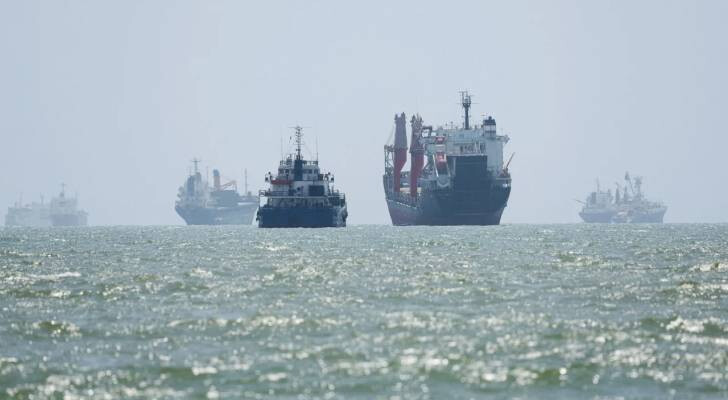
In a significant diplomatic development, Iran and Oman have reached a mutual agreement to establish a temporary joint maritime transit corridor through the strategic Strait of Hormuz. The announcement followed high-level talks in Tehran between Iranian Foreign Minister Abbas Araghchi and Omani Foreign Minister Badr Albusaidi, underscoring ongoing backchannel efforts to restore safe navigation in one of the world's most critical energy chokepoints.

According to details provided by Iranian officials, the newly proposed temporary route will span approximately 7 miles (13 kilometers) in width. Unlike traditional dual-lane systems, the corridor is structured as a two-way passage where entering and exiting vessels will navigate through Iranian territorial waters. Kazem Gharibabadi, Iran's Deputy Foreign Minister for Legal and International Affairs, described the lane as a temporary, highway-like arrangement designed to enhance monitoring and oversight of transiting vessels under Iranian surveillance. In addition to the transit corridor, both nations agreed to progressively execute joint operations to clear naval mines from the area.

Despite this breakthrough in bilateral negotiations, Tehran has maintained a firm stance that the Strait of Hormuz will not reopen immediately. Iranian officials emphasized that the full restoration of regular shipping operations is strictly contingent upon Washington's policy changes. Tehran demands the complete lifting of crippling economic sanctions, an end to the ongoing conflicts and blockades across the Middle East—including Yemen and Lebanon—and full adherence to prior diplomatic understandings. Dismissing recent statements from U.S. President Donald Trump regarding the clearance of naval mines as market-soothing propaganda, Iran reiterated its sovereign control over the waterway.

Concurrently, intense behind-the-scenes diplomacy involving regional mediators has been underway. Pakistan's Army Chief, General Asim Munir, recently visited Tehran to relay messages between Iran and the United States, focusing on reactivating previous memorandums of understanding and recognizing Iran's administrative role in the strait. Qatari Prime Minister Mohammed bin Abdulrahman Al Thani also engaged in telephone consultations with his Iranian counterpart to discuss the temporary passage and mine-clearance frameworks.

On the American side, diplomatic signals suggest a temporary pause in aggressive military escalation. Recent reports indicate that the U.S. State Department intends to gradually reinstate diplomatic staff to embassies across the Middle East, including nations like Oman, Jordan, and Lebanon, while maintaining economic pressure through targeted treasury sanctions. Meanwhile, international media reports, including those from Russian state agency RIA Novosti, have hinted at a potential impending truce agreement concerning freedom of navigation, though concrete terms have yet to be officially formalized.

As international energy markets and global shipping lines closely monitor these developments, the proposed temporary corridor represents a cautious step toward de-escalation. However, the ultimate opening of the Strait of Hormuz remains tethered to broader geopolitical concessions and the uncertain trajectory of U.S.-Iran relations.

[Copyright (c) Global Economic Times. All Rights Reserved.]

  • #\ormuz Impasse
  • #globaleconomictimes
  • #micorea
  • #mykorea
  • #nammidonganews
  • #singaporenewsk
  • #Samsung
  • #Daewoo
  • #Hyos
Ana Fernanda Reporter

Popular articles

  • US Army Conducts Rare Temporary Burial Drills to Prepare for Worst-Case Large-Scale War Scenarios

  • ISEF 2026: “Goodness for All” Paves the Way for Indonesia’s Islamic Economy and Finance

  • Stay in the U.S. Starting at $70K? "It Means Go Back to Your Country," Students Reeling from Shock

I like it
Share
  • Facebook
  • X
  • Kakaotalk
  • LINE
  • BAND
  • NAVER
  • https://www.globaleconomictimes.kr/article/1065573685466472 Copy URL copied.
Comments >

Comments 0

Weekly Hot Issue

  • Controversy Surrounds South Korea’s Overhaul of Regional ER Criteria, Accused of Favoring Top-Tier Hospitals
  • South Korea Weighs Overhauling Pediatric ICU Support Amid Plummeting Birth Rates
  • South Korean Doctors' Average Annual Business Income Tops 400 Million Won in Latest Tax Data
  • South Korea Maintains Stance on Strict Medical License Rules as Three-Year Milestone Approaches
  • Rokit Healthcare Accelerates 65.4 Billion KRW AI Organ Regeneration Initiative Aiming for Global Leadership by 2027
  • Traditional Korean and Japanese arts on one stage… Exchange performance ‘Jieum’ held in Osaka

Most Viewed

1
US Army Conducts Rare Temporary Burial Drills to Prepare for Worst-Case Large-Scale War Scenarios
2
World Citizens are Flying Directly to Busan... The Era of 4 Million Foreigners is Just Around the Corner
3
Eating 100g of Baechu Kimchi Daily Linked to Lower High-Cholesterol Risks
4
Meeting Christmas Early!… Busan Dessert Sales Event "Daldal The Market" Held
5
From Kim Whanki to Pokémon Cards... Seoul Auction Opens the Floodgates
체리가든 스토리
nutri huevos
로타리
동포저널

Hot Issue

Jensen Huang Faces Shareholder Class Action and Leadership Scrutiny Amid Espionage Allegations Involving Former Associate

Disgraced South Korean Scientist Hwang Woo-suk Becomes UAE Citizen

Is South Korea Heading Toward France's Path? Aging Population and Fiscal Pressures Looming Ahead

Fashion Runway Show 2026

Let’s recycle the old blankets in Jeju Island’s closet instead of incinerating them.

Global Economic Times
korocamia@naver.com
CEO : LEE YEON-SIL
Publisher : KO YONG-CHUL
Registration number : Seoul, A55681
Registration Date : 2024-10-24
Youth Protection Manager: KO YONG-CHUL
Singapore Headquarters
5A Woodlands Road #11-34 The Tennery. S'677728
Korean Branch
Phone : +82(0)10 4724 5264
#304, 6 Nonhyeon-ro 111-gil, Gangnam-gu, Seoul
Copyright © Global Economic Times All Rights Reserved
  • News K
  • 반달곰 프로젝트
  • 광고문의
Search
Category
  • All articles
  • Synthesis
  • World
  • Business
  • Industry
  • ICT
  • Distribution Economy
  • Well+Being 
    • 전체
    • Pet Life
    • Halal Horizon
  • Travel
  • Eco-News
  • Education
  • Korean Wave News
  • Opinion
  • Arts&Culture
  • Sports
  • People & Life 
    • 전체
    • International Student Report
    • With Ambassador
  • Column 
    • 전체
    • Cho Kijo Column
    • Cherry Garden Story
    • Ko Yong-chul Column
    • Kim Bong-seon's Photo Column
    • Kim Seul-Ong Column
    • Lee Yeon-sil Column
  • Photo News
  • New Book Guide
  • Overseas Koreans
  • Multicultural News