• 2026.11.29 (Sun)
  • All articles
  • LOGIN
  • JOIN
Global Economic Times
한인동포뉴스(상단)
  • Synthesis
  • World
  • Business
  • Industry
  • ICT
  • Distribution Economy
  • Well+Being
    • Pet Life
    • Halal Horizon
  • Travel
  • Eco-News
  • Education
  • Korean Wave News
  • Opinion
  • Arts&Culture
  • Sports
  • People & Life
    • International Student Report
    • With Ambassador
  • Column
    • Cho Kijo Column
    • Cherry Garden Story
    • Ko Yong-chul Column
    • Kim Bong-seon's Photo Column
    • Kim Seul-Ong Column
    • Lee Yeon-sil Column
    • Professor Lee Soo-young’s Life Essays
  • Photo News
  • New Book Guide
MENU
 
Home > World

Behind the Cozy Knit: Why Fashion’s "Ethical Wool" Promises Are Falling Short

Ana Fernanda Reporter / Updated : 2026-11-29 10:06:15
  • -
  • +
  • Print

As winter wardrobes fill with soft merino sweaters, recent investigations by international animal welfare groups reveal a stark disconnect between fashion brands' ethical pledges and the reality on global wool farms.

According to the Fashion Animal Welfare Report 2026 published by the global animal welfare organization FOUR PAWS, which evaluated 332 major apparel companies, nearly two-thirds (64%) of surveyed brands have publicly committed to phasing out "mulesing"—a painful surgical procedure performed on lambs. Yet, only 20% have actually achieved 100% certified mulesing-free wool across their supply chains, marking a sluggish 7-percentage-point increase since 2024. Meanwhile, a mere 8% of brands have pledged to reduce their overall reliance on animal-derived textiles.

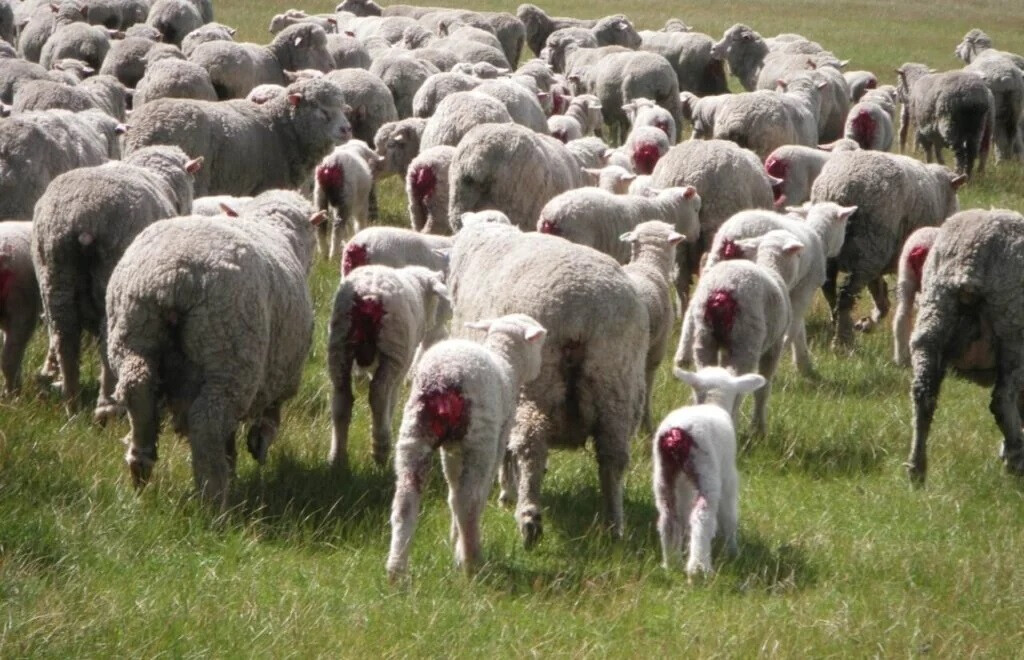
A Painful Practice Driven by Production At the heart of the controversy is Australia, the supplier of roughly 80% of the world’s fine merino wool. Merino sheep have been selectively bred to develop excessive skin folds to maximize wool yield. Because these folds trap moisture and waste, they attract blowflies that lay eggs, leading to fatal maggot infestations known as flystrike.

To prevent this, Australian farmers routinely perform mulesing on lambs aged two to twelve weeks—restraining the animals and slicing away strips of skin around their hindquarters to create smooth scar tissue. Industry estimates indicate that over 10 million lambs undergo this procedure annually in Australia, with the RSPCA estimating that roughly one in five receives no pain relief. Recovery takes weeks, impairing the lambs' growth and resulting in an estimated 4% mortality rate. Despite the Australian wool industry pledging in 2004 to end the practice by 2010, recent sustainability disclosures for the 2025–2026 season show that only 21% of declared merino wool comes from non-mulesed or ceased-mulesing farms.

The Limits of "Ethical" Certifications Even in countries like New Zealand, which outlawed mulesing in 2018, welfare abuses persist due to piece-rate pay structures that reward shearing speed over animal care. Undercover investigations by PETA Asia-Pacific across more than 30 shearing sheds in New Zealand—and more recently in South Africa in April—documented workers punching, kicking, and throwing sheep, as well as stitching deep shearing wounds without anesthesia.

Notably, several of the implicated facilities held prominent industry certifications such as ZQ and NATIVA. FOUR PAWS’ analysis of 12 major animal welfare certification schemes found that 11 fail to mandate pain relief for injuries or invasive procedures, raising questions about the reliability of "ethical wool" labels sold in retail markets worldwide, including South Korea.

Shifting Toward Plant-Based Alternatives In response to these systemic issues, advocacy groups are pushing for stricter supply chain transparency and a shift toward botanical textiles. In South Korea, a coalition of five animal protection and vegan organizations recently called for mandatory labeling of animal-derived raw materials to empower conscious consumer choices.

At the same time, textile innovators and organizations like PETA—which designates November as "Vegan Wool Month"—are spotlighting plant-based alternatives crafted from organic cotton, hemp, linen, and lyocell. For everyday shoppers, experts recommend checking fabric composition tags, extending the lifespan of existing garments, and exploring plastic-free botanical knits.

"While parts of the fashion sector are taking steps in the right direction," said Jessica Metcalf, a fashion animal welfare specialist at FOUR PAWS, "fashion that leaves animals out of the equation altogether remains the most genuinely animal-friendly choice."

[Copyright (c) Global Economic Times. All Rights Reserved.]

  • #Cherry Garden
  • #HalalFood
  • #Halal
  • #Petlife
  • #Cats
  • #Dogs
  • #Halalhorizone
  • #Hormuz Impasse
  • #Joseon
  • #globaleconomicti
Ana Fernanda Reporter

Popular articles

  • US Army Conducts Rare Temporary Burial Drills to Prepare for Worst-Case Large-Scale War Scenarios

  • "Stay Out, Get Paid, or Have Police Stay With You": Shenzhen Imposes Strict Security Ahead of APEC Summit

  • US Midterm Elections Complicate Trade Calculus... Persistent Uncertainty Over Tariffs and Investment

I like it
Share
  • Facebook
  • X
  • Kakaotalk
  • LINE
  • BAND
  • NAVER
  • https://www.globaleconomictimes.kr/article/1065575105615908 Copy URL copied.
Comments >

Comments 0

Weekly Hot Issue

  • The Twist Behind a Cleansing Balm Jar… Why CJ CheilJedang Launched a Planet in Seongsu-dong
  • South Korean Chipmakers Face Dual Headwinds: U.S. Tariff Threats and Cooling Memory Forecasts
  • LG Electronics Meets Future Customers on Mexican Campus… Opens First Overseas ‘Another Campus’
  • Seoul Stocks Face Prolonged Consolidation as Tariff Risks and Fed Policy Fuel Sharp Swings
  • South Korea’s Chip-Fueled 4% Growth Masks Deepening Domestic Divide
  • Team Korea Ramp Up Czech Nuclear Project Ahead of 2027 Permit Application

Most Viewed

1
Memory Chip Rout Deepens as Wall Street Questions AI Spending and DRAM Pricing
2
Exercise Beats Diet in Extending Lifespan, Major Review Finds
3
South Korean Burger Chain Lotteria Expands Singapore Footprint with Halal Certification and New Teriyaki Lineup
4
AI Semiconductor Stocks Plummet: Philadelphia Index Drops 5.28% and Micron Plunges 7.59% Amid Executive Shakeup and Export Restrictions
5
"Stay Out, Get Paid, or Have Police Stay With You": Shenzhen Imposes Strict Security Ahead of APEC Summit
체리가든 스토리
nutri huevos
로타리
동포저널

Hot Issue

South Korea’s Chip-Fueled 4% Growth Masks Deepening Domestic Divide

LG Electronics Meets Future Customers on Mexican Campus… Opens First Overseas ‘Another Campus’

Autonomous Heavy Trucks Step Up to Solve South Korea’s Logistics Labor Crisis

Fashion Runway Show 2026

Let’s recycle the old blankets in Jeju Island’s closet instead of incinerating them.

Global Economic Times
korocamia@naver.com
CEO : LEE YEON-SIL
Publisher & Editor : KO YONG-CHUL
Registration number : Seoul, A55681
Registration Date : 2024-10-24
Youth Protection Manager: KO YONG-CHUL
Singapore Headquarters
5A Woodlands Road #11-34 The Tennery. S'677728
Korean Branch
Phone : +82(0)10 4724 5264
#304, 6 Nonhyeon-ro 111-gil, Gangnam-gu, Seoul
Copyright © Global Economic Times All Rights Reserved
  • News K
  • 반달곰 프로젝트
  • 광고문의
Search
Category
  • All articles
  • Synthesis
  • World
  • Business
  • Industry
  • ICT
  • Distribution Economy
  • Well+Being 
    • 전체
    • Pet Life
    • Halal Horizon
  • Travel
  • Eco-News
  • Education
  • Korean Wave News
  • Opinion
  • Arts&Culture
  • Sports
  • People & Life 
    • 전체
    • International Student Report
    • With Ambassador
  • Column 
    • 전체
    • Cho Kijo Column
    • Cherry Garden Story
    • Ko Yong-chul Column
    • Kim Bong-seon's Photo Column
    • Kim Seul-Ong Column
    • Lee Yeon-sil Column
    • Professor Lee Soo-young’s Life Essays
  • Photo News
  • New Book Guide
  • Overseas Koreans
  • Multicultural News