• 2025.12.17 (Wed)
  • All articles
  • LOGIN
  • JOIN
Global Economic Times
APEC2025KOREA가이드북
  • Synthesis
  • World
  • Business
  • Industry
  • ICT
  • Distribution Economy
  • Well+Being
  • Travel
  • Eco-News
  • Education
  • Korean Wave News
  • Opinion
  • Arts&Culture
  • Sports
  • People & Life
  • Column
    • Cho Kijo Column
    • Lee Yeon-sil Column
    • Ko Yong-chul Column
    • Cherry Garden Story
  • Photo News
  • New Book Guide
MENU
 
Home > Synthesis

South Korea's Growing Economy, Shrinking Wallets

KO YONG-CHUL Reporter / Updated : 2024-12-19 10:14:11
  • -
  • +
  • Print


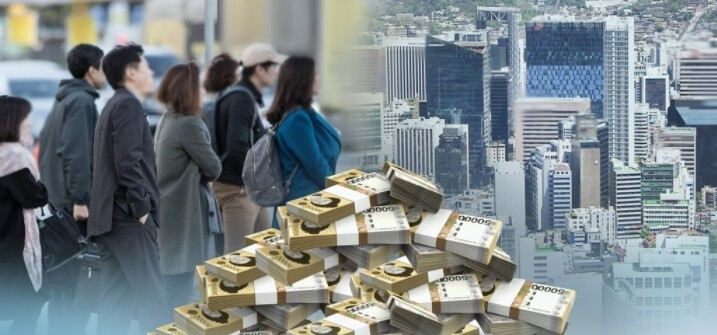
Seoul, South Korea – Despite a remarkable surge in South Korea's Gross National Income (GNI) over the past seven decades, many South Koreans are feeling a growing disconnect between the nation's economic prosperity and their personal finances.

According to data released by the Bank of Korea on Monday, South Korea's per capita GNI soared from a mere $67 in 1953 to a staggering $36,194 in 2020, marking a 540-fold increase. This represents an annual average growth rate of 9.4%.

However, the growth in household disposable income (PGDI) has failed to keep pace. PGDI, which measures the amount of income households have left after taxes and social security contributions, increased from $482 in 1975 to $19,498 in 2020, representing an annual average growth rate of 8.0%.

The ratio of PGDI to GNI has also been on a downward trend. In 1975, when the statistics were first compiled, PGDI accounted for 77.5% of GNI. However, this figure has steadily declined and reached a historic low of 53.9% in 2020.

The widening gap between economic growth and household income growth has led to a growing perception among South Koreans that they are not sharing in the nation's prosperity. While the overall economy has expanded significantly, the benefits of this growth have not been evenly distributed.

"The data shows that while South Korea has achieved impressive economic growth, the average citizen has not seen their disposable income grow at the same rate," said [Name], an economist at [Institution]. "This discrepancy has contributed to a growing sense of economic inequality and has fueled social discontent."

The Bank of Korea attributed the widening gap to a number of factors, including changes in the economic structure, rising income inequality, and increasing costs of living.

To address these issues, the government and policymakers may need to focus on policies that promote more equitable income distribution, such as increasing the minimum wage, strengthening social safety nets, and investing in education and training.

[Copyright (c) Global Economic Times. All Rights Reserved.]

  • #globaleconomictimes
  • #koyongchul
  • #cherrylee
  • #seoulkorea
  • #periodicoeconomico
  • #글로벌이코노믹타임즈
  • #GET
  • #GETtv
  • #liderdel
KO YONG-CHUL Reporter
Reporter Page

Popular articles

  • A Garden Where the City's Rhythm Stops: Dongdaemun's 'Cherry Garden', Cooking Consideration and Diversity

  • Choi Bun-do, Chairman of PTV Group, Assumes Presidency of the Korean Chamber of Commerce and Industry in South Central Vietnam

  • The Paradox of the 'Juvenile Offender' (Chokbeop Sonyeon): Impunity or Unfinished Rehabilitation?

I like it
Share
  • Facebook
  • X
  • Kakaotalk
  • LINE
  • BAND
  • NAVER
  • https://www.globaleconomictimes.kr/article/1065575511063756 Copy URL copied.
Comments >

Comments 0

Weekly Hot Issue

  • 'AI' Dominates 2025 Book Titles in South Korea
  • End-of-Year Concert Extravaganza: Jo Sumi, Geum Nan-sae, and Danny Koo Headline Diverse Lineup
  • R.E.D. Sectors Poised for Growth in 2026, the Year of the 'Red Horse,' Driven by AI Investment Boom
  • South Korea Launches $115 Million Export Voucher Program to Boost SME Global Reach
  • Extension Granted for '2026 Honors for SME Contributors' Application
  • 44% of Recent Construction Projects Report Deficits, Industry Survey Finds

Most Viewed

1
Choi Bun-do, Chairman of PTV Group, Assumes Presidency of the Korean Chamber of Commerce and Industry in South Central Vietnam
2
From Court to Content: French Tennis Star Océane Dodin Trades Racquet for OnlyFans, Eyes $5M in a Year
3
Lee Dismisses Vice Minister Amid Allegations of Misconduct and Vetting Gaps
4
NVIDIA Lobby Succeeds? U.S. Bill Expected to Drop AI Chip Export Restrictions
5
US Layoffs Surge: Over 1.17 Million Job Cuts Announced in First 11 Months of 2025
광고문의
임시1
임시3
임시2

Hot Issue

South Korean AI Models Flunk College Entrance Math Exams, Lagging Far Behind Global Leaders

KRX Temporarily Slashes Stock Trading Fees by 20-40% to Counter ATS Rival

Israel Condemns Australia After Sydney Shooting, Citing 'Fueling' of Anti-Semitism

Lotte Mart Launches Major Imported Fruit Discount Event Amid High Prices

Let’s recycle the old blankets in Jeju Island’s closet instead of incinerating them.

Global Economic Times
korocamia@naver.com
CEO : LEE YEON-SIL
Publisher : KO YONG-CHUL
Registration number : Seoul, A55681
Registration Date : 2024-10-24
Youth Protection Manager: KO YONG-CHUL
Singapore Headquarters
5A Woodlands Road #11-34 The Tennery. S'677728
Korean Branch
Phone : +82(0)10 4724 5264
#304, 6 Nonhyeon-ro 111-gil, Gangnam-gu, Seoul
Copyright © Global Economic Times All Rights Reserved
  • 에이펙2025
  • APEC2025가이드북TV
  • 독도는우리땅
Search
Category
  • All articles
  • Synthesis
  • World
  • Business
  • Industry
  • ICT
  • Distribution Economy
  • Well+Being
  • Travel
  • Eco-News
  • Education
  • Korean Wave News
  • Opinion
  • Arts&Culture
  • Sports
  • People & Life
  • Column 
    • 전체
    • Cho Kijo Column
    • Lee Yeon-sil Column
    • Ko Yong-chul Column
    • Cherry Garden Story
  • Photo News
  • New Book Guide
  • Multicultural News
  • Jobs & Workers