• 2026.05.08 (Fri)
  • All articles
  • LOGIN
  • JOIN
Global Economic Times
fashionrunwayshow2026
  • Synthesis
  • World
  • Business
  • Industry
  • ICT
  • Distribution Economy
  • Well+Being
  • Travel
  • Eco-News
  • Education
  • Korean Wave News
  • Opinion
  • Arts&Culture
  • Sports
  • People & Life
    • International Student Report
    • With Ambassador
  • Column
    • Cho Kijo Column
    • Cherry Garden Story
    • Ko Yong-chul Column
    • Kim Seul-Ong Column
    • Lee Yeon-sil Column
  • Photo News
  • New Book Guide
MENU
 
Home > Industry

Korea to Expand District Heating Supply and Transition to Clean Energy Sources by 2028

Hee Chan Kim Reporter / Updated : 2025-02-17 10:24:58
  • -
  • +
  • Print

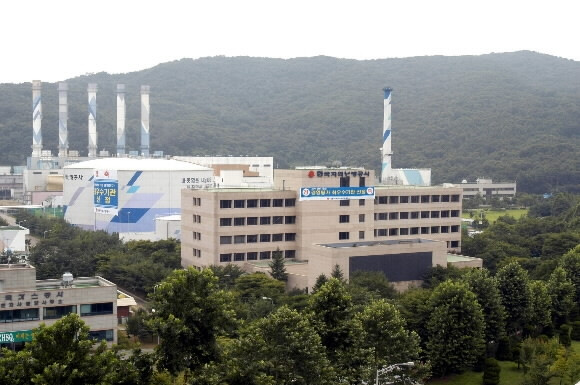
Seoul, South Korea – The Ministry of Trade, Industry and Energy (MOTIE) announced plans to significantly expand the district heating supply and transition to clean energy sources by 2028. This initiative is part of the 6th Basic Plan for District Energy Supply (2024-2028), which was unveiled at a public hearing held in Seoul on January 14, 2024.

The plan aims to increase the number of households receiving district heating to 4.46 million by 2028, up from 3.78 million in 2023. This expansion will bring district heating to 21.3% of all households in Korea. Additionally, the number of industrial complexes utilizing district energy is projected to rise from 45 in 2023 to 54 by 2028.

In line with the global push for decarbonization, the plan emphasizes the transition to clean energy sources. MOTIE outlined several key strategies to achieve this goal, including:

Promoting the use of untapped heat sources: The ministry will establish new criteria for designating areas that can utilize untapped heat sources, such as waste heat from industrial processes.
Developing a clean energy roadmap: MOTIE will create a comprehensive roadmap for transitioning to clean energy sources for district heating.
Introducing a renewable heat energy certification system: The Renewable Heat Energy Certificate (RHC) system will be introduced to incentivize the use of renewable energy sources in district heating.
Furthermore, the plan includes pilot projects for Power-to-Heat (P2H) technology, which utilizes surplus renewable electricity to generate heat. Incentives will also be provided for the adoption of heat pumps to utilize low-temperature heat sources.

MOTIE expects the 6th Basic Plan for District Energy Supply to result in significant energy savings and greenhouse gas emission reductions. Over the five-year period, the plan is projected to save 45 million TOE (Tonnes of Oil Equivalent) of energy and reduce greenhouse gas emissions by 92 million tons.

"This plan marks the beginning of a significant transition towards a low-carbon, high-efficiency, and low-cost heat energy system," said a MOTIE official. "We are confident that this initiative will contribute to Korea's efforts to combat climate change and promote sustainable energy development."

[Copyright (c) Global Economic Times. All Rights Reserved.]

  • #globaleconomictimes
  • #글로벌이코노믹타임즈
  • #한국
  • #중기청
  • #재외동포청
  • #외교부
  • #micorea
  • #mykorea
  • #newsk
  • #nammidonganews
  • #singaporenewsk
Hee Chan Kim Reporter

Popular articles

  • How Long Can You Stand on One Leg? 5 Simple Tests to Reveal Your ‘Biological Age’

I like it
Share
  • Facebook
  • X
  • Kakaotalk
  • LINE
  • BAND
  • NAVER
  • https://www.globaleconomictimes.kr/article/1065576236391256 Copy URL copied.
Comments >

Comments 0

Weekly Hot Issue

  • Hyundai Mobis Completes Independent EV 'Heart' Lineup: A Major Leap Toward Global Leadership in Power Electric Systems
  • OpenAI Redefines Human-AI Interaction with ‘GPT-Realtime-2’ and New Suite of Live Voice Models
  • Tensions Flare in Strait of Hormuz: U.S.-Iran Clashes Threaten Fragile Truce
  • UAE Sovereign Wealth Giants Descend on Seoul to Forge Strategic AI Alliance
  • U.S. Trade Court Strikes Down Trump’s ‘Global 10% Tariff,’ Citing Executive Overreach
  • POSTECH Researchers Double Metal-Polymer Adhesion via 3D Printing Surface Control

Most Viewed

1
Iran Imposes Transit Fees on Strait of Hormuz Amid Escalating Maritime Tensions
2
Korea and Vietnam Forge Strategic Partnership in Science, Technology, and Innovation
3
80% of Enterprises Hit by 'AI Agent Anomalies': SailPoint Calls for Integrated Identity Governance
4
Kurly Abandons 'All-Paper' Packaging Strategy Amid Rising Cost Pressures
5
Tradition Meets the Public: Chungju’s Gugak Busking
광고문의
임시1
임시3
임시2

Hot Issue

Tensions Flare in Strait of Hormuz: U.S.-Iran Clashes Threaten Fragile Truce

Tesla Model Y Becomes First to Pass Grueling New U.S. Autonomous Safety Tests

U.S. Trade Court Strikes Down Trump’s ‘Global 10% Tariff,’ Citing Executive Overreach

Hyundai Motor Group Bets $700 Million on Mexico Amid Trade Policy Volatility

Fashion Runway Show 2026

Global Economic Times
korocamia@naver.com
CEO : LEE YEON-SIL
Publisher : KO YONG-CHUL
Registration number : Seoul, A55681
Registration Date : 2024-10-24
Youth Protection Manager: KO YONG-CHUL
Singapore Headquarters
5A Woodlands Road #11-34 The Tennery. S'677728
Korean Branch
Phone : +82(0)10 4724 5264
#304, 6 Nonhyeon-ro 111-gil, Gangnam-gu, Seoul
Copyright © Global Economic Times All Rights Reserved
  • 에이펙2025
  • APEC2025가이드북TV
  • 반달곰 프로젝트
Search
Category
  • All articles
  • Synthesis
  • World
  • Business
  • Industry
  • ICT
  • Distribution Economy
  • Well+Being
  • Travel
  • Eco-News
  • Education
  • Korean Wave News
  • Opinion
  • Arts&Culture
  • Sports
  • People & Life 
    • 전체
    • International Student Report
    • With Ambassador
  • Column 
    • 전체
    • Cho Kijo Column
    • Cherry Garden Story
    • Ko Yong-chul Column
    • Kim Seul-Ong Column
    • Lee Yeon-sil Column
  • Photo News
  • New Book Guide
  • Multicultural News
  • Jobs & Workers