• 2026.03.23 (Mon)
  • All articles
  • LOGIN
  • JOIN
Global Economic Times
fashionrunwayshow2026
  • Synthesis
  • World
  • Business
  • Industry
  • ICT
  • Distribution Economy
  • Well+Being
  • Travel
  • Eco-News
  • Education
  • Korean Wave News
  • Opinion
  • Arts&Culture
  • Sports
  • People & Life
    • International Student Report
    • With Ambassador
  • Column
    • Cho Kijo Column
    • Cherry Garden Story
    • Ko Yong-chul Column
    • Kim Seul-Ong Column
    • Lee Yeon-sil Column
  • Photo News
  • New Book Guide
MENU
 
Home > Synthesis

Foreign Land Transactions Restricted in 17 Key South Korean Border Regions

Desk / Updated : 2025-02-28 10:42:04
  • -
  • +
  • Print

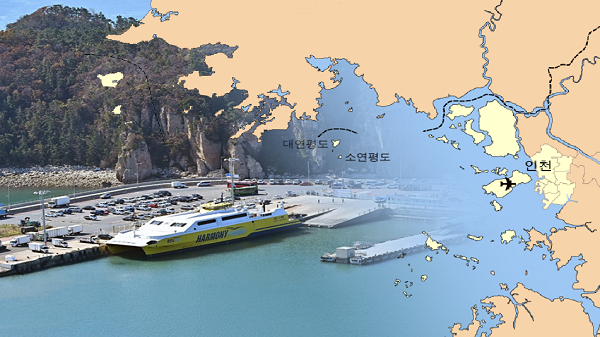
The South Korean government has designated 17 of its outermost territories, including the strategically important islands of the West Sea (Yellow Sea), as Foreign Land Transaction Permit Zones. This measure, implemented at the request of the National Intelligence Service (NIS), requires foreign nationals to obtain prior permission from local authorities before purchasing land in these areas.

Key Points:

Designated Areas:The five islands of the West Sea: Baekryeongdo, Daecheongdo, Socheongdo, Yeonpyeongdo, and Udo.
12 additional islands located on the country's territorial sea baselines.
Purpose:To strengthen territorial sovereignty in border island regions.
To address national security concerns related to foreign land ownership in sensitive areas.
Permit Requirement:Foreigners must obtain permission from the relevant city, county, or district office before entering into any land purchase contract.
Permit approvals will be determined in consultation with relevant agencies, including the Ministry of National Defense and the NIS.
Penalties:Land purchase contracts made without the required permit will be invalidated.
Violators may face up to two years of imprisonment or a fine of up to 20 million won.
Context:This action comes approximately 10 years after the designation of eight uninhabited islands as permit zones in December 2014.
This action was requested by the NIS, and then finalized by the Ministry of Land, Infrastructure and Transport after deliberation by the Central Urban Planning Committee.

Implications:

This new regulation reflects South Korea's heightened focus on national security and territorial integrity. By implementing stricter controls on foreign land ownership in these strategically important regions, the government aims to safeguard its borders and protect its national interests.

This measure highlights the South Korean government's proactive approach to managing foreign investment in sensitive areas, balancing economic openness with national security concerns.

[Copyright (c) Global Economic Times. All Rights Reserved.]

  • #globaleconomictimes
  • #글로벌이코노믹타임즈
  • #한국
  • #중기청
  • #재외동포청
  • #외교부
  • #micorea
  • #mykorea
  • #newsk
  • #nammidonganews
  • #singaporenewsk
Desk
Desk

Popular articles

  • The Coronation of a New Queen: Kim Gil-li Clinches Double Gold, While a Tearful Farewell Marks the End of an Era

  • US House Probes Coupang Over ‘Discriminatory’ Korean Regulations: Potential Catalyst for Section 301 Investigation?

  • South Korea’s Bakery Giants Slash Prices as Government Ramps Up Pressure on Food Inflation

I like it
Share
  • Facebook
  • X
  • Kakaotalk
  • LINE
  • BAND
  • NAVER
  • https://www.globaleconomictimes.kr/article/1065577236771769 Copy URL copied.
Comments >

Comments 0

Weekly Hot Issue

  • Coway Clinches Top Honor at "Water Taste Awards" for 7th Consecutive Year
  • HP Targets Korea as Strategic Hub for 'Edge AI' Expansion, Seeking Startup Partnerships
  • Pearl Abyss’s 'Crimson Desert' Shatters Records with 2 Million Copies Sold on Day One
  • "BTS Over Books?" Indian Academies Issue Emergency Notices as Students Plot Mass Absences for Comeback Live
  • Naver to Shut Down Men's Fashion Service 'MR.' to Launch Expanded AI-Driven Fashion Platform
  • JBNU and SKKU Researchers Achieve Breakthrough in "Dream Material" MXene, Setting New World Records in Performance

Most Viewed

1
An Open Letter to BTS On the Eve of a Historic Performance
2
From Industrial Capital to Tourism Mecca... Ulsan Makes a Bold Move with ‘Experiential Content’ in 2026
3
Ko Sang-goo, President of World Federation of Korean Associations, Elected as First Private Sector Chair of World Korean Community Leaders Convention
4
It is Time for BTS’s Fandom, ARMY, to Step Forward
5
Korean Stock Market Plunges: Circuit Breaker and Sidecar Triggered Amid Geopolitical Crisis
광고문의
임시1
임시3
임시2

Hot Issue

Vishay Unveils Ultra-Compact 0404 RGB LED with Independent Chip Control for Enhanced Color Precision

Coway Clinches Top Honor at "Water Taste Awards" for 7th Consecutive Year

AI Medical Ecosystem in Focus: KIMES 2026 Opens in Seoul as Global Healthcare Hub

Netanyahu Declares Decisive Blow to Iran’s Nuclear and Missile Programs, Signals Early End to War

Let’s recycle the old blankets in Jeju Island’s closet instead of incinerating them.

Global Economic Times
korocamia@naver.com
CEO : LEE YEON-SIL
Publisher : KO YONG-CHUL
Registration number : Seoul, A55681
Registration Date : 2024-10-24
Youth Protection Manager: KO YONG-CHUL
Singapore Headquarters
5A Woodlands Road #11-34 The Tennery. S'677728
Korean Branch
Phone : +82(0)10 4724 5264
#304, 6 Nonhyeon-ro 111-gil, Gangnam-gu, Seoul
Copyright © Global Economic Times All Rights Reserved
  • 에이펙2025
  • APEC2025가이드북TV
  • 독도는우리땅
Search
Category
  • All articles
  • Synthesis
  • World
  • Business
  • Industry
  • ICT
  • Distribution Economy
  • Well+Being
  • Travel
  • Eco-News
  • Education
  • Korean Wave News
  • Opinion
  • Arts&Culture
  • Sports
  • People & Life 
    • 전체
    • International Student Report
    • With Ambassador
  • Column 
    • 전체
    • Cho Kijo Column
    • Cherry Garden Story
    • Ko Yong-chul Column
    • Kim Seul-Ong Column
    • Lee Yeon-sil Column
  • Photo News
  • New Book Guide
  • Multicultural News
  • Jobs & Workers