![[등록] 2026-09-01 15:48:31](/support/_updata/banner2/tl181982910_6749.png)


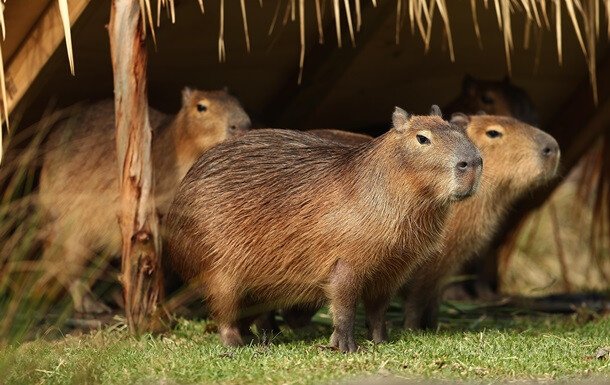
Nordelta, Argentina – The gentle giant of the rodent world, the capybara, has become an unlikely source of contention in the affluent Nordelta community near Buenos Aires. What was once a rare sighting has become a frequent occurrence, leading to a clash of opinions among residents and prompting a controversial attempt to manage their burgeoning population.
Known locally as "carpinchos," these semi-aquatic mammals, the largest rodents on Earth, can grow to over a meter in length and weigh upwards of 60 kilograms. Their placid nature and perceived friendliness have endeared them to many, inspiring a global wave of adorable merchandise. However, in the meticulously planned neighborhoods of Nordelta, the capybaras are increasingly seen as a nuisance.
Reports from the New York Times and Argentine media highlight a growing number of complaints from Nordelta residents. Concerns range from confrontations with domestic dogs and property damage to the animals causing traffic accidents as they roam freely through the gated communities. Online forums and social media have become platforms for residents to share images and videos of capybaras casually traversing roads, raiding garbage bins, and lounging near recreational areas like volleyball courts, further fueling the discontent.
The capybara population in Nordelta has exploded in recent years, ballooning to an estimated one thousand – a nearly threefold increase in just two years. In response to the escalating situation, the local real estate development company, with the approval of authorities, has initiated a pilot program involving the administration of "infertility vaccines" to control the capybara numbers.
This intervention, however, has ignited a fierce debate. Local environmental activists argue that the issue stems from the development of Nordelta itself, which was constructed on the wetlands of the Paraná River – a natural habitat for capybaras. They contend that the residents have encroached upon the animals' territory, making the current situation an ecological consequence of human expansion.
The residents of Nordelta are also divided on the matter. As one resident expressed to the New York Times, "The capybaras are part of the nature that we have come to live with in the city," supporting the population control measures. Conversely, another resident argued, "The cuteness of the capybaras is a strategy for ecological adaptation, and providing them with new habitats should be the priority."
The ecological impact of Nordelta's development on the surrounding wetlands has been a point of contention since its inception. These wetlands are crucial ecosystems, providing habitat for a diverse array of flora and fauna and playing a vital role in flood control and water filtration. The construction of the artificial residential complex has inevitably led to habitat loss and fragmentation, potentially pushing wildlife, including capybaras, into closer proximity with human settlements.
Capybaras are herbivores with a diet consisting mainly of grasses, aquatic plants, and occasionally fruits and tree bark. Their natural predators in the wild include jaguars, pumas, caimans, and anacondas. The absence of these predators within the confines of Nordelta likely contributes to their population boom. Furthermore, the manicured lawns and landscaping of the residential areas may provide an attractive and readily available food source for the capybaras.
The use of infertility vaccines as a population control method is a relatively non-lethal approach, aiming to gradually reduce the reproductive rate of the capybaras. However, the long-term effectiveness and potential ecological consequences of this method are still under evaluation. Concerns have been raised about the potential impact on the animals' behavior and social structures, as well as the broader ecosystem.
The situation in Nordelta highlights the increasing conflicts that arise as human development encroaches upon natural habitats. It underscores the complexities of wildlife management in urban and suburban environments and the ethical considerations involved in balancing human comfort and the preservation of biodiversity. As the debate continues, the fate of Nordelta's capybara population remains uncertain, serving as a compelling case study in the challenges of coexisting with wildlife in a rapidly changing world.
[Copyright (c) Global Economic Times. All Rights Reserved.]