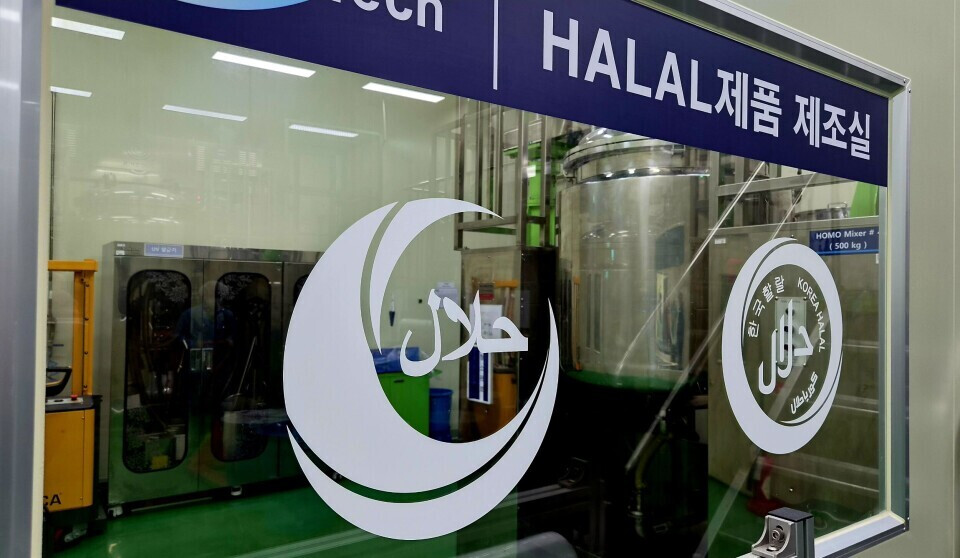
SEOUL — For millions of Muslim women who wear hijabs, the eyes serve as the ultimate focal point of expression. This unique cultural aspect has sparked an unexpected boom for Korean cosmetics, with K-beauty eye creams and Halal-certified beauty products rapidly capturing the hearts of consumers across the Islamic world.
With the global Muslim population reaching approximately 2 billion—roughly 30 percent of whom are young adults aged 15 to 29—Korean cosmetics companies are accelerating their expansion into the Halal market. What started as a niche sector is fast turning into a major growth engine for South Korea’s beauty industry.
Unlike vegan beauty products, which primarily focus on ethical or plant-based ingredients, Halal standards enforce rigorous regulatory controls spanning the entire lifecycle of a product, from raw material sourcing and manufacturing to packaging and distribution.
Manufacturers must strictly prohibit ingredients forbidden under Islamic law. For instance, snail mucin—a popular Korean skincare ingredient known for its moisturizing properties—cannot be used in Halal products and is often replaced with mucin extracted from yams. Production lines require dedicated schedules to prevent cross-contamination, and transport logistics must be equally immaculate.
"The restrictions are so stringent that we cannot even deliver our finished products in a truck that previously carried sausages," said Kim Tae-gon, CEO of Pion-Tech, a South Korean cosmetics manufacturer.
Pion-Tech secured $3 million in Halal cosmetics orders within just two months of receiving its certification in July, driving the company into its busiest operational period since its founding in 2001. "Orders from Islamic countries are coming in faster than we can handle them. Reaching $10 million in Halal orders alone next year is well within our grasp," Kim added.
According to market research firm Future Market Insights, the global Halal cosmetics market expanded from $26.8 billion in 2020 to $53.1 billion last year, and is projected to skyrocket to $152 billion by 2035.
Major original design manufacturers (ODMs) and brands in Korea are aggressively scaling up to meet this surging demand. Around 40 Korean cosmetics companies have secured Halal certification to date.
Cosmax currently manufactures roughly 3,000 types of Halal cosmetics at its facility in Indonesia, with a new factory slated for completion in the first half of next year that will expand its annual capacity to 800 million units. Sales at Cosmax Indonesia surged from 31 billion won ($22.8 million) in 2020 to 113.2 billion won by 2024.
Meanwhile, Kolmar Korea has operated a proprietary "Halal assurance system" since 2020, managing raw material selection, production, and distribution according to strict religious guidelines. This system allows client brands to produce Halal-certified items without undergoing separate certification processes themselves. Kolmar Korea’s Halal cosmetics sales have grown at an annual average of 17.4 percent over the past three years.
Functional skincare items—especially eye creams and wrinkle-care products—stand out as top best-sellers. "Because the eyes remain visible outside the hijab, functional items targeting the eye area enjoy immense popularity in Islamic markets," Pion-Tech's Kim noted.
Beyond religious compliance, Halal beauty products are also gaining traction among non-Muslim consumers drawn to their reputation for rigorous safety standards and clean, plant-based formulations. In some categories, Halal standards are even stricter than vegan standards; while certain vegan cosmetics may contain alcohol, Halal formulations prohibit it entirely.
Lower barriers to entry are further fueling momentum. In the past, Korean companies faced heavy financial burdens, often having to sponsor flights and lodging for overseas inspection teams. Today, the growing presence of domestic Halal certification bodies has significantly reduced these costs.
However, industry experts advise that challenges remain. "Even within the Islamic world, market structures, consumer profiles, and regulatory environments vary significantly by country," said Kang Sung-eun, a senior researcher at the Korea International Trade Association. "Cosmetics brands must adopt a tailored, strategic approach for each local market to sustain this growth."
[Copyright (c) Global Economic Times. All Rights Reserved.]