• 2026.11.11 (Wed)
  • All articles
  • LOGIN
  • JOIN
Global Economic Times
[등록] 2026-09-01 15:48:31
  • Synthesis
  • World
  • Business
  • Industry
  • ICT
  • Distribution Economy
  • Well+Being
    • Pet Life
    • Halal Horizon
  • Travel
  • Eco-News
  • Education
  • Korean Wave News
  • Opinion
  • Arts&Culture
  • Sports
  • People & Life
    • International Student Report
    • With Ambassador
  • Column
    • Cho Kijo Column
    • Cherry Garden Story
    • Ko Yong-chul Column
    • Kim Bong-seon's Photo Column
    • Kim Seul-Ong Column
    • Lee Yeon-sil Column
  • Photo News
  • New Book Guide
MENU
 
Home > Synthesis

Seoul Universities Raise Tuition Fees for First Time in 14 Years

Hwang Sujin Reporter / Updated : 2025-02-02 10:50:47
  • -
  • +
  • Print

Seoul, South Korea – Over 20 universities in the Seoul metropolitan area have increased their tuition fees for the 2025 academic year, breaking a 14-year freeze on tuition hikes. This decision comes as universities face mounting financial pressures and the government loosens regulations on tuition increases.

Widespread Increases
At least 39 universities nationwide have raised their tuition fees, with several Seoul-based institutions leading the charge. Seoul City University, Sungshin Women's University, and Korea University have all implemented increases exceeding 5%. Other prominent universities, such as Yonsei University, Dongguk University, and Chung-Ang University, have also raised their fees by nearly 5%.

Breaking the Freeze
This marks the first time since 2012 that universities have significantly increased tuition fees. The government's policy of withholding national scholarship funds from institutions that raise tuition has effectively frozen fees for over a decade. However, with the rising cost of living and increasing financial strain on universities, the government has relaxed these regulations, allowing for modest increases.

Financial Pressures
Universities have long argued that the tuition freeze has led to significant financial difficulties. They cite rising operating costs, stagnant government funding, and the need to invest in new facilities and programs as reasons for the increases. While some criticize the move, arguing that it will burden students and families, others acknowledge the financial pressures faced by universities.

Future Outlook
Experts predict that more universities will follow suit in the coming years, leading to a gradual increase in tuition fees across the country. The government is exploring ways to increase funding for higher education to alleviate the financial burden on universities and students alike. However, finding a sustainable solution that balances the needs of all stakeholders remains a challenge.

[Copyright (c) Global Economic Times. All Rights Reserved.]

Hwang Sujin Reporter

Popular articles

  • From Kim Whanki to Pokémon Cards... Seoul Auction Opens the Floodgates

  • CGV Unveils October Tech Special Hall Lineup… From Films to K-Pop Live Concerts

  • November Shopping Festival Sparks Retail War in South Korea: Where to Find the Best Deals

I like it
Share
  • Facebook
  • X
  • Kakaotalk
  • LINE
  • BAND
  • NAVER
  • https://www.globaleconomictimes.kr/article/1065577780397175 Copy URL copied.
Comments >

Comments 0

Weekly Hot Issue

  • Bridging Distances: Africa and the Middle East Korean Communities Forge Historic Regional Alliance in Addis Ababa
  • Beyond the Clean Bill of Health: Why You Still Feel Unwell After Normal Test Results
  • Echoes of Baek Seok in Dalian: A Poetry Recital Bridging Divides and Generations
  • Global Fossil Fuel Carbon Emissions Expected to Drop by 0.4% Despite Economic Growth
  • South Korea's Real Estate Sector Emphasizes Human Trust Amid AI Integration
  • Korea’s Trade Insurer Fuels Record-Breaking Export Drive with 100 Trillion Won in SME Support

Most Viewed

1
South Korea and Ethiopia Sign Trilateral MOU to Introduce Liquid-Based Cytology (LBC) Technology for Cervical Cancer Diagnosis
2
US Army Conducts Rare Temporary Burial Drills to Prepare for Worst-Case Large-Scale War Scenarios
3
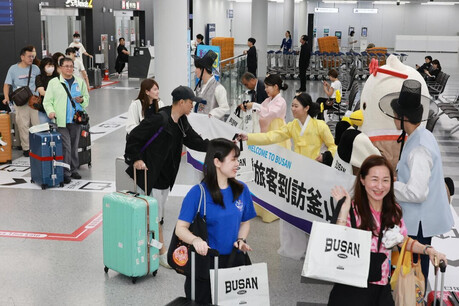
World Citizens are Flying Directly to Busan... The Era of 4 Million Foreigners is Just Around the Corner
4
From Kim Whanki to Pokémon Cards... Seoul Auction Opens the Floodgates
5
Eating 100g of Baechu Kimchi Daily Linked to Lower High-Cholesterol Risks
체리가든 스토리
nutri huevos
로타리
동포저널

Hot Issue

LG Electronics and Skyscanner Partner to Bring Smart Travel Planning to Living Rooms

Regional Tourism in South Korea Struggles as Infrastructure Lags Behind Inbound Airport Growth

Miky Lee Honored with Asian Hall of Fame’s Centennial Medal for Pioneering Global K-Culture

Fashion Runway Show 2026

Let’s recycle the old blankets in Jeju Island’s closet instead of incinerating them.

Global Economic Times
korocamia@naver.com
CEO : LEE YEON-SIL
Publisher : KO YONG-CHUL
Registration number : Seoul, A55681
Registration Date : 2024-10-24
Youth Protection Manager: KO YONG-CHUL
Singapore Headquarters
5A Woodlands Road #11-34 The Tennery. S'677728
Korean Branch
Phone : +82(0)10 4724 5264
#304, 6 Nonhyeon-ro 111-gil, Gangnam-gu, Seoul
Copyright © Global Economic Times All Rights Reserved
  • News K
  • 반달곰 프로젝트
  • 광고문의
Search
Category
  • All articles
  • Synthesis
  • World
  • Business
  • Industry
  • ICT
  • Distribution Economy
  • Well+Being 
    • 전체
    • Pet Life
    • Halal Horizon
  • Travel
  • Eco-News
  • Education
  • Korean Wave News
  • Opinion
  • Arts&Culture
  • Sports
  • People & Life 
    • 전체
    • International Student Report
    • With Ambassador
  • Column 
    • 전체
    • Cho Kijo Column
    • Cherry Garden Story
    • Ko Yong-chul Column
    • Kim Bong-seon's Photo Column
    • Kim Seul-Ong Column
    • Lee Yeon-sil Column
  • Photo News
  • New Book Guide
  • Overseas Koreans
  • Multicultural News