• 2025.12.15 (Mon)
  • All articles
  • LOGIN
  • JOIN
Global Economic Times
APEC2025KOREA가이드북
  • Synthesis
  • World
  • Business
  • Industry
  • ICT
  • Distribution Economy
  • Well+Being
  • Travel
  • Eco-News
  • Education
  • Korean Wave News
  • Opinion
  • Arts&Culture
  • Sports
  • People & Life
  • Column
    • Cho Kijo Column
    • Lee Yeon-sil Column
    • Ko Yong-chul Column
    • Cherry Garden Story
  • Photo News
  • New Book Guide
MENU
 
Home > Synthesis

South Korea's Birth Rate Sees Uptick, Ending Years-Long Decline

Desk / Updated : 2024-12-29 11:25:03
  • -
  • +
  • Print

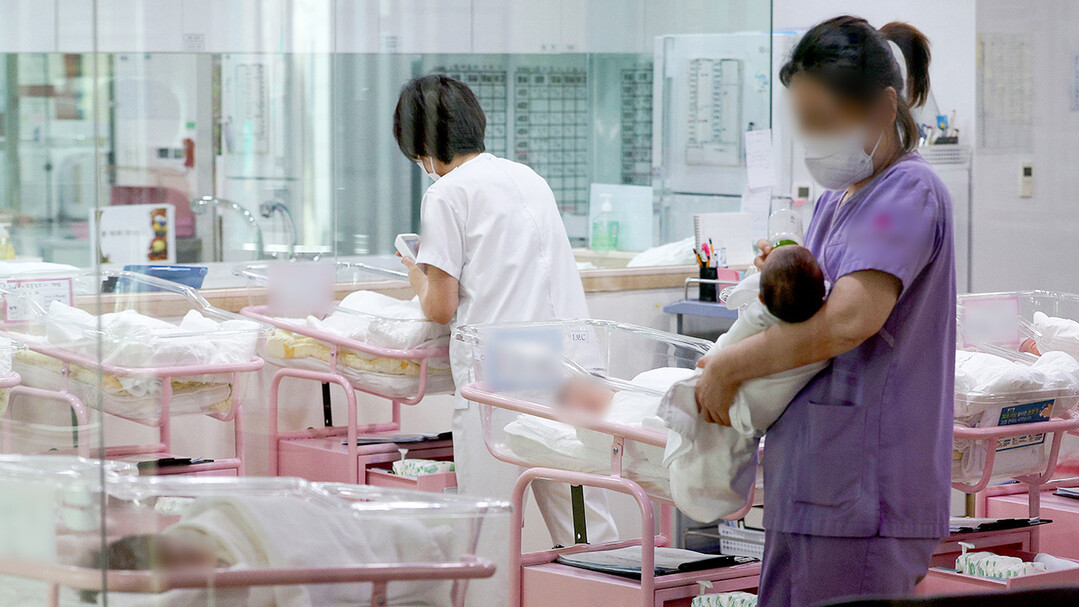
Seoul, South Korea – In a surprising turn of events, South Korea's long-standing declining birth rate appears to be reversing course. According to data released by the Statistics Korea, the country experienced a significant increase in births in October 2024, marking the largest monthly increase in 14 years.

The uptick in births can be attributed in part to a surge in marriages following the COVID-19 pandemic. As restrictions eased, couples began tying the knot in greater numbers, and the subsequent increase in births is now being observed. Additionally, the relatively large population of individuals born in the early 1990s, often referred to as the "second baby boom generation," is reaching childbearing age, contributing to the recent rise in births.

The government's efforts to support families and encourage childbearing are also believed to be playing a role. Initiatives such as expanded childcare subsidies and increased parental leave have made it easier for couples to start families.

"This is a promising development," said [Name], a demographer at [University]. "While it's too early to say whether this is a sustained trend, the data suggests that South Korea may be turning a corner on its declining fertility rate."

Despite the positive news, experts caution that it may take several years to determine if this upward trend will continue. A variety of factors, including economic conditions, social attitudes, and government policies, can influence birth rates.

The government has set ambitious goals to increase the birth rate and address the country's aging population. However, the success of these efforts will depend on a combination of factors, including making it easier for women to balance work and family life, providing affordable childcare, and addressing the high cost of living.

The recent increase in South Korea's birth rate offers a glimmer of hope for a country grappling with a rapidly aging population. While it remains to be seen whether this trend will continue, the data suggests that government policies, demographic changes, and a shift in societal attitudes may be contributing to a more positive outlook for the future.

[Copyright (c) Global Economic Times. All Rights Reserved.]

  • #globaleconomictimes
  • #seoulkorea
  • #periodicoeconomico
  • #글로벌이코노믹타임즈
  • #GET
  • #GETtv
  • #한국기업
  • #한국기술
  • #대한민국
  • #coreadelsur
  • #재외
Desk
Desk

Popular articles

  • Korean Fashion Brands Set Sights on China: Dunst Opens Pop-up in Shanghai

  • Alliance in a Dilemma: The Fallout of Trump's Advice to Takaichi Not to 'Provoke Taiwan' 

  • South Korea Lauded as 'Model Ally' After Committing to 3.5% GDP Defense Spending

I like it
Share
  • Facebook
  • X
  • Kakaotalk
  • LINE
  • BAND
  • NAVER
  • https://www.globaleconomictimes.kr/article/1065579816221197 Copy URL copied.
Comments >

Comments 0

Weekly Hot Issue

  • South Korea Launches $115 Million Export Voucher Program to Boost SME Global Reach
  • Extension Granted for '2026 Honors for SME Contributors' Application
  • 44% of Recent Construction Projects Report Deficits, Industry Survey Finds
  • South Korean AI Models Flunk College Entrance Math Exams, Lagging Far Behind Global Leaders
  • KRX Temporarily Slashes Stock Trading Fees by 20-40% to Counter ATS Rival
  • Lotte Mart Launches Major Imported Fruit Discount Event Amid High Prices

Most Viewed

1
Choi Bun-do, Chairman of PTV Group, Assumes Presidency of the Korean Chamber of Commerce and Industry in South Central Vietnam
2
From Court to Content: French Tennis Star Océane Dodin Trades Racquet for OnlyFans, Eyes $5M in a Year
3
Lee Dismisses Vice Minister Amid Allegations of Misconduct and Vetting Gaps
4
NVIDIA Lobby Succeeds? U.S. Bill Expected to Drop AI Chip Export Restrictions
5
US Layoffs Surge: Over 1.17 Million Job Cuts Announced in First 11 Months of 2025
광고문의
임시1
임시3
임시2

Hot Issue

South Korean AI Models Flunk College Entrance Math Exams, Lagging Far Behind Global Leaders

KRX Temporarily Slashes Stock Trading Fees by 20-40% to Counter ATS Rival

Israel Condemns Australia After Sydney Shooting, Citing 'Fueling' of Anti-Semitism

Lotte Mart Launches Major Imported Fruit Discount Event Amid High Prices

Let’s recycle the old blankets in Jeju Island’s closet instead of incinerating them.

Global Economic Times
korocamia@naver.com
CEO : LEE YEON-SIL
Publisher : KO YONG-CHUL
Registration number : Seoul, A55681
Registration Date : 2024-10-24
Youth Protection Manager: KO YONG-CHUL
Singapore Headquarters
5A Woodlands Road #11-34 The Tennery. S'677728
Korean Branch
Phone : +82(0)10 4724 5264
#304, 6 Nonhyeon-ro 111-gil, Gangnam-gu, Seoul
Copyright © Global Economic Times All Rights Reserved
  • 에이펙2025
  • APEC2025가이드북TV
  • 독도는우리땅
Search
Category
  • All articles
  • Synthesis
  • World
  • Business
  • Industry
  • ICT
  • Distribution Economy
  • Well+Being
  • Travel
  • Eco-News
  • Education
  • Korean Wave News
  • Opinion
  • Arts&Culture
  • Sports
  • People & Life
  • Column 
    • 전체
    • Cho Kijo Column
    • Lee Yeon-sil Column
    • Ko Yong-chul Column
    • Cherry Garden Story
  • Photo News
  • New Book Guide
  • Multicultural News
  • Jobs & Workers