![[등록] 2026-09-01 15:48:31](/support/_updata/banner2/tl181982910_6749.png)


(C) Pixabay
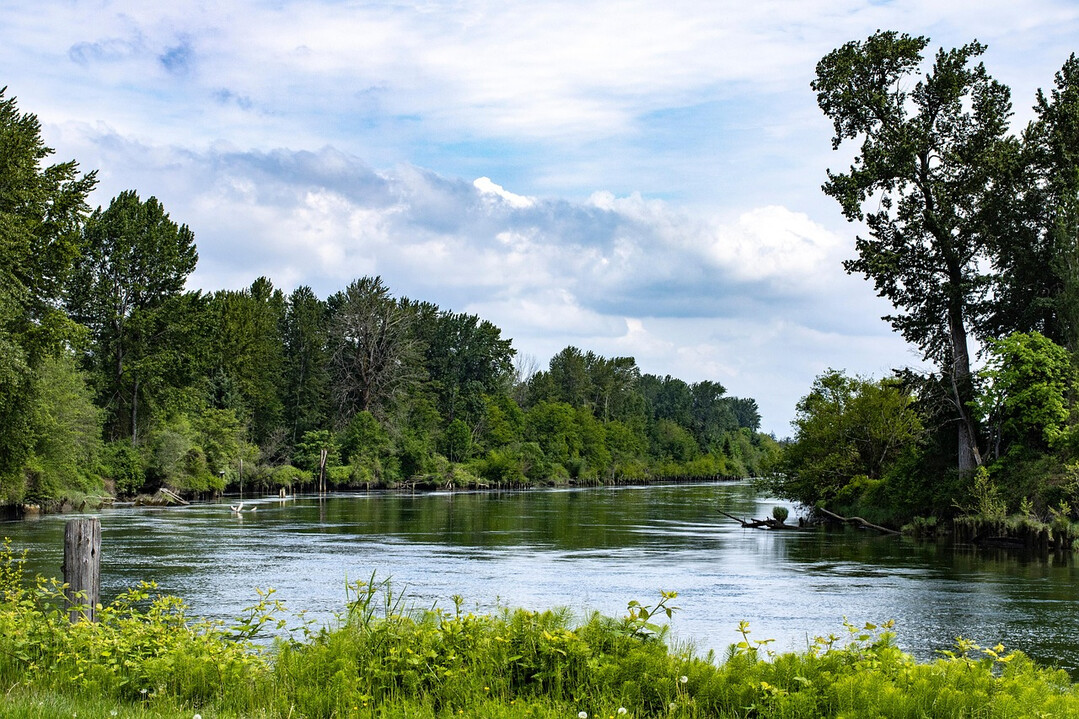
The Mississippi River originates in Lake Itasca, Minnesota, flows through several states, and finally enters the Gulf of Mexico near New Orleans, Louisiana, carrying 500 million tons of sediment every year. Due to this, it is not a clear blue river, but is called the "Big Muddy," a river resembling the Yellow River. At the estuary in New Orleans, there is a huge delta, and what appear to be lush reed beds along the riverbanks turn out to be sugarcane fields. Consequently, there are sugar factories on the riverside, and the sugar produced there is shipped by boat. ASR Group’s Chalmette refinery makes the famous Domino sugar.
For the past few hundred years, sugar has been a precious commodity, leading to the worldwide planting of sugarcane and production of sugar. In Korea, sugar refineries were established only after the war. Living in the countryside, I first tasted sugar in the 60s. Until then, sweetness was achieved by dissolving a medicinal-looking white grain called "saccharin." Until the 70s, sugar was a popular holiday gift. Nowadays, it is treated with caution due to diabetes and obesity, but the temptation of sweetness is hard to resist. Sugar is widely used to make 'enzymes' (fermented fruit syrups) by mixing it 1:1 with various fruits. The best of these is probably maesil-cheong (Korean plum syrup). Bokbunja (Korean black raspberry) or other fruits are sometimes preserved in sugar to make fruit wine.
In New Orleans, the French Quarter is a district that preserves one former French colonial area exactly as it was. If you exit the back door of the nearby Hilton Hotel, the former riverside fish market has been well-renovated and transformed into a modern shopping arcade called Riverwalk. The long arcade building houses a food court and a shopping mall. You should try crawfish, which is a local specialty. It is palatable.
The painful scars of Hurricane Katrina in 2005 have healed, but all I see are the beautiful, mature oak trees planted as street trees and the sugarcane fields on the outskirts. On the west side of the river, the West Bank, if you go up along the riverside for a while, you will find the “Oak Alley Plantation” where 28 magnificent oak trees stand in a row. Beyond the huge two-story mansion at the end of the alley, there are small houses on the farm, slave quarters, hastily built with planks. They resemble stables.
The type of farming called plantation agriculture is a collective farm. It was a farm where over 100 slaves worked. It is now preserved as a historical site and charges an entrance fee as a tourist attraction. Slaves were used for the labor of planting, cultivating, cutting, chopping, crushing, and juicing the sugarcane—which grows up to 4 meters tall—and then boiling the juice to make highly sweet sugar. Since it was a cottage industry, the slaves were fed like cattle and severely overworked. Iron shackles were placed on their ankles to prevent them from running away, and they were whipped if they were slow. They were also killed if they ran away.
I took a night cruise on the Mississippi River. It is called a steamboat, and it goes out, turning a paddlewheel with steam and sounding a thunderous ship's whistle. We went upstream as the evening glow faded, and only drifted back down on the flowing river after it got dark. In the cabin, I ordered a traditional meal seasoned with Creole seasoning. Creole originally refers to the descendants of Europeans born in the colonies, but it has come to encompass people of mixed European, African, and Native American descent, and everything they eat, drink, and enjoy. Here, Black spirituals, blues, and jazz are also Creole. Holding a glass of wine, I went up to the deck, and the river breeze was cool. The strong band's jazz performance was resounding, but only the ear-splitting sound of the small trumpet was clamorous. The long trombone and the enormous sousaphone were powerless. Darn! In music too, loudness rules. It sounds like a desperate scream and noise.
In “The Adventures of Huckleberry Finn,” which I read in elementary school, Finn meets and develops affection for Jim, a runaway Black slave hiding. Uncle Jim was a very kind, talented, gentle soul. This is a story from this place 140 years ago. Slavery has disappeared. However, there are countless slaves everywhere. Most are slaves to money and slaves to greed. They want to play or earn a little but spend a lot. That is a scoundrel (bulhandang). Animals that try to steal and eat the prey caught by others range from tiny insects to four-legged beasts, and up to two-handed, two-footed creatures. There are countless 'vermin' fiercely taking and eyeing things right now. The history of humankind is filled with a history of invasion and a history of theft. If you cannot protect it, you die or become a slave. Misinterpreted, freedom is not free. (Freedom is not free.) You must risk your life to protect it.
[Copyright (c) Global Economic Times. All Rights Reserved.]