• 2026.05.08 (Fri)
  • All articles
  • LOGIN
  • JOIN
Global Economic Times
fashionrunwayshow2026
  • Synthesis
  • World
  • Business
  • Industry
  • ICT
  • Distribution Economy
  • Well+Being
  • Travel
  • Eco-News
  • Education
  • Korean Wave News
  • Opinion
  • Arts&Culture
  • Sports
  • People & Life
    • International Student Report
    • With Ambassador
  • Column
    • Cho Kijo Column
    • Cherry Garden Story
    • Ko Yong-chul Column
    • Kim Seul-Ong Column
    • Lee Yeon-sil Column
  • Photo News
  • New Book Guide
MENU
 
Home > Industry

Seoul's Most Expensive Apartments Remain in 'Land Transaction Permit Zones'

Hwang Sujin Reporter / Updated : 2025-02-04 11:47:54
  • -
  • +
  • Print

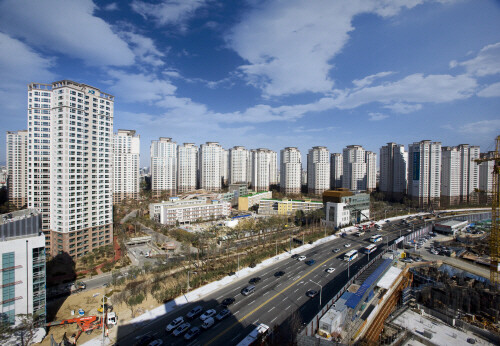
Seoul - An analysis of apartment sales prices in Seoul over the past decade has revealed that the most expensive areas remain concentrated in the city's 'Land Transaction Permit Zones'. These zones, designated to curb speculation and price surges, include the sought-after Gangnam, Seocho, and Songpa districts, as well as Yongsan district.

According to data from the real estate platform 'Dabang', the average price per 3.3㎡ (approximately 36 square feet) in Seocho district reached a staggering 92.85 million won (approximately 70,000 USD) in 2024. This represents a remarkable 209% increase from 2014. Gangnam district followed closely behind with 91.45 million won per 3.3㎡.

The other two districts included in the Land Transaction Permit Zones, Yongsan and Songpa, also boasted high average prices of 74.77 million won and 67.62 million won per 3.3㎡, respectively. These zones require buyers to obtain permission from the local government for property transactions and impose strict conditions, such as mandatory residence and restrictions on speculative investments.

Seven other districts in Seoul recorded average prices exceeding 50 million won per 3.3㎡, while Dobong district had the lowest average price at 25.94 million won.

Over the past 10 years, the most significant price increases were observed in Seongdong district (199%), followed by Yongsan (187%) and Mapo (176%) districts. Gangnam district also saw a substantial rise of 169%.

The average price in the Gangnam, Seocho, and Songpa districts last year was 82.51 million won per 3.3㎡, nearly double the average price in other Seoul districts.

A representative from Dabang noted that while apartment prices in areas outside the Gangnam, Seocho, and Songpa districts experienced a slight lull in the past few years, the overall trend in Seoul's apartment market has been upward over the past decade.

This analysis highlights the enduring appeal of Seoul's Land Transaction Permit Zones, particularly the Gangnam area, despite the stringent regulations in place. The high demand and limited supply continue to drive prices up, making these districts the most expensive places to live in the city.

[Copyright (c) Global Economic Times. All Rights Reserved.]

Hwang Sujin Reporter

Popular articles

  • BYD Hits 10,000-Unit Milestone in South Korea Within One Year, Eyes Exclusive "10,000 Club" Entry

  • South Korean Financial Groups Surpass ₩4,000 Trillion in Total Assets; Net Profit Hits ₩26.7 Trillion Amid Stock Market Rally

  • Generative AI Use Triples Among Seoul Citizens, but Digital Divide Persists for Seniors

I like it
Share
  • Facebook
  • X
  • Kakaotalk
  • LINE
  • BAND
  • NAVER
  • https://www.globaleconomictimes.kr/article/1065581190169235 Copy URL copied.
Comments >

Comments 0

Weekly Hot Issue

  • Samsung Electronics Shifts Strategy in China: Moving from Hardware Sales to Platform-Based Business
  • Banking War 2.0: South Korean Banks Race to Transition into 'AI-First' Institutions
  • Tesla Model Y Becomes First to Pass Grueling New U.S. Autonomous Safety Tests
  • Celltrion’s Zymfentra Sees Explosive 300% Growth, Hits Record Quarterly Prescriptions in the U.S.
  • BMW Korea Ignites May with Exclusive 9-Model Online Limited Edition Lineup
  • Hyundai Mobis Completes Independent EV 'Heart' Lineup: A Major Leap Toward Global Leadership in Power Electric Systems

Most Viewed

1
Iran Imposes Transit Fees on Strait of Hormuz Amid Escalating Maritime Tensions
2
Korea and Vietnam Forge Strategic Partnership in Science, Technology, and Innovation
3
80% of Enterprises Hit by 'AI Agent Anomalies': SailPoint Calls for Integrated Identity Governance
4
Kurly Abandons 'All-Paper' Packaging Strategy Amid Rising Cost Pressures
5
Tradition Meets the Public: Chungju’s Gugak Busking
광고문의
임시1
임시3
임시2

Hot Issue

Tensions Flare in Strait of Hormuz: U.S.-Iran Clashes Threaten Fragile Truce

Tesla Model Y Becomes First to Pass Grueling New U.S. Autonomous Safety Tests

U.S. Trade Court Strikes Down Trump’s ‘Global 10% Tariff,’ Citing Executive Overreach

Hyundai Motor Group Bets $700 Million on Mexico Amid Trade Policy Volatility

Fashion Runway Show 2026

Global Economic Times
korocamia@naver.com
CEO : LEE YEON-SIL
Publisher : KO YONG-CHUL
Registration number : Seoul, A55681
Registration Date : 2024-10-24
Youth Protection Manager: KO YONG-CHUL
Singapore Headquarters
5A Woodlands Road #11-34 The Tennery. S'677728
Korean Branch
Phone : +82(0)10 4724 5264
#304, 6 Nonhyeon-ro 111-gil, Gangnam-gu, Seoul
Copyright © Global Economic Times All Rights Reserved
  • 에이펙2025
  • APEC2025가이드북TV
  • 반달곰 프로젝트
Search
Category
  • All articles
  • Synthesis
  • World
  • Business
  • Industry
  • ICT
  • Distribution Economy
  • Well+Being
  • Travel
  • Eco-News
  • Education
  • Korean Wave News
  • Opinion
  • Arts&Culture
  • Sports
  • People & Life 
    • 전체
    • International Student Report
    • With Ambassador
  • Column 
    • 전체
    • Cho Kijo Column
    • Cherry Garden Story
    • Ko Yong-chul Column
    • Kim Seul-Ong Column
    • Lee Yeon-sil Column
  • Photo News
  • New Book Guide
  • Multicultural News
  • Jobs & Workers