• 2026.03.22 (Sun)
  • All articles
  • LOGIN
  • JOIN
Global Economic Times
fashionrunwayshow2026
  • Synthesis
  • World
  • Business
  • Industry
  • ICT
  • Distribution Economy
  • Well+Being
  • Travel
  • Eco-News
  • Education
  • Korean Wave News
  • Opinion
  • Arts&Culture
  • Sports
  • People & Life
    • International Student Report
    • With Ambassador
  • Column
    • Cho Kijo Column
    • Cherry Garden Story
    • Ko Yong-chul Column
    • Kim Seul-Ong Column
    • Lee Yeon-sil Column
  • Photo News
  • New Book Guide
MENU
 
Home > World

Switzerland's "Blue Gold": From Europe's Dirtiest Waters to Pristine Urban Sanctuaries

Desk / Updated : 2025-03-25 11:52:47
  • -
  • +
  • Print

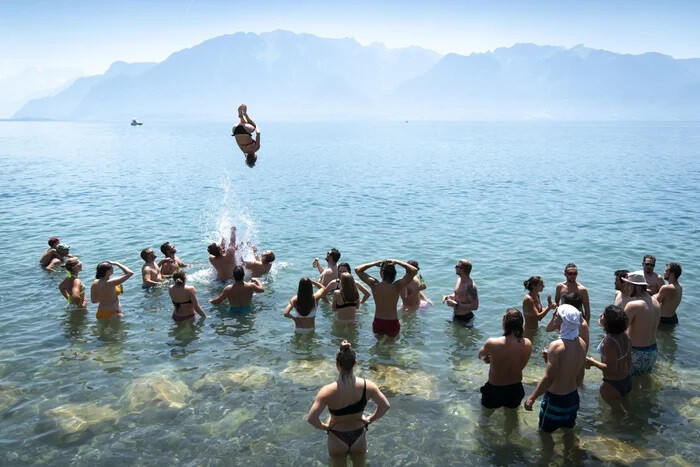
Geneva, Switzerland - In the heart of Geneva, where luxury boutiques overlook the shimmering expanse of Lake Geneva, a remarkable transformation is taking place. Once notorious for some of Europe's most polluted waters, Switzerland now boasts crystal-clear rivers and lakes, attracting swimmers and nature enthusiasts alike.

Decades ago, the scene was starkly different. In the 1960s, Swiss waterways were plagued by algal blooms, foam, and dead fish, rendering them hazardous to public health. Swimming was banned in many rivers, and raw sewage flowed directly into water bodies. Today, however, the transformation is palpable.   

"It's just so fun," says René Rottenberg, a 75-year-old retired gynaecologist, who swims in Lake Geneva up to five times a week. "The place is beautiful." Rottenberg is a member of Les Givrés, a swimming club that braves the 8°C waters even in winter, highlighting the city's newfound aquatic allure.

This dramatic shift is the result of a concerted national effort. A pivotal moment came after a typhoid outbreak in Zermatt in 1963, which spurred the government to enact stringent wastewater treatment laws. By 1971, wastewater treatment was enshrined in Swiss law, leading to today's impressive statistic: 98% of the population is connected to advanced wastewater treatment plants, up from a mere 14% in 1965.

The Swiss government's commitment is evident in its substantial investment, spending an average of £174 per person on wastewater treatment in 2022, compared to approximately £90 in England and Wales. This investment has paid off, with Switzerland now leading the world in purifying micropollutants, including pharmaceuticals and other chemicals that conventional treatments often miss.

"Very high water quality is important to the population," explains Michael Mattle, head of wastewater technology at Holinger. "We take a lot of care not to pollute water on its way through Switzerland."

The Villette wastewater treatment plant in Geneva exemplifies this commitment. Using advanced filtration and activated charcoal, it removes 80% of micropollutants, setting a global standard. By 2040, Switzerland aims to have 140 such plants.   

This pioneering work has drawn attention from neighboring countries, with wastewater experts from France, Italy, and Belgium visiting Swiss facilities to learn from their methods. The EU has also taken note, mandating micropollutant removal in wastewater treatment plants serving over 10,000 people by 2045.

Despite the high costs, the benefits are clear. "I think Swiss people are proud of their water," says Mattle. "It helps citizens enjoy a healthy and joyful life."

The transformation is evident on the shores of Lake Geneva, where people gather to swim, socialize, and enjoy the pristine waters. As Pascal Baudin, a member of Les Givrés, puts it, "We are united by a love of water. Here is the ideal medicine – cold water and friends."

Switzerland's journey from environmental crisis to aquatic paradise serves as a powerful example for other nations striving to clean their waterways, demonstrating that with commitment and investment, even the most polluted waters can be restored to their natural beauty.

[Copyright (c) Global Economic Times. All Rights Reserved.]

  • #globaleconomictimes
  • #글로벌이코노믹타임즈
  • #한국
  • #중기청
  • #재외동포청
  • #외교부
  • #micorea
  • #mykorea
  • #newsk
  • #nammidonganews
  • #singaporenewsk
Desk
Desk

Popular articles

  • The Coronation of a New Queen: Kim Gil-li Clinches Double Gold, While a Tearful Farewell Marks the End of an Era

  • US House Probes Coupang Over ‘Discriminatory’ Korean Regulations: Potential Catalyst for Section 301 Investigation?

  • South Korea’s Bakery Giants Slash Prices as Government Ramps Up Pressure on Food Inflation

I like it
Share
  • Facebook
  • X
  • Kakaotalk
  • LINE
  • BAND
  • NAVER
  • https://www.globaleconomictimes.kr/article/1065581510843608 Copy URL copied.
Comments >

Comments 0

Weekly Hot Issue

  • Coway Clinches Top Honor at "Water Taste Awards" for 7th Consecutive Year
  • HP Targets Korea as Strategic Hub for 'Edge AI' Expansion, Seeking Startup Partnerships
  • Pearl Abyss’s 'Crimson Desert' Shatters Records with 2 Million Copies Sold on Day One
  • "BTS Over Books?" Indian Academies Issue Emergency Notices as Students Plot Mass Absences for Comeback Live
  • Naver to Shut Down Men's Fashion Service 'MR.' to Launch Expanded AI-Driven Fashion Platform
  • JBNU and SKKU Researchers Achieve Breakthrough in "Dream Material" MXene, Setting New World Records in Performance

Most Viewed

1
An Open Letter to BTS On the Eve of a Historic Performance
2
From Industrial Capital to Tourism Mecca... Ulsan Makes a Bold Move with ‘Experiential Content’ in 2026
3
Ko Sang-goo, President of World Federation of Korean Associations, Elected as First Private Sector Chair of World Korean Community Leaders Convention
4
It is Time for BTS’s Fandom, ARMY, to Step Forward
5
Korean Stock Market Plunges: Circuit Breaker and Sidecar Triggered Amid Geopolitical Crisis
광고문의
임시1
임시3
임시2

Hot Issue

Vishay Unveils Ultra-Compact 0404 RGB LED with Independent Chip Control for Enhanced Color Precision

Coway Clinches Top Honor at "Water Taste Awards" for 7th Consecutive Year

AI Medical Ecosystem in Focus: KIMES 2026 Opens in Seoul as Global Healthcare Hub

Netanyahu Declares Decisive Blow to Iran’s Nuclear and Missile Programs, Signals Early End to War

Let’s recycle the old blankets in Jeju Island’s closet instead of incinerating them.

Global Economic Times
korocamia@naver.com
CEO : LEE YEON-SIL
Publisher : KO YONG-CHUL
Registration number : Seoul, A55681
Registration Date : 2024-10-24
Youth Protection Manager: KO YONG-CHUL
Singapore Headquarters
5A Woodlands Road #11-34 The Tennery. S'677728
Korean Branch
Phone : +82(0)10 4724 5264
#304, 6 Nonhyeon-ro 111-gil, Gangnam-gu, Seoul
Copyright © Global Economic Times All Rights Reserved
  • 에이펙2025
  • APEC2025가이드북TV
  • 독도는우리땅
Search
Category
  • All articles
  • Synthesis
  • World
  • Business
  • Industry
  • ICT
  • Distribution Economy
  • Well+Being
  • Travel
  • Eco-News
  • Education
  • Korean Wave News
  • Opinion
  • Arts&Culture
  • Sports
  • People & Life 
    • 전체
    • International Student Report
    • With Ambassador
  • Column 
    • 전체
    • Cho Kijo Column
    • Cherry Garden Story
    • Ko Yong-chul Column
    • Kim Seul-Ong Column
    • Lee Yeon-sil Column
  • Photo News
  • New Book Guide
  • Multicultural News
  • Jobs & Workers