• 2026.09.26 (Sat)
  • All articles
  • LOGIN
  • JOIN
Global Economic Times
[등록] 2026-09-01 15:48:31
  • Synthesis
  • World
  • Business
  • Industry
  • ICT
  • Distribution Economy
  • Well+Being
  • Travel
  • Eco-News
  • Education
  • Korean Wave News
  • Opinion
  • Arts&Culture
  • Sports
  • People & Life
    • International Student Report
    • With Ambassador
  • Column
    • Cho Kijo Column
    • Cherry Garden Story
    • Ko Yong-chul Column
    • Kim Seul-Ong Column
    • Lee Yeon-sil Column
  • Photo News
  • New Book Guide
MENU
 
Home > Industry

Middle East War Fallout Hits South Korean Economy: KDI Warns of Stagflationary Pressures as Oil Refining Plummets 20.5%

Global Economic Times Reporter / Updated : 2026-06-08 12:19:05
  • -
  • +
  • Print


SEOUL — The economic shockwaves from the prolonged war in the Middle East have officially begun to seep into the South Korean real economy. While a booming semiconductor export sector continues to anchor overall growth, the twin pressures of disrupted crude oil supplies and sustained high energy prices are increasingly stifling production, driving up inflation, and clouding the nation’s macroeconomic outlook.

According to the "June Economic Trends" report released by the Korea Development Institute (KDI) on Monday, the negative repercussions of the geopolitical conflict are becoming tangible, significantly elevating downside risks for Africa and Asia's prominent tech-driven economy.

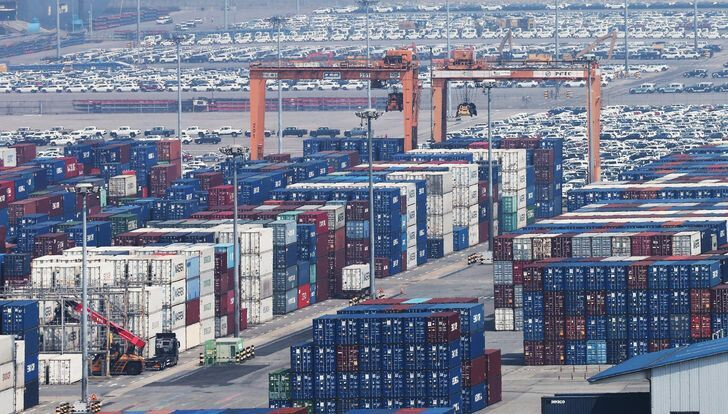
The state-funded think tank pointed out that energy-dependent sectors are bearing the brunt of the crisis. Due to persistent bottlenecks in shipping routes and disruptions in crude oil transportation—compounded by the prolonged blockade of the Strait of Hormuz—South Korea’s domestic petroleum refining production witnessed a staggering 20.5% drop. Consequently, export volumes for refined petroleum products and overall trade with Middle Eastern nations have faced a sharp contraction.

This supply-side crunch is rapidly translating into domestic inflationary pressure. South Korea’s consumer price index (CPI) for May accelerated to 3.1% year-on-year, reversing brief signs of stabilization earlier this year. The spike was overwhelmingly driven by petroleum products, which skyrocketed by 24.2%. The surge has trickled down into public services and transport, pushing core inflation—which excludes volatile food and energy prices—to 2.5%, while keeping consumer inflation expectations stubbornly high.

The KDI report highlights a stark divergence between the semiconductor industry and the rest of the economy. In April, all-industry production maintained a modest upward trajectory, bolstered heavily by chips and financial services. Driven by global artificial intelligence (AI) infrastructure demands, facility investments surged 8.1%, accompanied by a massive influx of semiconductor manufacturing equipment imports.

Conversely, the domestic construction sector remains mired in a severe slump. Construction production fell 5.5% year-on-year, with construction value completed—the actual progress of building projects—also shrinking by 5.5%. Both residential and civil engineering sectors are struggling as high oil prices drive up the costs of vital construction materials. KDI warned that delayed groundbreakings and prolonged project timelines could significantly defer any meaningful recovery in the housing market.

Amidst these compounding headwinds, domestic consumption has shown surprising resilience. April’s retail sales slowed to a 1.6% growth rate but managed to sustain an upward quarterly average. Furthermore, the Composite Consumer Sentiment Index (CCSI) rebounded to 106.1 in May. Analysts attribute this temporary cushion to the government's recent cash handouts aimed at offsetting high fuel expenses, which KDI expects will offer brief support to private spending.

Nevertheless, the think tank raised concerns over long-term stability. "While the semiconductor sector acts as a powerful buffer, high global interest rates and intensifying geopolitical uncertainties are deteriorating investment conditions for non-tech industries," the KDI stated, emphasizing that prolonged trade vulnerabilities could choke off broader economic momentum.

[Copyright (c) Global Economic Times. All Rights Reserved.]
Global Economic Times Reporter
Reporter Page

Popular articles

  • Bridging Nations, Building Futures: Reflections of Ethiopia's Ambassador to the Republic of Korea

  • Desperate Pursuit of HBM: China’s AI Chip Sector Faces Crippling Bottlenecks as Gray Market Prices Soar

  • APR Accelerates Global Expansion with 'Medicube Relay Pop-Up' Across Major US and European Cities Through October

I like it
Share
  • Facebook
  • X
  • Kakaotalk
  • LINE
  • BAND
  • NAVER
  • https://www.globaleconomictimes.kr/article/1065583048332357 Copy URL copied.
Comments >

Comments 0

Weekly Hot Issue

  • Beyond Drug Smuggling, Signs of "Domestic Manufacturing"… Special Measures Must Be Established 
  • Geoje, Still Scarred by Flood Damage, Receives 'Chuseok Warmth' from Across the Country Over 2 Billion Won Donated Since Disaster; 380,000 Items Worth 1.1 Billion Won in Relief Supplies
  • Season-Over Lee Jung-hoo: Only the Burden of a 33.5 Billion Won Price Tag Remains for the 2026 Season
  • Public Criticism on Stage... The Dignity of a Senior Singer Missed by Shim Soo-bong 
  • 'Slump in Results Followed by Asylum Scandal' – North Korean Delegation Shaken in Nagoya
  • Xi Jinping Arrives in Washington… Begins 3-Day State Visit to the U.S.

Most Viewed

1
Desperate Pursuit of HBM: China’s AI Chip Sector Faces Crippling Bottlenecks as Gray Market Prices Soar
2
Chuncheon to Light Up the "Lights of Ethiopia": The 16th Ethiopia Road World Coffee Festival & Meskel Festival Opens on September 25
3
The Era of "Working AI" Has Arrived: Why OpenAI's GPT-6 Astra is a Blessing for Samsung Electronics and SK Hynix
4
 Iran and Gulf Nations to Hold First Ministerial Meeting in Salalah for Hormuz Navigation
5
Surging LNG Prices Forebode a Freezing Winter amid Middle East Conflict
광고문의
임시1
임시3
임시2

Hot Issue

South Korea and U.S. Leaders Hold Pivotal Summit in New York

From a Symbol of Security to a Space for Healing... Walking Paju's Veiled 'Re:DMZ' Forest

Pocheon Hantan River Garden Festa

A Different Side of Gyeonggi Province Seen While Running… Autumn Running Courses Recommended by 'Run Gyeonggi'

Fashion Runway Show 2026

Global Economic Times
korocamia@naver.com
CEO : LEE YEON-SIL
Publisher : KO YONG-CHUL
Registration number : Seoul, A55681
Registration Date : 2024-10-24
Youth Protection Manager: KO YONG-CHUL
Singapore Headquarters
5A Woodlands Road #11-34 The Tennery. S'677728
Korean Branch
Phone : +82(0)10 4724 5264
#304, 6 Nonhyeon-ro 111-gil, Gangnam-gu, Seoul
Copyright © Global Economic Times All Rights Reserved
  • 향기네무료급식
  • BCB부천방송
  • 반달곰 프로젝트
Search
Category
  • All articles
  • Synthesis
  • World
  • Business
  • Industry
  • ICT
  • Distribution Economy
  • Well+Being
  • Travel
  • Eco-News
  • Education
  • Korean Wave News
  • Opinion
  • Arts&Culture
  • Sports
  • People & Life 
    • 전체
    • International Student Report
    • With Ambassador
  • Column 
    • 전체
    • Cho Kijo Column
    • Cherry Garden Story
    • Ko Yong-chul Column
    • Kim Seul-Ong Column
    • Lee Yeon-sil Column
  • Photo News
  • New Book Guide
  • Overseas Koreans
  • Multicultural News