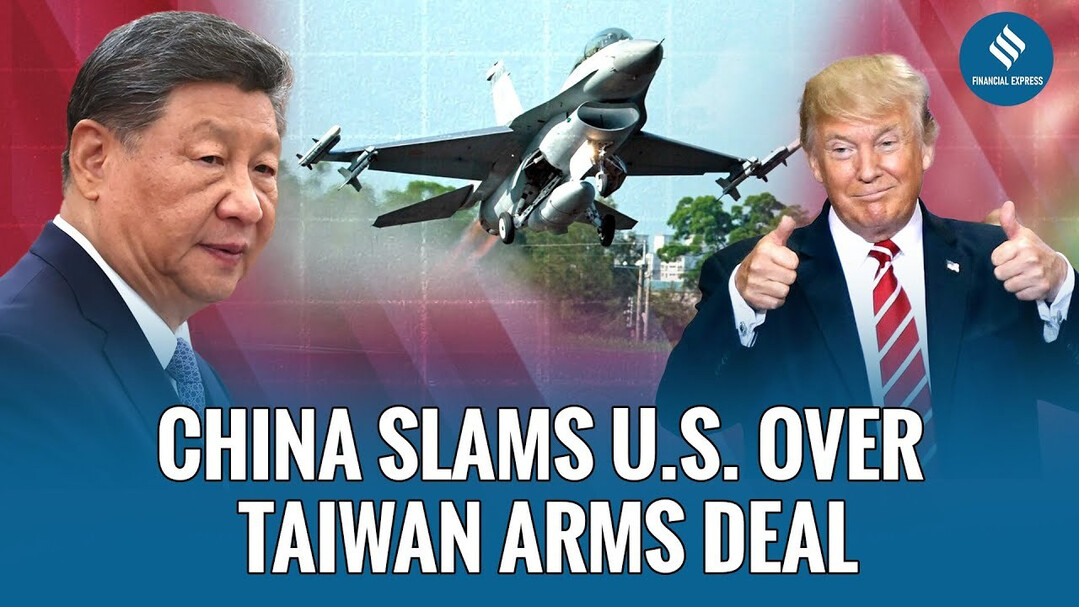
As the late September U.S.-China summit approaches, bilateral tensions are reaching a boiling point. According to diplomatic sources, Beijing has warned Washington that if the United States approves new weapon sales to Taiwan, China may cancel the highly anticipated leaders' summit altogether. This standoff highlights how deeply entrenched disputes over territorial sovereignty, technological supremacy, and geopolitical conflicts continue to strain the world's two largest economies.
The Taiwan 'Red Line' and Growing Arms Purchases
China views the Taiwan issue as the ultimate "red line" in its bilateral relations with the United States. Beijing has consistently condemned U.S. arms sales to the self-governing island, arguing that military support severely undermines regional peace and stability. These tensions have been further inflamed following recent defense developments. Notably, Taiwan has moved forward with substantial military acquisitions, including a major drone purchase agreement and supplementary defense funding to bolster its asymmetric warfare capabilities, building upon historic multi-billion-dollar arms packages previously authorized by Washington.
During their summit in Beijing earlier this year, Chinese President Xi Jinping delivered a stern warning to U.S. President Donald Trump, emphasizing that mishandling the Taiwan question could push the two nations toward direct confrontation. While President Trump has previously viewed transactional elements of foreign policy as potential leverage, the persistent friction over Taiwan threatens to derail diplomatic engagements. President Trump has heavily invested political capital in organizing the upcoming late September meeting in Washington to showcase foreign policy achievements ahead of the November midterm elections, making Beijing's threat of cancellation a severe diplomatic challenge.
Tech Hegemony and AI Competition
Beyond territorial sovereignty, artificial intelligence (AI) and technological dominance are expected to anchor the core agenda of the upcoming summit. Washington and Beijing are locked in an intense tech rivalry. The United States has ramped up intelligence and security scrutiny on Chinese tech firms, accusing entities like DeepSeek and Moonshot of illicitly acquiring advanced U.S. AI technology. Simultaneously, American intelligence and security agencies have expanded counter-espionage operations targeting Chinese entities in sectors spanning semiconductors, biotechnology, and AI. On the other hand, Chinese officials remain deeply suspicious of Washington’s strategic motives, believing that U.S. export controls and tech restrictions are intentionally designed to suppress China's long-term technological rise and innovation capabilities.
The Shadow of the Ongoing War with Iran
The protracted war involving Iran has emerged as another critical flashpoint straining U.S.-China dynamics. Investigations by Western intelligence have revealed that Iran utilized high-resolution satellite imagery obtained from Chinese-linked entities during past military actions against U.S. assets in the Middle East. Although Washington has pressured Beijing to align with international economic isolation campaigns against Tehran, China has resisted these demands. During multilateral engagements such as the BRICS summit in New Delhi, President Xi emphasized Beijing's commitment to fostering stability and diplomatic cooperation within the Gulf region, contrasting sharply with the unilateral maximum-pressure strategy pursued by the White House.
As the clock ticks down to the scheduled Washington summit, the structural contradictions between the U.S. and China remain stark. Whether both leaders can manage these profound geopolitical divergences or whether the mounting friction over Taiwan will trigger a diplomatic breakdown remains one of the most critical questions facing global stability.
[Copyright (c) Global Economic Times. All Rights Reserved.]