• 2026.11.11 (Wed)
  • All articles
  • LOGIN
  • JOIN
Global Economic Times
[등록] 2026-09-01 15:48:31
  • Synthesis
  • World
  • Business
  • Industry
  • ICT
  • Distribution Economy
  • Well+Being
    • Pet Life
    • Halal Horizon
  • Travel
  • Eco-News
  • Education
  • Korean Wave News
  • Opinion
  • Arts&Culture
  • Sports
  • People & Life
    • International Student Report
    • With Ambassador
  • Column
    • Cho Kijo Column
    • Cherry Garden Story
    • Ko Yong-chul Column
    • Kim Bong-seon's Photo Column
    • Kim Seul-Ong Column
    • Lee Yeon-sil Column
  • Photo News
  • New Book Guide
MENU
 
Home > People & Life

Retired Nepali Police Officer Finds Success in Rainbow Trout Farming

Eugenio Rodolfo Sanabria Reporter / Updated : 2024-11-28 12:50:40
  • -
  • +
  • Print


Parbat, Nepal – Bikash Timilsina, a former police officer from Modi Rural Municipality-2, Deupur in Parbat district, Nepal, has become a role model for many young people in the country after achieving significant success in his fish farming venture.

Timilsina, who served as a police officer for 21 years and as the ward chairperson of Modi-2 Deupur for five years, proudly shares that his enterprise, Modi Rainbow Trout Firm, generates an annual income of 30 million rupees (approximately USD 280,000).

Spread over 30 ropani (1.52 hectares) along the Pati Khola stream in Modi-5 Timure, the firm, in partnership with four local investors, has a capacity to produce 30 tons of fish from 37 small and large ponds. Currently, one kilogram of rainbow trout is sold at 1,000 rupees (approximately USD 9.50).

Timilsina mentioned that his company receives technical support from Parbat's Agricultural Knowledge Center and financial assistance from the district's fisheries development center for pond construction and facility upgrades.

After retiring as a deputy superintendent of police, he served as a people's representative for five years. Balancing public service with entrepreneurship, he is now fully dedicated to his business, supplying his products to the Kusma market and other markets like Pokhara and Kathmandu.

Established in 2071, the company has become a popular destination for students from universities, schools, and clubs interested in fisheries.

Initially, the venture faced significant financial setbacks due to a massive flood. However, Timilsina relocated the company to a nearby area and secured further investment from local investors, including Yam Prasad Sharma, Prem Poudel, Rajesh Shahi, and Raju Khadka. Since then, this entrepreneur, who now employs five other young people, has never looked back. He currently saves 1.5 million rupees (approximately USD 14,000) from his total income.

To expand his business, he has recently started producing fish eggs at the farm. His success serves as a compelling testament to the potential of entrepreneurship in Nepal.

[Copyright (c) Global Economic Times. All Rights Reserved.]

Eugenio Rodolfo Sanabria Reporter

Popular articles

  • Nearly 900 Schools Temporarily Closed as 'Flu' Epidemic Sweeps Japan

  • AI Companies Rush to Go Public, But Face Sudden Brakes Amid Cooling Investor Sentiment

  • Singapore and Brunei Sign Landmark MOU on Mutual Recognition of Halal Certificates

I like it
Share
  • Facebook
  • X
  • Kakaotalk
  • LINE
  • BAND
  • NAVER
  • https://www.globaleconomictimes.kr/article/1065585018381978 Copy URL copied.
Comments >

Comments 0

Weekly Hot Issue

  • Hyundai Motor Deepens Tech Alliances with Samsung and Nvidia to Pioneer the Physical AI Era
  • G마켓 Expands Beyond Search: E-Commerce Giant Taps Creators for SNS Shopping
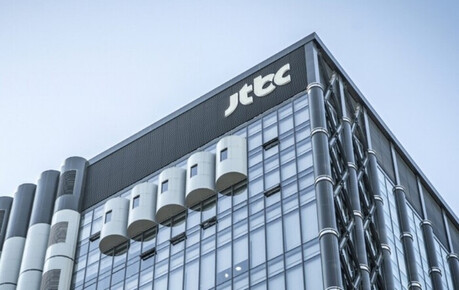
  • JTBC Initiates Formal Sale Process to Find a Strategic Buyer
  • Miky Lee Honored with Asian Hall of Fame’s Centennial Medal for Pioneering Global K-Culture
  • The Harsh Reality of K-Pop: Why Small Agency Idols Struggle to Survive Beyond Three Years
  • Regional Tourism in South Korea Struggles as Infrastructure Lags Behind Inbound Airport Growth

Most Viewed

1
US Army Conducts Rare Temporary Burial Drills to Prepare for Worst-Case Large-Scale War Scenarios
2
World Citizens are Flying Directly to Busan... The Era of 4 Million Foreigners is Just Around the Corner
3
Eating 100g of Baechu Kimchi Daily Linked to Lower High-Cholesterol Risks
4
Meeting Christmas Early!… Busan Dessert Sales Event "Daldal The Market" Held
5
South Korea and Ethiopia Sign Trilateral MOU to Introduce Liquid-Based Cytology (LBC) Technology for Cervical Cancer Diagnosis
체리가든 스토리
nutri huevos
로타리
동포저널

Hot Issue

LG Electronics and Skyscanner Partner to Bring Smart Travel Planning to Living Rooms

Regional Tourism in South Korea Struggles as Infrastructure Lags Behind Inbound Airport Growth

Miky Lee Honored with Asian Hall of Fame’s Centennial Medal for Pioneering Global K-Culture

Fashion Runway Show 2026

Let’s recycle the old blankets in Jeju Island’s closet instead of incinerating them.

Global Economic Times
korocamia@naver.com
CEO : LEE YEON-SIL
Publisher : KO YONG-CHUL
Registration number : Seoul, A55681
Registration Date : 2024-10-24
Youth Protection Manager: KO YONG-CHUL
Singapore Headquarters
5A Woodlands Road #11-34 The Tennery. S'677728
Korean Branch
Phone : +82(0)10 4724 5264
#304, 6 Nonhyeon-ro 111-gil, Gangnam-gu, Seoul
Copyright © Global Economic Times All Rights Reserved
  • News K
  • 반달곰 프로젝트
  • 광고문의
Search
Category
  • All articles
  • Synthesis
  • World
  • Business
  • Industry
  • ICT
  • Distribution Economy
  • Well+Being 
    • 전체
    • Pet Life
    • Halal Horizon
  • Travel
  • Eco-News
  • Education
  • Korean Wave News
  • Opinion
  • Arts&Culture
  • Sports
  • People & Life 
    • 전체
    • International Student Report
    • With Ambassador
  • Column 
    • 전체
    • Cho Kijo Column
    • Cherry Garden Story
    • Ko Yong-chul Column
    • Kim Bong-seon's Photo Column
    • Kim Seul-Ong Column
    • Lee Yeon-sil Column
  • Photo News
  • New Book Guide
  • Overseas Koreans
  • Multicultural News