![[등록] 2026-09-01 15:48:31](/support/_updata/banner2/tl181982910_6749.png)


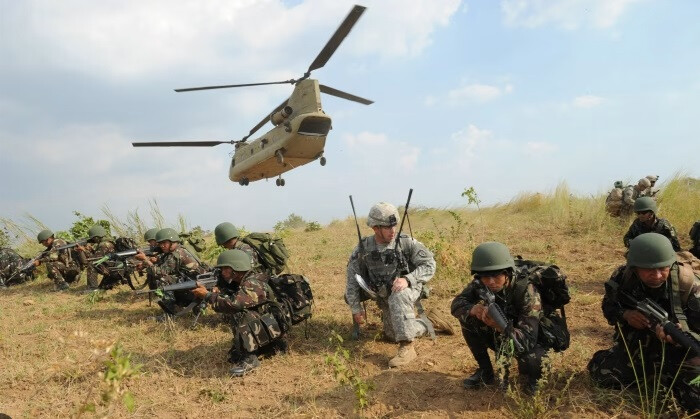
Manila, Philippines – Amidst escalating uncertainties following the inauguration of a new administration in Washington, the United States has moved decisively to reaffirm its alliance with the Philippines, declaring it remains "ironclad." Doubts had arisen regarding the strength of the bilateral relationship due to unpredictable foreign policy decisions from U.S. President Donald Trump, China's assertive actions in the West Philippine Sea (South China Sea), and reports of espionage activities within the Philippines. These concerns were further amplified by President Trump's recent announcement of sweeping tariffs on global imports, effective today, April 9th.
Against this backdrop, the choice of the Philippines as the first stop in U.S. Secretary of Defense John Hagstedt's Indo-Pacific tour sends a powerful message about Washington's strategic prioritization of Manila. Secretary Hagstedt's visit serves as a clear demonstration that the U.S.-Philippines alliance endures, despite the shifting geopolitical landscape.
During his meeting with Philippine Secretary of National Defense Gilberto Teodoro Jr., Secretary Hagstedt underscored the United States' unwavering commitment to the Philippines and pledged continued U.S. security assistance, including a significant $500 million in military aid. This commitment signals a strong intent to not only maintain but also enhance programs initiated under previous administrations.
Secretary Hagstedt's visit went beyond simply reiterating existing ties; it laid the groundwork for a deeper and more robust partnership. Just days after his engagements in Manila, the U.S. State Department approved the potential sale of 20 F-16 fighter jets to the Philippines, a move that underscores Washington's recognition of the Philippines' strategic importance in the Indo-Pacific.
In a press statement, the U.S. State Department affirmed, "This proposed sale will support the foreign policy and national security of the United States by helping to improve the security of a strategic partner which continues to be an important force for political stability, peace, and economic progress in Southeast Asia."
During their bilateral talks, the defense secretaries discussed an ambitious and forward-looking defense agenda, agreeing on several initiatives aimed at significantly enhancing the interoperability, readiness, and joint operational capabilities of the U.S. and Philippine armed forces.
Key initiatives include the deployment of advanced military assets such as the Navy-Marine Expeditionary Ship Interdiction System (NMESIS) and high-performance unmanned surface vehicles. These assets are intended to bolster the Philippines' defensive posture by providing strategic surveillance coverage over critical sea lanes in its coastal waters, thereby strengthening deterrence. These deployments are slated to occur in conjunction with the upcoming 40th iteration of the Balikatan (Shoulder-to-Shoulder) joint military exercises, scheduled from April 21st to May 9th.
This year's Balikatan exercises are poised to be a significant demonstration of the deepening partnership. Through the integration of new technologies, enhanced joint training scenarios, and high-level strategic coordination, the exercises will not only improve interoperability but also send a clear message to the region that the United States and the Philippines stand united and prepared to address any challenges.
The strategic importance of these exercises is well-understood by the Filipino populace. A recent survey conducted by SWS at the behest of Stratbase revealed that 77% of Filipinos believe the Philippine government should strengthen its alliances with other countries, including through joint patrols, joint navigation, and joint military exercises, to assert and defend the country's territorial and economic rights in the West Philippine Sea.
As Balikatan 2025 approaches, the Filipino people can take reassurance in the enhanced defense capabilities being developed with the backing of the world's most powerful military.
Beyond these key initiatives, the defense secretaries also explored a range of other collaborative ventures, including special forces training in Batanes, the development of a Defense Industrial Cooperation Vision Statement, and a bilateral cybersecurity campaign.
The new Defense Industrial Cooperation Vision Statement, released just days prior to Secretary Hagstedt's visit, outlines plans for the joint production of unmanned systems, enhanced logistics cooperation, and the easing of barriers to defense technology transfer, aiming to bolster not only maritime security but also economic resilience.
The statement's opening paragraph explicitly declares, "The United States and the Philippines are committed to a strong and enduring alliance rooted in a shared, ironclad commitment to a secure and prosperous Indo-Pacific region. Building upon the 1951 Mutual Defense Treaty, the 1998 Visiting Forces Agreement, and the 2014 Enhanced Defense Cooperation Agreement, the United States and the Philippines have developed a close and enduring bilateral defense cooperation. Defense and security cooperation has been a critical pillar of the deepening U.S.-Philippine partnership."
Finally, recognizing the critical importance of digital resilience, both nations have launched a campaign to bolster cybersecurity defenses. This includes the development of secure defense networks, the training of skilled cybersecurity personnel, and enhanced operational collaboration.
These initiatives represent more than just a bolstering of military might. They position the U.S.-Philippines alliance as a credible deterrent against growing threats in the region. As coercive actions in the West Philippine Sea continue to challenge Philippine sovereignty, the message that "the Philippines is not alone" resonates with profound significance.
[Copyright (c) Global Economic Times. All Rights Reserved.]