• 2026.03.23 (Mon)
  • All articles
  • LOGIN
  • JOIN
Global Economic Times
fashionrunwayshow2026
  • Synthesis
  • World
  • Business
  • Industry
  • ICT
  • Distribution Economy
  • Well+Being
  • Travel
  • Eco-News
  • Education
  • Korean Wave News
  • Opinion
  • Arts&Culture
  • Sports
  • People & Life
    • International Student Report
    • With Ambassador
  • Column
    • Cho Kijo Column
    • Cherry Garden Story
    • Ko Yong-chul Column
    • Kim Seul-Ong Column
    • Lee Yeon-sil Column
  • Photo News
  • New Book Guide
MENU
 
Home > Synthesis

Portugal Considers Lowering Legal Blood Alcohol Limit for Drivers

ONLINE TEAM / Updated : 2025-03-25 13:01:46
  • -
  • +
  • Print

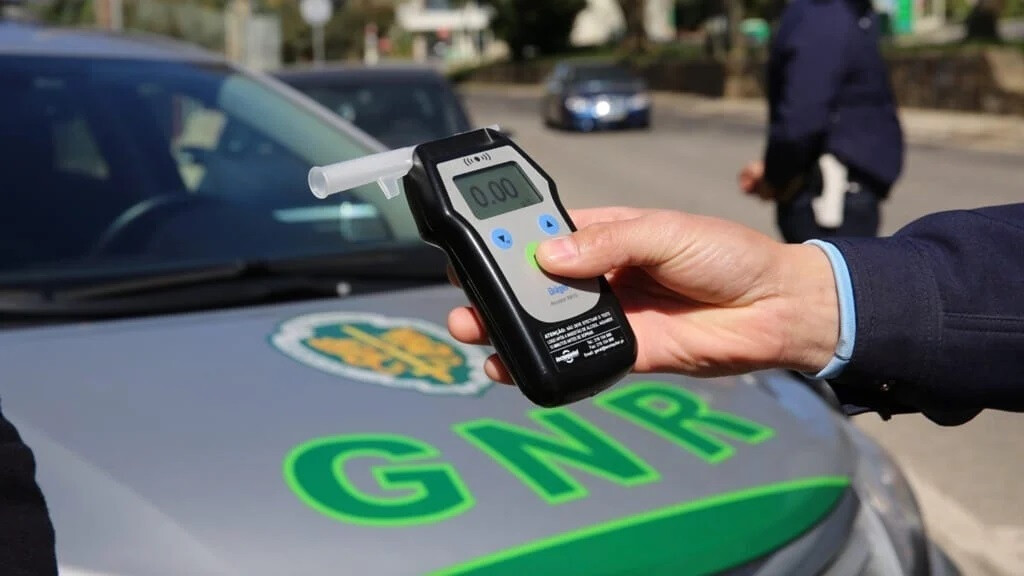
LISBON, Portugal – Portugal is set to engage in a public consultation regarding a proposal to significantly reduce the legal blood alcohol limit for drivers, from the current 0.5 grams per liter (gm/l) to 0.2 gm/l. This move aims to curb drink-driving incidents, which remain a major cause of road accidents in the country.

The proposal, part of the National Road Safety Strategy, comes amid concerns that despite ongoing traffic campaigns, a substantial number of drivers continue to operate vehicles under the influence of alcohol. While the reduction is expected to increase state revenue through fines, the central question remains whether it will effectively deter drivers from taking to the road after consuming alcohol.

Currently, Portugal maintains a dual standard: 0.5 gm/l for most drivers and 0.2 gm/l for professional drivers and those with provisional licenses. The proposed uniform reduction to 0.2 gm/l aligns with measures already implemented in other European nations.

The Association of Self-Mobilised Citizens supports the proposal, asserting that it is a "reasonable step" in combating drink-driving. "I think it's reasonable for us to accept that we need to combat drink driving and so reducing the blood alcohol level to 0.2 for everyone makes perfect sense," said Manuel João Ramos, the association's president, to SIC.

However, the association emphasizes that a reduction in the legal limit must be accompanied by a comprehensive understanding and addressing of youth alcoholism and excessive drinking across all age groups. Ramos highlighted the need to tackle society’s perception of drinking and driving, rather than focusing solely on enforcement.

He drew a contrast with Nordic countries, where a "zero tolerance" culture prevails, promoting complete abstinence from driving after consuming alcohol.

Despite the existing legal limits, data from the National Road Safety Authority indicates that alcohol remains a leading factor in road accidents in Portugal, underscoring the urgency of the proposed policy change. The public consultation will play a crucial role in determining the future of drink-driving regulations in the country.

[Copyright (c) Global Economic Times. All Rights Reserved.]

  • #globaleconomictimes
  • #글로벌이코노믹타임즈
  • #한국
  • #중기청
  • #재외동포청
  • #외교부
  • #micorea
  • #mykorea
  • #newsk
  • #nammidonganews
  • #singaporenewsk
ONLINE TEAM
ONLINE TEAM
Reporter Page

Popular articles

  • Over 1,800 Companies Sue Trump Administration for $129 Billion in Tariff Refunds

  • Yujin Robot Evolves Industrial Automation: Integrating Autonomous Mobility and Collaborative Robotics

  • Samsung Doubles DRAM Prices in Q1 Amid Unprecedented AI Demand Surge

I like it
Share
  • Facebook
  • X
  • Kakaotalk
  • LINE
  • BAND
  • NAVER
  • https://www.globaleconomictimes.kr/article/1065585663735416 Copy URL copied.
Comments >

Comments 0

Weekly Hot Issue

  • Coway Clinches Top Honor at "Water Taste Awards" for 7th Consecutive Year
  • HP Targets Korea as Strategic Hub for 'Edge AI' Expansion, Seeking Startup Partnerships
  • Pearl Abyss’s 'Crimson Desert' Shatters Records with 2 Million Copies Sold on Day One
  • "BTS Over Books?" Indian Academies Issue Emergency Notices as Students Plot Mass Absences for Comeback Live
  • Naver to Shut Down Men's Fashion Service 'MR.' to Launch Expanded AI-Driven Fashion Platform
  • JBNU and SKKU Researchers Achieve Breakthrough in "Dream Material" MXene, Setting New World Records in Performance

Most Viewed

1
An Open Letter to BTS On the Eve of a Historic Performance
2
From Industrial Capital to Tourism Mecca... Ulsan Makes a Bold Move with ‘Experiential Content’ in 2026
3
Ko Sang-goo, President of World Federation of Korean Associations, Elected as First Private Sector Chair of World Korean Community Leaders Convention
4
It is Time for BTS’s Fandom, ARMY, to Step Forward
5
Korean Stock Market Plunges: Circuit Breaker and Sidecar Triggered Amid Geopolitical Crisis
광고문의
임시1
임시3
임시2

Hot Issue

Vishay Unveils Ultra-Compact 0404 RGB LED with Independent Chip Control for Enhanced Color Precision

Coway Clinches Top Honor at "Water Taste Awards" for 7th Consecutive Year

AI Medical Ecosystem in Focus: KIMES 2026 Opens in Seoul as Global Healthcare Hub

Netanyahu Declares Decisive Blow to Iran’s Nuclear and Missile Programs, Signals Early End to War

Let’s recycle the old blankets in Jeju Island’s closet instead of incinerating them.

Global Economic Times
korocamia@naver.com
CEO : LEE YEON-SIL
Publisher : KO YONG-CHUL
Registration number : Seoul, A55681
Registration Date : 2024-10-24
Youth Protection Manager: KO YONG-CHUL
Singapore Headquarters
5A Woodlands Road #11-34 The Tennery. S'677728
Korean Branch
Phone : +82(0)10 4724 5264
#304, 6 Nonhyeon-ro 111-gil, Gangnam-gu, Seoul
Copyright © Global Economic Times All Rights Reserved
  • 에이펙2025
  • APEC2025가이드북TV
  • 독도는우리땅
Search
Category
  • All articles
  • Synthesis
  • World
  • Business
  • Industry
  • ICT
  • Distribution Economy
  • Well+Being
  • Travel
  • Eco-News
  • Education
  • Korean Wave News
  • Opinion
  • Arts&Culture
  • Sports
  • People & Life 
    • 전체
    • International Student Report
    • With Ambassador
  • Column 
    • 전체
    • Cho Kijo Column
    • Cherry Garden Story
    • Ko Yong-chul Column
    • Kim Seul-Ong Column
    • Lee Yeon-sil Column
  • Photo News
  • New Book Guide
  • Multicultural News
  • Jobs & Workers