![[등록] 2026-09-01 15:48:31](/support/_updata/banner2/tl181982910_6749.png)


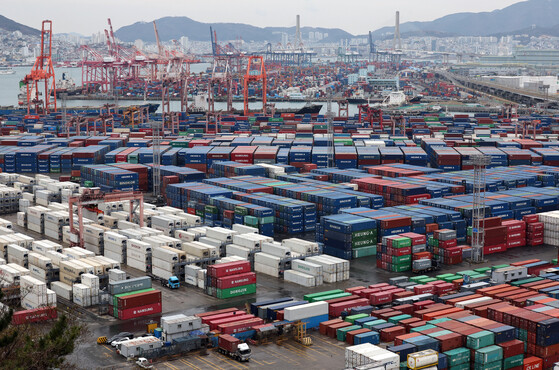
SEOUL – Amidst a landscape of global uncertainty and a tumultuous domestic political climate, South Korea’s economy has achieved a historic milestone. In March 2026, the nation’s monthly exports surged past the $80 billion mark for the first time in history, propelled by an unprecedented boom in the semiconductor sector.
According to the "March 2026 Import and Export Trends" released by the Ministry of Trade, Industry and Energy (MOTIE) on Wednesday, exports for the month skyrocketed 48.3% year-on-year to reach $86.13 billion.
A Historic Milestone Driven by AI and Chips
The record-breaking performance was largely underpinned by the semiconductor industry, which continues to serve as the backbone of the Korean economy.
Semiconductors: Export value surpassed $30 billion for the first time, reaching $32.83 billion—a staggering 151.4% increase compared to the previous year. This surge is attributed to sustained high memory prices and the aggressive expansion of AI server investments globally.
Computers & SSDs: Following the AI infrastructure trend, enterprise demand for high-capacity SSDs drove computer exports up by 189.2% to $3.42 billion, another record high.
Petroleum Products: Fueled by rising global oil prices, export values in this sector jumped 54.9% to $5.1 billion.
Automobiles: Despite logistics disruptions in the Middle East, the automotive sector maintained steady performance at $6.37 billion (+2.2%), supported by the popularity of eco-friendly vehicles like EVs and hybrids.
Trade Surplus and Regional Performance
The trade balance recorded a surplus of $25.74 billion, the highest monthly surplus ever recorded. This marks the 14th consecutive month that South Korea has maintained a positive trade balance.
Regionally, exports grew in seven out of the nine major markets:
China: Exports rose 64.2% to $16.51 billion, driven by semiconductors and petrochemicals.
United States: Recorded $16.34 billion (+47.1%), with IT-related exports showing triple-digit growth.
Middle East: Conversely, exports to the Middle East plummeted 49.1% to $900 million due to prolonged conflict and logistics bottlenecks in the region.
Resilience Amidst Domestic and Global Turmoil
The achievement is particularly noteworthy given the domestic challenges of 2024, which saw medical strikes, the declaration of martial law, and subsequent impeachment proceedings. While domestic consumption faced headwinds, the export sector remained a "beacon of hope."
On the import side, total imports rose 13.2% to $60.4 billion. While energy imports fell by 7% due to the blockade of the Strait of Hormuz, non-energy imports—particularly semiconductors—rose by nearly 18%, indicating strong industrial demand within the country.
"Despite the grave external conditions, our exports have breached the $80 billion barrier for the first time thanks to the balanced growth of our flagship and consumer products," said Kim Jung-kwan, Minister of Trade, Industry and Energy. "We will continue to monitor supply chains, including energy and logistics, to ensure this upward trend remains unshaken."
[Copyright (c) Global Economic Times. All Rights Reserved.]