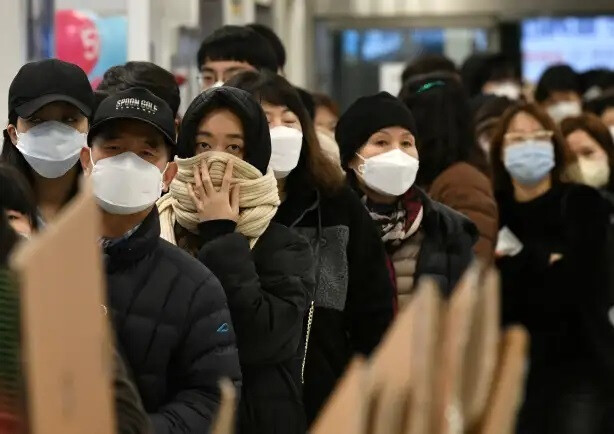
Seoul — South Korea is currently grappling with a synchronized wave of influenza and COVID-19, sparking health concerns as public transportation fills up with coughing commuters. Health authorities report that the convergence of these two respiratory illnesses is hitting vulnerable populations particularly hard this season.
According to recent infectious disease surveillance data released by the Korea Disease Control and Prevention Agency (KDCA) on November 2, the number of hospitalized flu patients between October 18 and 24 reached 380. This figure is nearly four times higher than the 98 hospitalizations recorded during the same period last year.
Outpatient clinics are also seeing a resurgence. During the same week, the estimated rate of suspected flu cases stood at 19.2 per 1,000 outpatients, marking an 8.5% increase from the previous week (17.7) and well above the official epidemic threshold of 12.9. Children aged 7 to 12 reported the highest incidence rate across all age groups, with 49 suspected cases per 1,000 children.
This year's flu season arrived roughly three weeks earlier than usual, prompting the KDCA to issue an influenza advisory as early as September 11. The dominant circulating strain is currently the A(H1N1) subtype. Although hospitalizations for COVID-19 have experienced a slight downward trend over the past three weeks—dropping to 199 patients in the 43rd week—the concurrent transmission of both viruses remains a pressing public health challenge.
Medical experts attribute the twindemic to a combination of seasonal shifts and fluctuating immunity levels following the relaxation of pandemic-era restrictions. Dr. Seo-woo Kim, a pulmonology professor at Ewha Womans University Seoul Hospital, noted in a recent column that decreased population-level immunity, seasonal transitions, and the early arrival of the H1N1 strain in late August have overlapped with a secondary COVID-19 wave.
Because both infections present with overlapping symptoms such as fever, coughing, and sore throats, distinguishing between them clinically based on symptoms alone is increasingly difficult. Dr. Kim emphasized that prompt diagnosis and treatment are critical, especially for children and the elderly, who face a higher risk of severe complications.
In response to the growing dual threat, the KDCA continues to strongly encourage high-risk groups to get vaccinated. The national immunization program for the 2026–2027 season is currently underway, and health officials confirm that both the influenza and COVID-19 vaccines can be administered safely on the same day.
[Copyright (c) Global Economic Times. All Rights Reserved.]