![[등록] 2026-09-01 15:48:31](/support/_updata/banner2/tl181982910_6749.png)


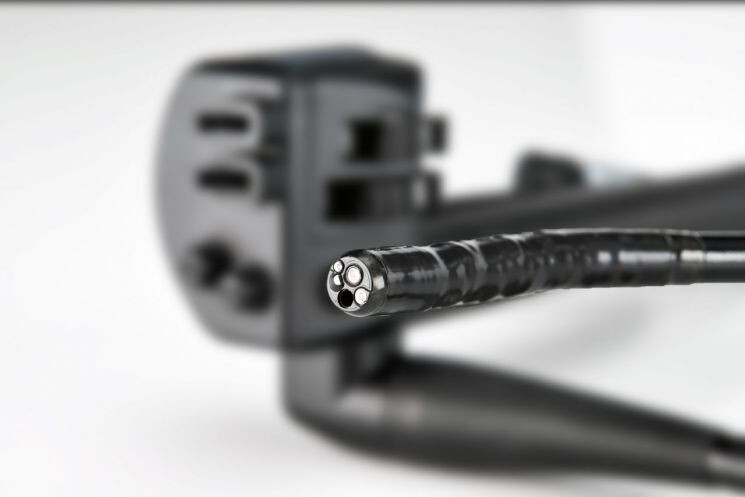
SEOUL — A powerful South Korean consortium comprising prominent enterprises, leading research universities, and top-tier medical institutions has officially launched an ambitious initiative to develop a next-generation robotic endoscope platform powered by artificial intelligence (AI). This high-stakes project aims to significantly reduce patient discomfort, minimize diagnostic time, and directly challenge the long-standing global monopoly held by Japanese manufacturers in the flexible electronic endoscope market.
The Korea Electrotechnology Research Institute (KERI) announced on June 7 that it has formed a specialized collaborative consortium with MediInTech—a high-tech medical electronic endoscope startup spun out of KERI—alongside Seoul National University Hospital (SNUH), Seoul National University (SNU), and the Daegu Gyeongbuk Institute of Science and Technology (DGIST). Together, these institutions are embarking on the comprehensive development of a "Next-Generation Intelligent Robotic Endoscope Platform."
The collaborative enterprise has secured robust financial backing, having been selected for this year's Interministerial Advanced Medical Device Research and Development Project. The initiative is slated to receive a total research budget of 22.8 billion KRW (approximately $16.5 million USD) spanning a multi-year development cycle that will run until December 2031.
Breaking the Technical Barriers of Manual Systems
Conventional flexible endoscopes currently utilized in clinical settings rely heavily on manual, mechanical operation. Medical practitioners must physically turn dials and manipulate levers to steer the endoscope through the intricate paths of the human body. This legacy approach induces substantial physical fatigue on medical staff and inevitably introduces variances in diagnostic accuracy and patient pain levels depending strictly on the practitioner's individual experience and technical proficiency.
To overcome these systemic limitations, the newly formed consortium will build upon the advanced motorized technology previously pioneered by MediInTech. By embedding cutting-edge artificial intelligence into the core system, the team intends to develop "AI Autonomous Steering Technology." This innovation will enable the robotic endoscope to dynamically calculate optimal trajectories within narrow, highly curved, and sensitive human organs, facilitating a remarkably smooth, safe, and automated entry process.
Expanding Beyond Diagnosis into Advanced Therapeutics
The scope of this expansive research project extends far beyond standard diagnostic procedures for upper and lower gastrointestinal tracts. The consortium is aggressively targeting the development of highly specialized diagnostic and therapeutic instruments, including advanced duodenoscopes and ultra-miniature cholangioscopes. The ultimate objective is to transform the endoscope from a passive visualization device into an active therapeutic workspace.
Crucial to this transition is the integration of an ultra-miniature, multi-degree-of-freedom (multi-DOF) surgical instrument system capable of operating within confined anatomical spaces. This highly articulate robotic attachment will automate high-precision, complex surgical maneuvers, enabling the system to firmly grasp, retract, dissect, and suture affected tissues with exceptional robotic stability.
Strategic Division of Roles for Commercial Success
To ensure the seamless integration of these complex subsystems, each member of the consortium brings specialized expertise to the table. MediInTech is tasked with spearheading the overall integration and development of the intelligent motorized robotic endoscope platform. Seoul National University Hospital will oversee large-scale, multi-center clinical trials to thoroughly validate the platform’s safety, efficacy, and clinical utility.
On the academic and fundamental research side, Seoul National University will focus on engineering the advanced AI algorithms required for real-time diagnostic and surgical assistance. KERI will contribute its proprietary, long-standing core competencies in spectroscopic imaging optics and high-speed image processing technologies. Concurrently, DGIST will take charge of designing and manufacturing the underlying essential components and robotic element technologies required for the endoscopic hardware.
"By consolidating KERI's long-accumulated medical imaging and electronic endoscope technologies with the combined expertise of this powerful industry-academia-research-hospital consortium, we aim to build a truly revolutionary, domestically produced robotic endoscope platform," stated Bae Young-min, Director of the Executive Medical Device Research Center at KERI and co-principal investigator. "We are deeply committed to ensuring that our scientific breakthroughs do not merely remain inside the laboratory, but actively transition into successful global commercialization."
Currently, Japanese corporations firmly control over 95% of the lucrative global flexible electronic endoscope market, creating a massive barrier to entry for international competitors. By successfully executing this ten-year roadmap, the South Korean consortium expects to establish technical sovereignty in medical robotics, dramatically enhance patient outcomes worldwide, and capture a significant share of the rapidly growing advanced medical device market.
[Copyright (c) Global Economic Times. All Rights Reserved.]