• 2026.03.23 (Mon)
  • All articles
  • LOGIN
  • JOIN
Global Economic Times
fashionrunwayshow2026
  • Synthesis
  • World
  • Business
  • Industry
  • ICT
  • Distribution Economy
  • Well+Being
  • Travel
  • Eco-News
  • Education
  • Korean Wave News
  • Opinion
  • Arts&Culture
  • Sports
  • People & Life
    • International Student Report
    • With Ambassador
  • Column
    • Cho Kijo Column
    • Cherry Garden Story
    • Ko Yong-chul Column
    • Kim Seul-Ong Column
    • Lee Yeon-sil Column
  • Photo News
  • New Book Guide
MENU
 
Home > Synthesis

Ethiopia Revokes Controversial Salt Directive, Aiming to Stabilize Market

Pedro Espinola Special Correspondent / Updated : 2025-02-28 14:13:47
  • -
  • +
  • Print

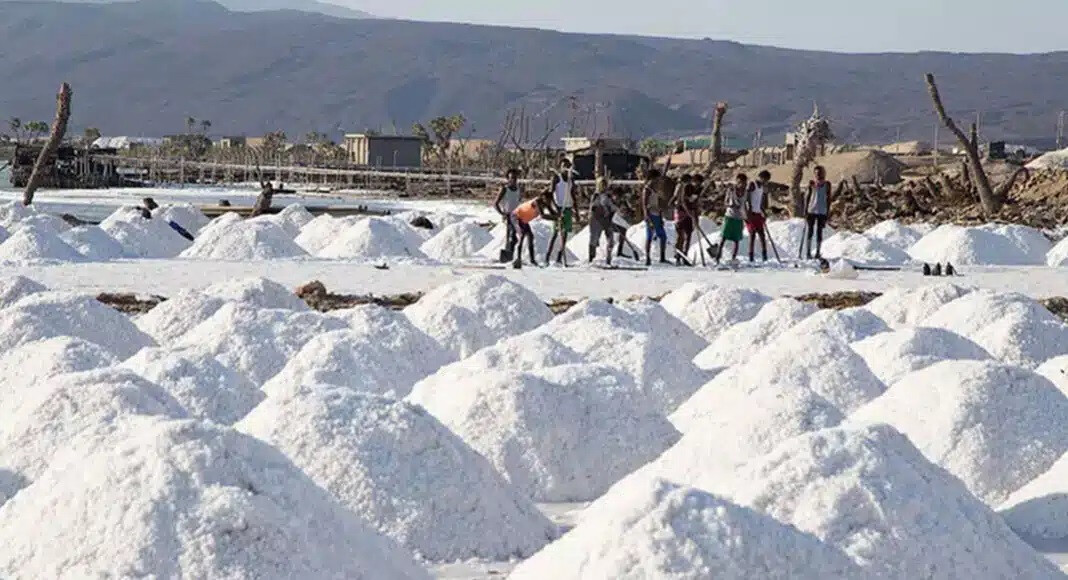
Addis Ababa, Ethiopia – In a significant move to rectify the severe market disruptions caused by a 2023 policy, Ethiopia's Ministry of Trade and Regional Integration has issued a new directive permitting the operation of salt processing plants outside the Afar Regional State. This decision overturns a previous regulation that had effectively monopolized the salt industry and led to critical shortages across the nation.

The new directive, approved by Minister Kassahun Gofe, repeals a predecessor policy implemented under Gebremeskel Challa. That earlier directive had mandated that all salt processing occur exclusively within the Afar region and required industrial salt to be treated with naphthalene, a chemical that has become difficult to source due to foreign exchange shortages.

The 2023 directive had granted the Afar Mining Corporation unprecedented control over salt mining and supply, displacing private businesses and the state-owned Ethiopian Industrial Inputs Development Enterprise (EIIDE), which had previously been key players in the sector. This monopolistic control resulted in severe supply chain bottlenecks, particularly affecting industries reliant on large volumes of industrial salt, such as breweries and tanneries.

"The previous directive created an artificial scarcity and crippled vital industries," stated a source within the Ministry of Trade. "By allowing processing plants to operate outside Afar and eliminating the mandatory naphthalene treatment, we are aiming to restore market balance and ensure a stable supply of salt."

The naphthalene requirement, while intended to ensure quality, proved impractical due to forex shortages, which hindered the import of the chemical. This added an unnecessary financial burden on processing plants, further exacerbating the supply crisis.

Another critical flaw of the previous directive was a clause that allowed manufacturing industries to maintain salt reserves. This provision inadvertently led to hoarding, contributing to the perceived scarcity. Trade officials now argue that this measure was not only difficult to enforce but also prevented the efficient utilization of Ethiopia's abundant salt resources.

During a parliamentary session last year, officials from the Ministry of Industry highlighted the paradox of salt shortages amid vast stockpiles in Afar. Members of Parliament urged for a political resolution to the issue, emphasizing the need to distribute the accumulated salt reserves effectively.

The new directive is expected to alleviate the current market pressures and revitalize the salt industry. Industry analysts anticipate that the policy change will encourage private sector participation, improve supply chain efficiency, and ultimately benefit consumers and industrial users alike. The Ministry of Trade has pledged to closely monitor the implementation of the new directive to ensure its effectiveness and prevent future market distortions.

This policy reversal marks a significant step towards addressing the economic challenges posed by the previous directive and underscores the government's commitment to fostering a competitive and stable market environment.

[Copyright (c) Global Economic Times. All Rights Reserved.]

  • #globaleconomictimes
  • #글로벌이코노믹타임즈
  • #한국
  • #중기청
  • #재외동포청
  • #외교부
  • #micorea
  • #mykorea
  • #newsk
  • #nammidonganews
  • #singaporenewsk
Pedro Espinola Special Correspondent

Popular articles

  • A New Era in The Hague: Rob Jetten Sworn In as Netherlands’ Youngest and First Openly Gay Prime Minister

  • The "Chicken-Sized" Dino: 900g Fossil Overturns Evolution Theory

  • Mexico on Edge: ‘King of Cocaine’ El Mencho Killed, Igniting Wave of Cartel Retaliation

I like it
Share
  • Facebook
  • X
  • Kakaotalk
  • LINE
  • BAND
  • NAVER
  • https://www.globaleconomictimes.kr/article/1065589959825427 Copy URL copied.
Comments >

Comments 0

Weekly Hot Issue

  • Coway Clinches Top Honor at "Water Taste Awards" for 7th Consecutive Year
  • HP Targets Korea as Strategic Hub for 'Edge AI' Expansion, Seeking Startup Partnerships
  • Pearl Abyss’s 'Crimson Desert' Shatters Records with 2 Million Copies Sold on Day One
  • "BTS Over Books?" Indian Academies Issue Emergency Notices as Students Plot Mass Absences for Comeback Live
  • Naver to Shut Down Men's Fashion Service 'MR.' to Launch Expanded AI-Driven Fashion Platform
  • JBNU and SKKU Researchers Achieve Breakthrough in "Dream Material" MXene, Setting New World Records in Performance

Most Viewed

1
An Open Letter to BTS On the Eve of a Historic Performance
2
From Industrial Capital to Tourism Mecca... Ulsan Makes a Bold Move with ‘Experiential Content’ in 2026
3
Ko Sang-goo, President of World Federation of Korean Associations, Elected as First Private Sector Chair of World Korean Community Leaders Convention
4
It is Time for BTS’s Fandom, ARMY, to Step Forward
5
Korean Stock Market Plunges: Circuit Breaker and Sidecar Triggered Amid Geopolitical Crisis
광고문의
임시1
임시3
임시2

Hot Issue

Vishay Unveils Ultra-Compact 0404 RGB LED with Independent Chip Control for Enhanced Color Precision

Coway Clinches Top Honor at "Water Taste Awards" for 7th Consecutive Year

AI Medical Ecosystem in Focus: KIMES 2026 Opens in Seoul as Global Healthcare Hub

Netanyahu Declares Decisive Blow to Iran’s Nuclear and Missile Programs, Signals Early End to War

Let’s recycle the old blankets in Jeju Island’s closet instead of incinerating them.

Global Economic Times
korocamia@naver.com
CEO : LEE YEON-SIL
Publisher : KO YONG-CHUL
Registration number : Seoul, A55681
Registration Date : 2024-10-24
Youth Protection Manager: KO YONG-CHUL
Singapore Headquarters
5A Woodlands Road #11-34 The Tennery. S'677728
Korean Branch
Phone : +82(0)10 4724 5264
#304, 6 Nonhyeon-ro 111-gil, Gangnam-gu, Seoul
Copyright © Global Economic Times All Rights Reserved
  • 에이펙2025
  • APEC2025가이드북TV
  • 독도는우리땅
Search
Category
  • All articles
  • Synthesis
  • World
  • Business
  • Industry
  • ICT
  • Distribution Economy
  • Well+Being
  • Travel
  • Eco-News
  • Education
  • Korean Wave News
  • Opinion
  • Arts&Culture
  • Sports
  • People & Life 
    • 전체
    • International Student Report
    • With Ambassador
  • Column 
    • 전체
    • Cho Kijo Column
    • Cherry Garden Story
    • Ko Yong-chul Column
    • Kim Seul-Ong Column
    • Lee Yeon-sil Column
  • Photo News
  • New Book Guide
  • Multicultural News
  • Jobs & Workers