![[등록] 2026-09-01 15:48:31](/support/_updata/banner2/tl181982910_6749.png)


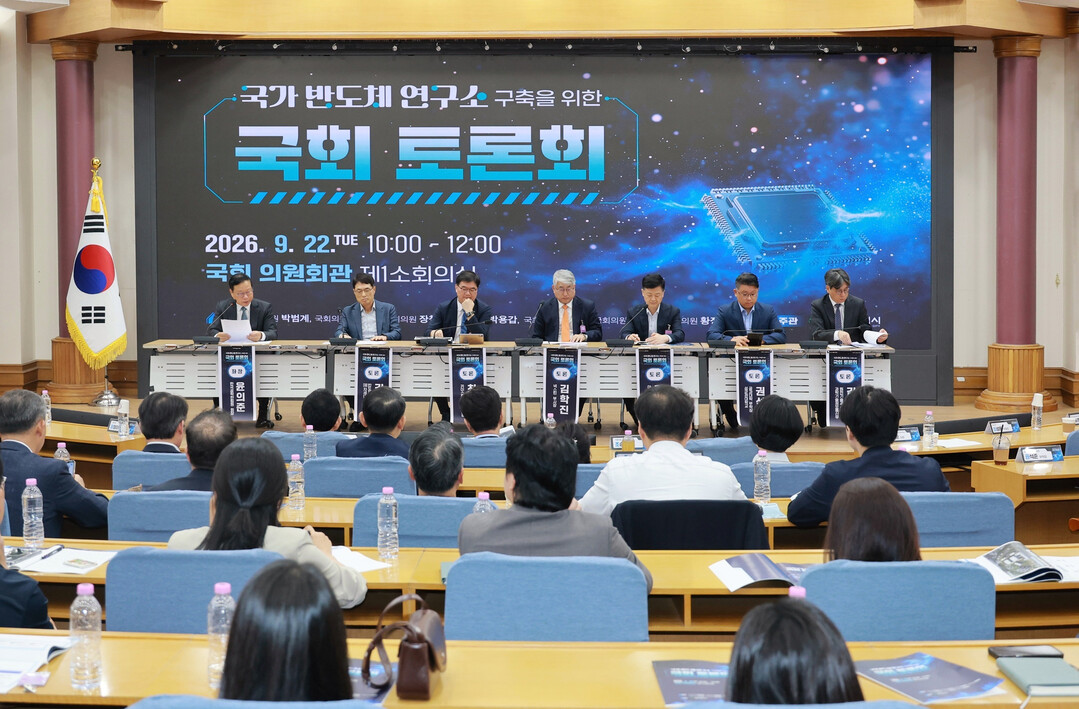
Daejeon City hosted a National Assembly forum on September 22nd to discuss the necessity and strategic direction for establishing the "National Semiconductor Research Institute".
This forum was organized to build a strong consensus on the urgent need to establish a national-level Research and Development (R&D) and demonstration hub in Daejeon, ensuring the continuous competitiveness of South Korea’s semiconductor industry.
Held under the theme "Establishing the National Semiconductor Research Institute in Daejeon for the Success of the Mega-Project Lead Competition," the forum was co-hosted by local lawmakers—Park Bum-kye, Park Yong-gap, Park Jung-hyun, Jang Jong-tae, Jang Cheol-min, Cho Seung-rae, and Hwang Jeong-ah—and organized by Daejeon City.
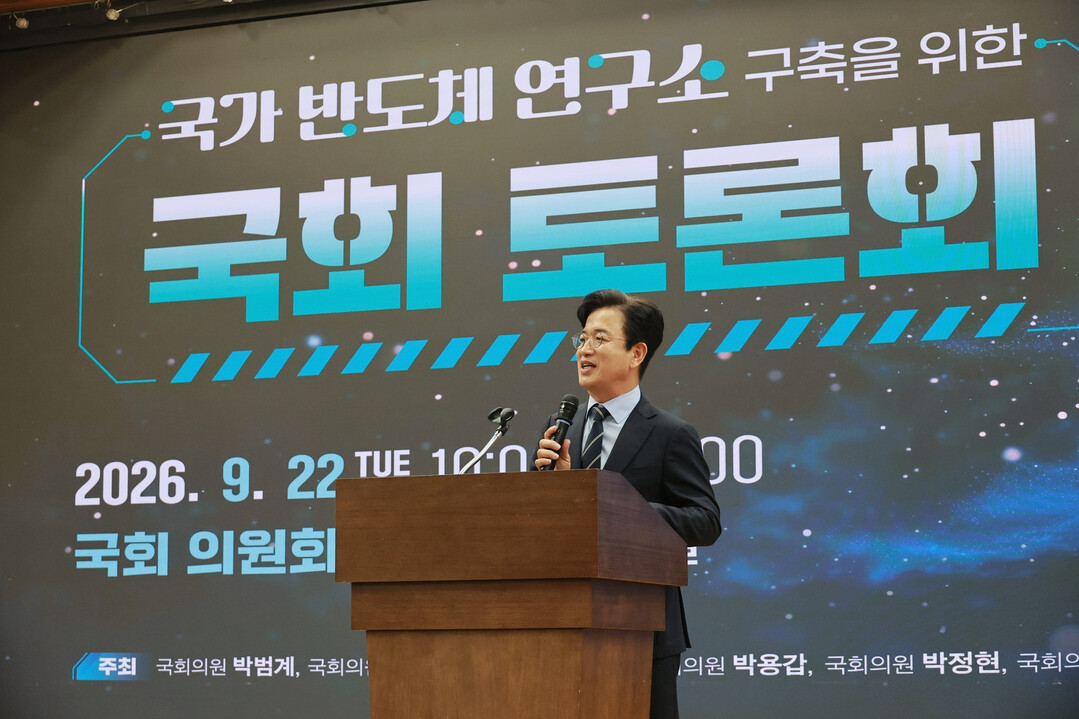
Around 100 experts from industry, academia, research institutes, and government sectors—including Daejeon Mayor Huh Tae-jung—attended the event. The keynote presentation was delivered by Yoon Eui-joon, Chairman of the National Academy of Engineering of Korea, under the theme "The Necessity and Role of the National Semiconductor Research Institute for Completing the Semiconductor Mega-Project."
Chairman Yoon emphasized, "To maintain South Korea’s semiconductor industry competitiveness amid a boom driven by exploding AI demand, technological superiority is essential. Major global economies are already mobilizing national capabilities to secure semiconductor technology hegemony." He stressed that South Korea also needs a comprehensive semiconductor research hub equipped with advanced process infrastructure, akin to Europe’s IMEC, the United States' NY Creates, and Taiwan’s TSRI.
Following the keynote, a panel discussion took place featuring Kim Hyung-jun, Head of the Next-Generation Intelligent Semiconductor Project Team; Choi Sung-yul, Vice President of Research at KAIST; Kwon Seok-jun, Associate Professor at Sungkyunkwan University; Kim Hak-jin, Executive Vice President at Nextin; Jin Byung-joo, Executive Vice President at ISTI; and Kim Dong-jun, Director of the Fundamental Technology Division at the Ministry of Science and ICT (MSIT).
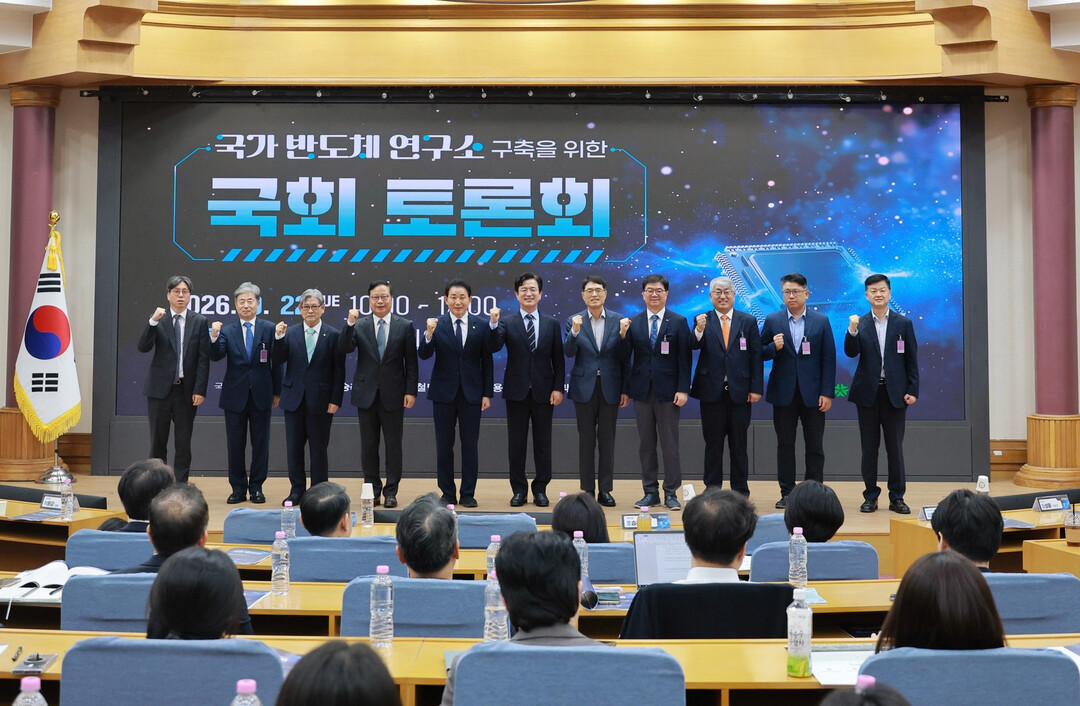
Participants agreed that the National Semiconductor Research Institute should serve as a national R&D platform carrying out key functions: ▲ developing next-generation semiconductor source technologies, ▲ linking research outcomes from universities and government-funded institutes to industries, ▲ testing and verifying corporate technologies, ▲ supporting fabless and material/parts/equipment (MPE) enterprises, ▲ nurturing future semiconductor talent, and ▲ conducting research in strategic future fields such as AI semiconductors and advanced packaging.
Daejeon Mayor Huh Tae-jung stated, "If corporate production investments serve as the 'growth engine' for South Korea's semiconductor industry, the National Semiconductor Research Institute will become the 'source of technology' that sustains that growth. To completely succeed in the semiconductor mega-project, Daejeon will take on this national role." Meanwhile, back in July, Mayor Huh proposed the establishment of the institute to Prime Minister Han Sung-sook to lead the semiconductor mega-project initiative.
Building upon this National Assembly forum, Daejeon City plans to materialize discussions regarding the necessity of the research institute and the justification for its location in Daejeon. According to recent municipal plans, the city aims to build the support research institute consolidating national semiconductor competencies on a 71,994-square-meter site at the former Daejeon Science and Industry Promotion Institute in Sinseong-dong, Yuseong-gu. Through close cooperation among the government, parliament, and industry-academia-research sectors, Daejeon aims to successfully establish this national semiconductor research hub.
[Copyright (c) Global Economic Times. All Rights Reserved.]