• 2026.10.09 (Fri)
  • All articles
  • LOGIN
  • JOIN
Global Economic Times
[등록] 2026-09-01 15:48:31
  • Synthesis
  • World
  • Business
  • Industry
  • ICT
  • Distribution Economy
  • Well+Being
  • Travel
  • Eco-News
  • Education
  • Korean Wave News
  • Opinion
  • Arts&Culture
  • Sports
  • People & Life
    • International Student Report
    • With Ambassador
  • Column
    • Cho Kijo Column
    • Cherry Garden Story
    • Ko Yong-chul Column
    • Kim Seul-Ong Column
    • Lee Yeon-sil Column
  • Photo News
  • New Book Guide
MENU
 
Home > Synthesis

Min Hyung-bae Proposes Full Implementation of Rural Basic Income for Depopulation-Risk Areas Starting Next Year

HONG MOON HWA Senior Reporter / Updated : 2026-10-08 14:15:21
  • -
  • +
  • Print
City and local counties to share 50% of the financial burden; integration incentives of up to 20 trillion won on the table if necessary.

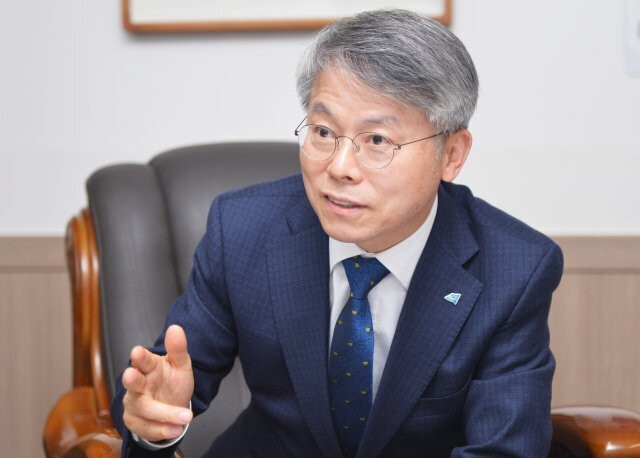
GWANGJU — Jeonnam-Gwangju Unified Metropolitan City Mayor Min Hyung-bae officially proposed a plan to all local municipal governments to fully implement a rural basic income for areas facing population decline, starting next year.

Under the proposal, the unified city intends to expand rural basic income benefits even to regions excluded from current government pilot projects. The financial burden will be split equally—50% funded by the Jeonnam-Gwangju Metropolitan City government and 50% by the respective local county.

Speaking at a press conference marking his 100th day in office, held at the Gwangju Government Complex business room on the 8th, Mayor Min stated, "We must strengthen the livelihoods of farmers and fishermen. I propose the full implementation of a rural basic income targeting depopulation-risk areas across Jeonnam-Gwangju starting next year."

Targeting 16 Depopulation-Risk Areas
Out of the 22 cities and counties within Jeonnam-Gwangju, 16 are currently designated as depopulation-risk areas.

Presently, the government-led rural basic income pilot project is underway in four counties: Gokseong, Sinan, Gurye, and Boseong. Spearheaded by the Ministry of Agriculture, Food and Rural Affairs, the pilot program aims to stabilize incomes and stimulate local economies by providing basic income to residents in farming and fishing communities facing population extinction crises.

Mayor Min’s vision is to broaden this support framework to include regions left out of the national pilot program.

"While four counties are currently targeted by the government pilot project, I will officially propose to the remaining regions that Jeonnam-Gwangju implement a full-scale rural basic income to the maximum extent the city can manage," Min said.

A 50-50 Financial Split... Exploring 20 Trillion Won Integration Incentives
The funding model suggests that Jeonnam-Gwangju Metropolitan City and the respective county will each shoulder 50% of the cost.

"Jeonnam-Gwangju will clear the path first," Mayor Min noted, adding that financial burdens and implementation methods will be thoroughly discussed with each county.

Notably, Min expressed willingness to utilize a portion of the 20 trillion-won integration incentive package—secured through the recent administrative merger—as a funding source for the basic income if required.

"I expect the respective counties to review this proactively," said Min. "If necessary, we can tap into a portion of the 20 trillion-won integration incentives."

However, actual full-scale implementation will require further negotiations regarding target recipients, payout sizes, distribution methods, and specific financial sharing ratios between the city and individual counties.

Council Chair Song Hyung-gon Echoes Need for Basic Income
Discussions regarding the introduction of a rural basic income have also gained traction within the Jeonnam-Gwangju Metropolitan Council.

On the preceding day, Council Chairperson Song Hyung-gon highlighted a sense of alienation felt in rural areas during his own 100th-day press conference held at the Jeonnam Government Complex, proposing a "Jeonnam-style" rural basic income.

"Contrasting Gwangju's high expectations for future industry investments like semiconductors with the stark reality of Jeonnam's rural communities, there are high hopes for administrative integration in depopulation-threatened regions," Song stated. "We need tangible policies that rural residents can genuinely experience following the integration."

Mayor Min similarly emphasized the need for a city-level response, noting that a broad consensus is forming among local lawmakers and the metropolitan council regarding the necessity of a rural basic income.

[Copyright (c) Global Economic Times. All Rights Reserved.]
  • #Hormuz Impasse
  • #globaleconomictimes
  • #micorea
  • #mykorea
  • #nammidonganews
  • #singaporenewsk
  • #Samsung
  • #Daewoo
  • #Hyos
HONG  MOON HWA Senior Reporter
HONG MOON HWA Senior Reporter

Popular articles

  • Chuncheon to Light Up the "Lights of Ethiopia": The 16th Ethiopia Road World Coffee Festival & Meskel Festival Opens on September 25

  • "Coffee Aroma and the Dance of Peace: A Global Cultural Harmony Unfolding This Chuseok" 

  • Interview with Lim Byung-jin, Secretary-General of the Association of Northeast Asia Regional Governments (NEAR)

I like it
Share
  • Facebook
  • X
  • Kakaotalk
  • LINE
  • BAND
  • NAVER
  • https://www.globaleconomictimes.kr/article/1065590026370603 Copy URL copied.
Comments >

Comments 0

Weekly Hot Issue

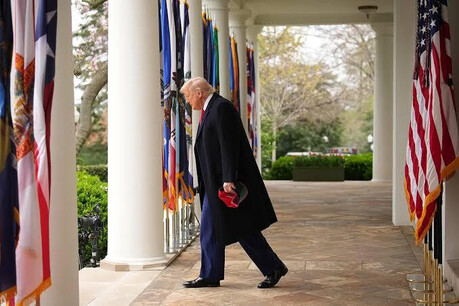
  • Trump’s Mid-Tier Campaign Suit Draws Attention—and Online Controversy Over 'Made in China' Origin
  • Thailand Floods Death Toll Reaches 60 as Authorities Rush to Prepare for Major International Summit Amid More Heavy Rain Warnings
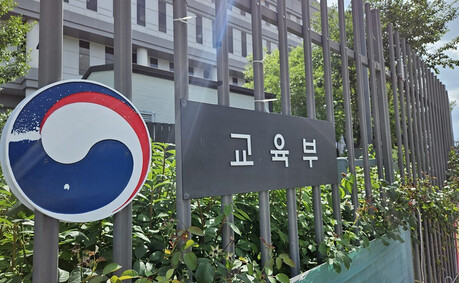
  • Korea and Egypt Revise Higher Education MOU to Strengthen AI Cooperation
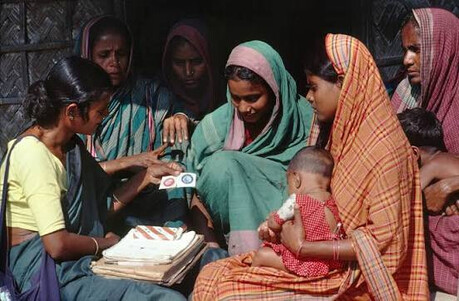
  • Bangladesh, Ranked 8th in Population, to Launch Nationwide Family Planning Campaign in December
  • Microsoft Challenges Apple with New AI-Powered Laptop Launch
  • U.S. Initiates Direct Contact with Myanmar’s Military Junta, Signaling a Shift Away From Isolation Policy

Most Viewed

1
US Deploys Third Carrier and 10,000 Troops to Middle East Amid Rising Tensions with Iran
2
Gyeongsangbuk-do Promotes Excellence of Korean Traditional Crafts in Washington, D.C.
3
30% of Employees Replaced by AI Expected to Be Rehired by 2029, Predicts Gartner
4
Chungbuk Province Goes All-Out to Attract Young Visitors for the 2026 Osong Cosmetics Beauty Expo
5
Gyeongsangbuk-do Joins Hands with Maryland and IonQ to Accelerate Global Quantum Industry Cooperation
체리가든 스토리
nutri huevos
로타리
동포저널

Hot Issue

AMD CEO Lisa Su Meets with Samsung and SK Hynix Chiefs, Sparking HBM Partnership Hopes

Henri Kagan and Kenso Soai Awarded the Nobel Prize in Chemistry

Government Unveils 1,000 Trillion Won "K-GX" Initiative to Drive Decarbonization and Green Tech

Samsung Special Performance Bonuses to Be Paid in March-April Next Year Amid Ongoing Compensation and Bargaining Divides

Fashion Runway Show 2026

Global Economic Times
korocamia@naver.com
CEO : LEE YEON-SIL
Publisher : KO YONG-CHUL
Registration number : Seoul, A55681
Registration Date : 2024-10-24
Youth Protection Manager: KO YONG-CHUL
Singapore Headquarters
5A Woodlands Road #11-34 The Tennery. S'677728
Korean Branch
Phone : +82(0)10 4724 5264
#304, 6 Nonhyeon-ro 111-gil, Gangnam-gu, Seoul
Copyright © Global Economic Times All Rights Reserved
  • 향기네무료급식
  • BCB부천방송
  • 반달곰 프로젝트
Search
Category
  • All articles
  • Synthesis
  • World
  • Business
  • Industry
  • ICT
  • Distribution Economy
  • Well+Being
  • Travel
  • Eco-News
  • Education
  • Korean Wave News
  • Opinion
  • Arts&Culture
  • Sports
  • People & Life 
    • 전체
    • International Student Report
    • With Ambassador
  • Column 
    • 전체
    • Cho Kijo Column
    • Cherry Garden Story
    • Ko Yong-chul Column
    • Kim Seul-Ong Column
    • Lee Yeon-sil Column
  • Photo News
  • New Book Guide
  • Overseas Koreans
  • Multicultural News