![[등록] 2026-09-01 15:48:31](/support/_updata/banner2/tl181982910_6749.png)


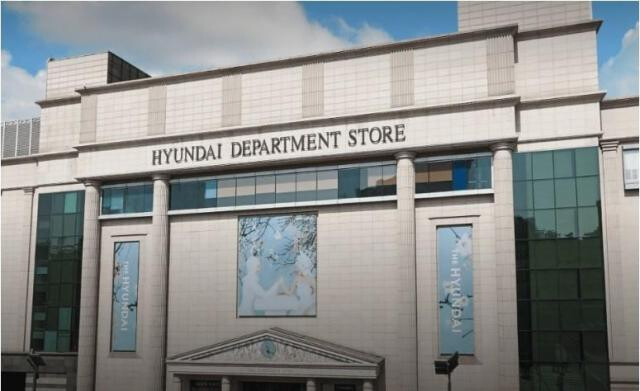
Hyundai Department Store is taking the lead in spreading a sustainable consumption culture by officially launching its 'Buy-Back' service, a resource-circulating recommerce model. This service allows customers to sell their unworn fashion items and receive H-Points, Hyundai Department Store Group's integrated membership points, equivalent to the market value of the used goods.
Hyundai Department Store announced on the 9th that it has officially implemented the Buy-Back service this month, following two months of successful pilot operation since May. Consumers can easily access this service through The Hyundai.com website or app. After applying to sell, customers simply pack their clothes in a box and leave them at their doorstep. Hyundai Department Store, in cooperation with the resale solution startup 'Madeleine Memory,' will then collect and inspect the items. Inspections are based on the item's components, labels, and release date. If the inspection is passed, the purchase amount is immediately credited as H-Points. H-Points can be used like cash at Hyundai Department Store, outlets, and The Hyundai.com, enhancing customer convenience.
Growth of the Recommerce Market and the Competitiveness of the 'Buy-Back' Service
The domestic recommerce market has recently seen rapid growth. While peer-to-peer transactions through used goods platforms are active, the participation of large corporations is expected to further increase market trustworthiness and accessibility. According to Statistics Korea, the size of the domestic online used goods market steadily grew from 20 trillion won in 2020 to 25 trillion won in 2021 and 30 trillion won in 2022. The fashion sector, in particular, is one of the most active categories for used transactions, and the 'Buy-Back' service meets customer needs by aligning with this market trend.
The biggest strengths of the 'Buy-Back' service are its convenience and reliability. Traditional used goods transactions involved the seller directly finding a buyer or the hassle of listing items and negotiating prices on transaction platforms. However, the 'Buy-Back' service resolves these inconveniences by allowing customers to easily sell their items without complex procedures. Furthermore, Hyundai Department Store's direct involvement in the inspection and purchase process enhances product reliability and minimizes the potential for disputes during transactions. This is expected to be a significant help in alleviating consumer anxieties, especially concerning transactions of luxury or high-priced apparel.
Contributing to the Spread of Sustainable Consumption Culture
The 'Buy-Back' service goes beyond simply purchasing used goods; it embodies the important value of spreading a sustainable consumption culture. The apparel production process consumes vast resources and energy and causes environmental pollution during disposal. The fashion industry accounts for approximately 10% of global carbon emissions, and enormous amounts of apparel waste are generated annually. As part of efforts to address these environmental issues, the 'Buy-Back' service contributes to extending the lifespan of clothing and reducing resource waste. By returning clothes no longer worn by consumers back into the market instead of discarding them, the service plays a role in the circular economy. This is expected to resonate strongly with modern consumers, especially the MZ generation, who value 'value consumption' that considers the environment.
The pilot operation results support this positive outlook. Over 1,000 people participated in the service during the two months, and the high re-use rate, with over 30% of customers using the service more than once, was observed. Notably, cases of repurchasing items from the same brand using H-Points accounted for 45% of all purchased items, indicating that the service also has the effect of increasing customer brand loyalty. This demonstrates that it's not just about selling used clothes; it's creating a virtuous cycle that leads to new consumption within the Hyundai Department Store platform.
Service Expansion and Future Prospects
The 'Buy-Back' service, currently targeting approximately 130 premium fashion brands available at Hyundai Department Store and The Hyundai.com, is expected to expand further in the future. Madeleine Memory, the collaborating partner, plans to resell the purchased used items on its own website starting in August, diversifying the distribution channels for used goods.
Beyond online services, Hyundai Department Store also plans to operate used item purchase centers within offline stores. This is expected to further increase service accessibility by expanding contact points where customers can directly bring items for consultation and sale. A Hyundai Department Store official stated, "As sustainability and ethical consumption have become important, especially among the MZ generation, we will develop the Buy-Back service into a recommerce platform that spreads sustainable fashion consumption culture, going beyond simple used transactions."
The 'Buy-Back' service is an example of Hyundai Department Store's commitment to becoming a company that realizes environmental and social values, beyond being a mere distribution channel. This is considered a 'win-win' strategy that strengthens corporate social responsibility (CSR), meets consumer demands for sustainability, and creates new business models. It remains to be seen what changes the 'Buy-Back' service will bring to the domestic fashion recommerce market.
[Copyright (c) Global Economic Times. All Rights Reserved.]