![[등록] 2026-09-01 15:48:31](/support/_updata/banner2/tl181982910_6749.png)


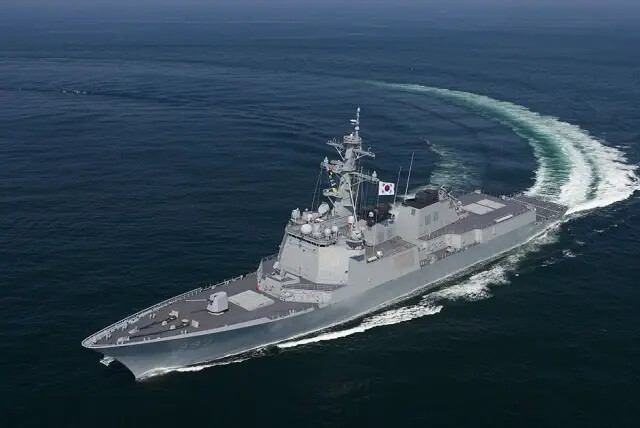
(C) Army Recognition
SEOUL, South Korea – The Republic of Korea's Defense Acquisition Program Administration (DAPA) is actively considering a collaborative design approach for the ambitious Korean Next-Generation Destroyer (KDDX) project, potentially involving shipbuilding giants HD Hyundai Heavy Industries (HHI) and Hanwha Ocean. This move is seen as a way to foster synergy and resolve an escalating, two-year-long legal and business dispute between the key industry players.
DAPA’s Defense Project Planning and Management Subcommittee recently deliberated and approved the 'KDDX Detailed Design and Lead Ship Construction Basic Plan,' narrowing the path forward to three options: a sole-source contract, a competitive bid, or the newly proposed joint-design scheme. The final business strategy is scheduled to be determined at the Defense Project Promotion Committee (DPPC) meeting on December 18.
The Stalled $6 Billion Program
The KDDX program is a landmark initiative, valued at approximately 7.8 trillion Korean won (about $6 billion), aimed at constructing six state-of-the-art destroyers entirely with indigenous Korean technology, encompassing both the hull and a domestically developed Aegis combat system. It represents the nation’s first fully homegrown destroyer project.
Ship construction projects typically progress through conceptual design, basic design, detailed design/lead ship construction, and finally, subsequent ship construction. In the KDDX timeline, Hanwha Ocean handled the initial conceptual design, while HD Hyundai HHI completed the basic design phase.
The detailed design and lead ship construction phase was originally slated to begin last year, immediately following the basic design completion in December 2023. However, the project has been significantly delayed by nearly two years due to intense competition and a protracted legal conflict between HD Hyundai and Hanwha Ocean.
The Three Options on the Table
Historically, DAPA would have proceeded with a sole-source contract with HD Hyundai HHI, the company responsible for completing the basic design. This approach offers streamlined continuity but has been vigorously challenged by Hanwha Ocean.
Hanwha Ocean has argued against the sole-source approach, citing a military secrets leakage incident involving HD Hyundai HHI personnel. Instead, Hanwha has pushed for either a more transparent competitive bidding process or the shared co-design approach.
The third, and now highly considered, option is co-design. This is DAPA’s proposition for a win-win partnership between the two corporate rivals. Under this model, HD Hyundai HHI and Hanwha Ocean would jointly conduct the KDDX detailed design. Crucially, immediately upon the design's completion, DAPA would simultaneously order the first two lead ships, allocating one to each company for construction.
A Path to Industry Harmony
The joint-design proposal appears to be DAPA's pragmatic effort to break the stalemate and re-energize the critical national defense project. The business rivalry has become a significant liability, threatening the timely deployment of advanced naval assets. By compelling the two companies into collaboration and guaranteeing each a lead ship contract, DAPA hopes to incentivize cooperation and mitigate the risk of further legal wrangling that could derail the project entirely.
The upcoming DPPC meeting on December 18 will be pivotal. The decision made will not only determine the construction schedule for the KDDX fleet but will also set a precedent for how the South Korean defense industry manages cooperation and competition on large-scale, high-value projects in the future. The outcome is being closely watched by defense contractors and naval planners alike, as the need for advanced domestic destroyers remains a strategic priority for the Republic of Korea Navy.
[Copyright (c) Global Economic Times. All Rights Reserved.]