
![[등록] 2026-09-01 15:48:31](/support/_updata/banner2/tl181982910_6749.png)


Argentina harbors a strong aspiration: the dream of reclaiming its past glory, when it was one of the wealthiest nations in the world, Buenos Aires was an international hub, and the Argentine flag flew proudly on the international stage. However, such dreams alone cannot rebuild a nation. It requires institutions that endure beyond a government's term and strategies that prioritize stability over short-term gains.
In 2024, the Nobel Prize in Economic Sciences was awarded to Daron Acemoglu, Simon Johnson, and James Robinson for their research on the causes of national success and failure. Their work highlights a truth that Argentina has long overlooked: prosperous nations are built not on ideology, strong leaders, or quick fixes, but on inclusive and enduring institutions. Institutions transcend electoral cycles, resist political opportunism, and provide a stable framework for a nation to engage productively with the world.
However, Argentina is currently moving in the opposite direction.
The Milei Government's Foreign Policy and International Isolation
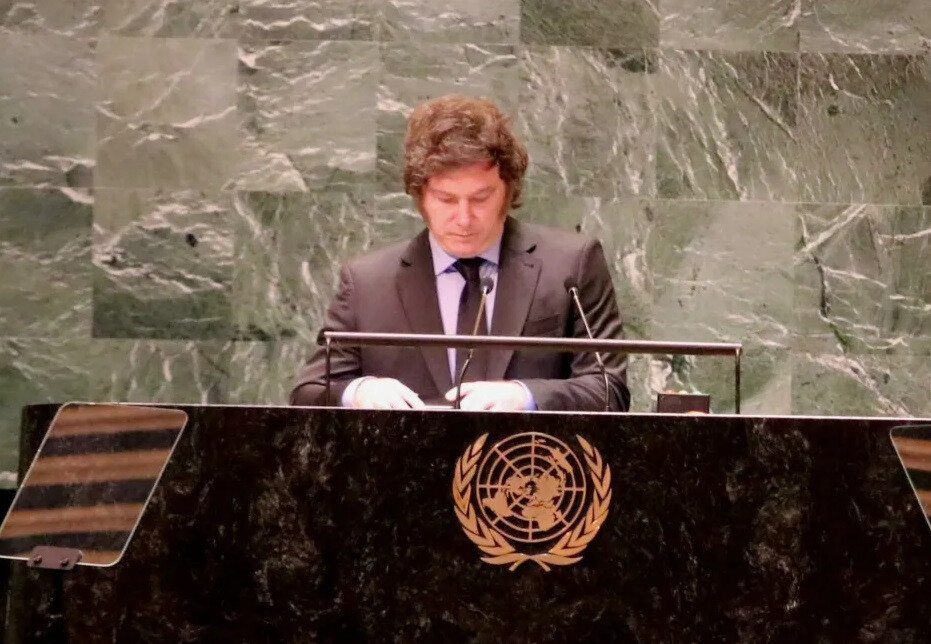
Upon his inauguration in 2023, President Javier Milei promised to reconnect Argentina with the world after years of "populist isolation." This resonated deeply with voters weary of triple-digit inflation and a stagnant economy. They wanted to believe that Argentina could regain its place among prosperous nations. Yet, reality has unfolded in the opposite direction.
Argentina's foreign policy and immigration laws, once rare areas of national consensus, are now being reshaped in ways that isolate the country. New immigration measures include restricting access to public healthcare services and universities, tightening residency and deportation regulations, and a decree that transfers naturalization procedures from the judiciary to the executive branch. This undermines the separation of powers and opens the door for citizenship to be granted as a political favor rather than through legal process. These changes reflect a broader trend of dismantling the institutional frameworks that once connected Argentina to the world.
Diminished Stature on the International Stage
Argentina's standing on the international stage is increasingly diminished. In recent months, Argentina has found itself virtually isolated in key UN votes, aligning only with a small number of countries that can hardly be considered models of democracy. The Milei government has also announced its withdrawal from the World Health Organization (WHO), severing itself from global health cooperation.
The dismissal of Foreign Minister Diana Mondino last year also fits this pattern. She was dismissed after casting a UN vote consistent with Argentina's long-standing diplomatic position. Her dismissal signified a shift from institutional continuity to political spectacle. These are not isolated incidents but a systematic dismantling of Argentina's diplomatic stance.
For decades, Argentina's foreign policy was a rare point of stability amidst political division. From military regimes to democratization, from Peronist waves to liberal experiments, Argentina's relationship with international organizations like the UN, WHO, and Mercosur remained consistent. This institutional memory is now under attack. This erosion of diplomatic norms directly undermines the kind of long-term institutions that Nobel laureates argue are essential for prosperity.
The Milei administration has also rejected the UN's Sustainable Development Goals, Agenda 2030. This raises a fundamental question: How can Argentina expect to integrate into the global economy while isolating itself from the rules and frameworks that define it?
Autonomy or Self-Harm?
Milei frames these moves as sovereign acts defending Argentina's "true" interests. Yet, the paradox is clear: he promised to open Argentina to the world, but he is systematically disconnecting the country from the very institutions that enable global cooperation.
To play a significant role in the international community, one must abide by the rules of the game. Argentina cannot expect to attract investment, forge trade agreements, or shape global standards while diplomatically isolating itself. This is not a matter of left versus right; it is about whether a nation can build permanent institutions that endure beyond a single electoral cycle. Argentina's foreign policy, immigration stance, and international engagement form the bedrock of its long-term strategy, not tools for short-term political spectacle.
The Milei administration might view these moves as bold. However, to many around the world, they appear to be acts of self-harm. There is a risk that Argentina will once again turn its dreams into fantasies, aspiring to a significant role on the international stage while burning its own bridges.
If Argentina wants to reclaim its place on the international stage, it's time to decide whether it will be a player or merely a spectator.
[Copyright (c) Global Economic Times. All Rights Reserved.]














