![[등록] 2026-09-01 15:48:31](/support/_updata/banner2/tl181982910_6749.png)


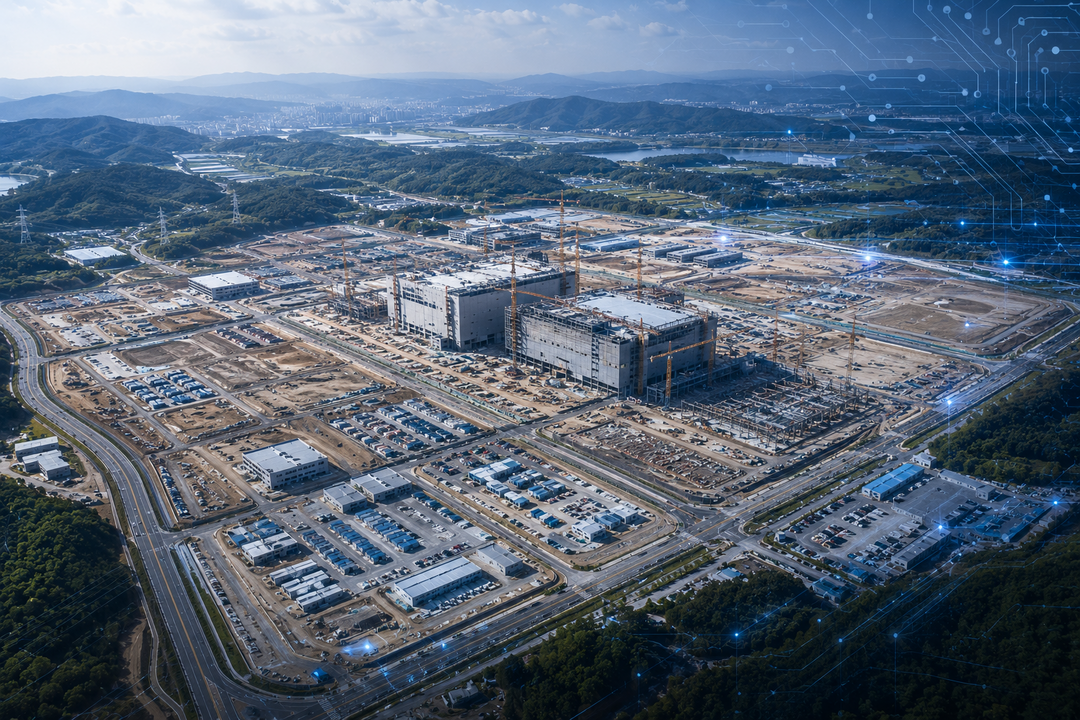
"Culture has become the very economy, future growth engine, and core pillar of national competitiveness." These were the words of President Lee Jae-myung in his New Year's address this year. Gwangju and Jeonnam have joined hands after 40 years to form a single administrative district, embarking on a historic voyage as the "Jeonnam-Gwangju Integrated Special City." Standing on the massive launching pad of administrative reform, the top priority and core benchmark for the success of this integrated city is undeniably "youth retention."
Up until now, local government youth policies have focused heavily on attracting companies and inflating employment statistics. However, jobs and factories alone are simply not enough to stop young people from fleeing to the capital region. This is why a "youth-friendly settlement ecosystem" that allows individuals to enjoy culture and art in their daily lives must be swiftly established, stretching from major industrial complexes to new urban footholds.
◆ "Nobody Stays in a Gray Workplace After Work"
In the past, industrial complexes and new towns were treated as mere places to "work" or "sleep." Today, however, the criteria young people look for in a city have completely transformed. Alongside a high salary, the decisive factors in choosing a workplace are "work-life balance" and "enjoying culture in everyday life." If the environment is bleak, offering nothing to do on evenings and weekends, young people will never stay.
Recognizing this early on, the government and other local governments are accelerating efforts to culturally transform industrial complexes. Last year, the Ministry of Culture, Sports and Tourism, the Ministry of Trade, Industry and Energy, and the Ministry of Land, Infrastructure and Transport launched a joint cross-governmental "Culture-Led Industrial Complex Creation Project," selecting three pilot sites: Gumi, Changwon, and Wanju general industrial complexes. They announced plans to designate 10 locations by 2027 to transform industrial complexes into vibrant spaces that young people seek out.
Gumi National Industrial Complex: Under the vision of "A living space where industrial heritage and culture coexist for youth wanting to live here," the complex is utilizing a preserved historic textile building (Bangrim) to build a landmark. Next to the landmark, a park, performance plaza, and underground parking lot are being newly built, while improving the landscape along the street (1 Industrial Complex Road) leading to the Nakdong Riverbank. The core feature is consolidating cultural facilities around this landmark.
Changwon National Industrial Complex: Guided by the vision of "A meta-cultural industrial complex embracing machinery and defense," the complex is establishing experience and exhibition halls themed around precision machinery and defense. To build a brand suited for the nation’s largest machinery complex, it integrates machinery, defense, and the arts to develop experiential contents, alongside operating "industrial tourism tours" linked with related companies. Improvements are also underway for the pedestrian walkways along the Namcheon River and expanding Bongam Bridge to enhance logistics and traffic.
Wanju General Industrial Complex: Under the vision of "The No. 1 culture-fusion leading industrial complex where you work, play, and grow," a landmark highlighting Wanju’s history (agriculture, automobiles, hydrogen) and hands-on experiences is being created. In addition, the complex's worker welfare center is being transformed into an educational space for video production and 3D modeling, running creative programs linked with the automobile and hydrogen industries.
Along with these advanced models, this year’s Ministry of Trade, Industry and Energy "Industrial Complex Environment Creation Grant Project" provided 120 billion won in national funding to three locations—including Muan Cheonggye Agricultural and Industrial Complex in Jeonnam-Gwangju, Sacheon in Gyeongnam, and Asan in Chungnam—to build "Youth Culture Centers" combining complex cultural and innovation support functions, while carrying out renewal projects for aging factories such as the Daebul National Industrial Complex in Yeongam, Jeonnam-Gwangju.
By benchmarking and swiftly applying these advanced models and government policies, a bold policy decision is urgently needed to build a "complex cultural ecosystem"—combining galleries, performance halls, co-working spaces, and hobby community hubs—not just in industrial complexes, but across all major bases of the integrated city.
◆ "Lack of Cultural Infrastructure" Ranks as No. 1 Reason Youth Leave
The era of capturing the younger generation through jobs alone has come to an end. Even if people flow into Jeonnam-Gwangju due to industrial infrastructure like the Gwangju Semiconductor Cluster, if there is no cultural environment to enjoy after work, the outflow to the capital area cannot be prevented.
According to the Ministry of Culture, Sports and Tourism's "3rd Regional Culture Promotion Basic Plan (2026–2030)," the number one reason local youth leave their regions is undeniably the "lack of culture, leisure, and consumption infrastructure (49.3%)".
This reality is starkly exposed by internal regional imbalances. While Gwangju ranks first nationwide in cultural and artistic spending per household at 158,460 won, its actual citizen cultural and art viewership rate ranks a dismal 15th nationwide at 54.7%.
This indicates that despite citizens' high cultural aspirations and spending power, effective infrastructure and content supply within the region are severely lacking.
Furthermore, with 61.3% of all domestic performances concentrated in the capital region, regional youth boarding KTX trains on the weekends for "cultural expeditions" has long become routine.
To improve this, infrastructure innovation must take precedence by first building life-friendly complex cultural spaces next to industrial complexes and workplaces. Furthermore, tailored youth performance/exhibition programs and expanded space support at the Jeonnam-Gwangju Integrated City level are desperately needed so that Gwangju’s high cultural spending translates into actual local viewership.
If Jeonnam-Gwangju proactively establishes "cultural living spaces right next to workplaces" and shifts its systemic body before the new regional culture policies fully take effect in 2028, a southern regional era where youth choose to stay will finally open.
"Relying solely on job creation like semiconductor complexes and fabs has limitations in attracting youth," emphasized a regional expert. "To make youth stay and put down roots, a settlement environment where culture breathes across the entire living sphere must be created first."
◆ Embracing Young Artists to Form a "Virtuous Culture Cycle"
Alongside the transformation of industrial complexes and urban hubs, a mandatory parallel task is attracting young artists to the region to build a sustainable cultural ecosystem. We must make the southern region a new "cradle of creativity" for young creators exhausted by the capital’s exorbitant rents and fierce survival competition.
Much like the "Youth Craft Village" in Buyeo, Chungnam, or the co-working space support model in Gangneung, Gangwon, Jeonnam-Gwangju must institutionally guarantee bold housing and creative space support alongside opportunities to participate in local projects if it wishes to become a city where youth return.
When young artists rooted in local communities breathe cultural vitality into alleys and workplaces, the settlement satisfaction of local workers and residents rises, completing a "virtuous cultural cycle."
If the structural passive consumption of local culture remains unchanged when the government’s multi-year policy agreements and new regional culture initiatives roll out in 2028, the results will remain the same.
Only by weaving an attractive story of "cultural life" onto the solid foundation of "jobs" can a true southern era open where young people voluntarily seek out and settle in the region.
◆ Gwangju Integrated City Spearheads Youth-Led "Cultural Great Transformation"
As the Jeonnam-Gwangju Integrated Special City faces a major turning point—including the creation of semiconductor national industrial complexes—it is embarking on a sweeping overhaul of cultural policies designed to attract youth and revitalize regional culture. The core strategy is moving away from a top-down, benevolent administrative structure and establishing young artists as the prime drivers who plan and execute policies.
The Special City plans to establish a new "Cultural Sovereignty Committee" next year, dramatically increasing the participation ratio of young artists. It will also build the "Citizen Culture Office," which will serve as a hub for field artists to foster free policy development and exchange. Projects securing creative spaces will also accelerate. The "Old Downtown Re-core Project," which converts underutilized downtown spaces into work and exhibition spaces, will be intensively applied to the cultural sector, alongside the creation of "150 Cultural Villages" anchored by independent bookstores and cultural cafes with young artists at the helm. Dedicated spaces and educational programs for new media and planning fields, such as independent publishing and video production, will also be expanded.
A Gwangju Special City official explained, "We will make concerted efforts to create culture-rich settlement conditions in industrial complexes and residential areas expected to see youth influx due to job creation, by establishing performance halls, artist creative spaces, and attracting organizations affiliated with the Ministry of Culture, Sports and Tourism."
[Copyright (c) Global Economic Times. All Rights Reserved.]