• 2026.10.24 (Sat)
  • All articles
  • LOGIN
  • JOIN
Global Economic Times
[등록] 2026-09-01 15:48:31
  • Synthesis
  • World
  • Business
  • Industry
  • ICT
  • Distribution Economy
  • Well+Being
    • Pet Life
    • Halal Horizon
  • Travel
  • Eco-News
  • Education
  • Korean Wave News
  • Opinion
  • Arts&Culture
  • Sports
  • People & Life
    • International Student Report
    • With Ambassador
  • Column
    • Cho Kijo Column
    • Cherry Garden Story
    • Ko Yong-chul Column
    • Kim Seul-Ong Column
    • Lee Yeon-sil Column
  • Photo News
  • New Book Guide
MENU
 
Home > Arts&Culture

From Busan Yeongdo to Gyeongseong's Dining Table... The Journey Worn by Abandoned Porcelain Shards

Hee Chan Kim Reporter / Updated : 2026-10-24 15:29:13
  • -
  • +
  • Print

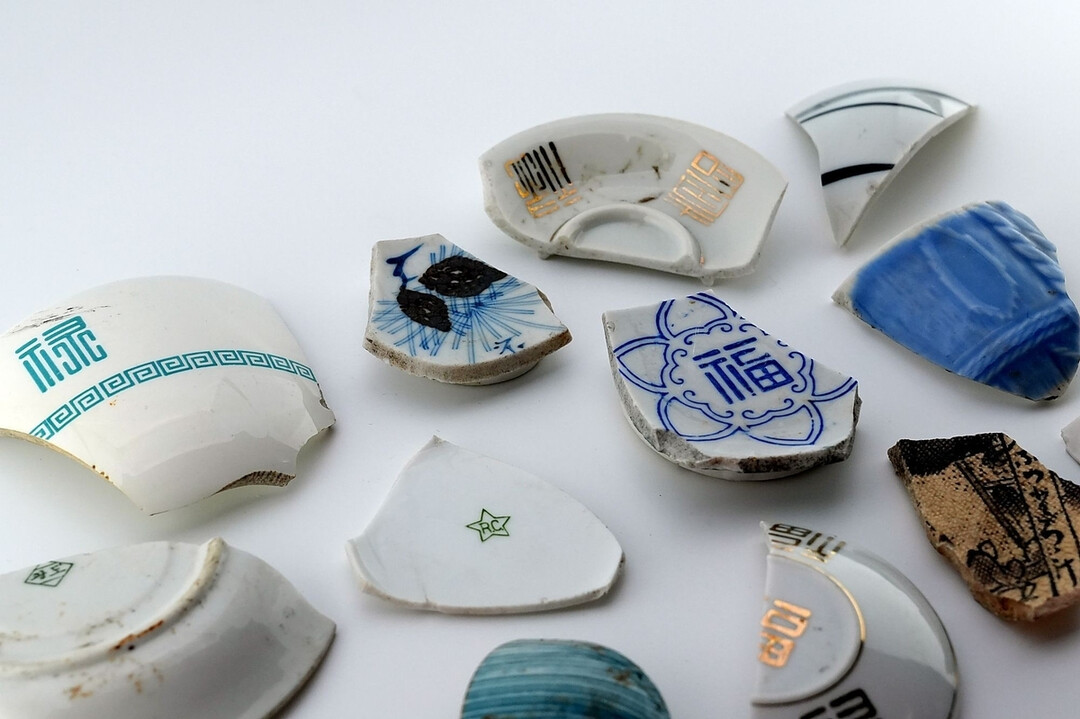
In 2009, an area in Haengdang-dong, Seongdong-gu, Seoul. Amidst excavation work in full swing ahead of urban development, fragments of bowls emerged one after another. The worn-out bowls were cracked and broken in various places. Buried together in this area were ceramics and household goods ranging from the late 19th century to the 1960s. They are the touch-worn traces of an area once called Gyeongseong and now known as Seoul.

Where did these bowls, which must have accompanied someone's daily life, come from, and why were they left here?

An exhibition highlighting the journey walked by discarded bowls is being held in Seoul and Busan. It is the 'Movement of Objects' spotlighted by the Hanyang University Museum in Seoul and the Korea National Maritime Museum in Yeongdo, Busan. Opening last month, the exhibition tracks where the bowls of Gyeongseong excavated from the Haengdang-dong waste site were made, how they made their way onto someone's dining table, and how they were eventually discarded. It is a journey of discovery using clues such as trademarks and inscriptions on the base of the feet, brand names left on bottles, and shard patterns. Ahn Shin-won, director of the Hanyang University Museum, emphasized the significance of the exhibition, saying, "Tracing bowl fragments is not just an archaeological investigation, but an act of reconnecting a city's daily life with industries across the sea."

Through various artifacts, the exhibition shows the process by which bowls manufactured in various parts of Japan about 100 years ago crossed the sea to arrive in Gyeongseong, and then made their way to dining tables via department stores and general merchandise shops. The section dealing with Yeongdo, Busan—one of the places the bowls passed through—is noteworthy. Japan Hard Porcelain Co., Ltd., based in Kanazawa, Japan, established a subsidiary in 1917 and built a factory in Yeongdo. It produced a variety of bowls, playing a central role in modern industrial ceramics. After liberation, the factory was taken over by Koreans, changed its name to Daehan Pottery and later Daehan Ceramics, and operated until the early 1970s.

The museum explained, "While the Seoul exhibition starts from the consumer hub of Gyeongseong and traces back to the production site of Yeongdo, the Busan exhibition starts from Yeongdo where the bowls were made and heads toward Gyeongseong." The Seoul exhibition also allows visitors to explore the art left on bowls by painters during the wartime evacuation period. During the Korean War, artists such as Kim Whanki (1913–1974), Byun Kwan-sik (1899–1976), Kim Eun-ho (1892–1979), and Jeon Hyuk-rim (1916–2010) painted directly on plates made at Daehan Pottery in Yeongdo. These plates were also regarded as 'souvenirs' capturing Korea for UN soldiers and foreign reporters at the time.

In the Seohwa Gallery of the Hanyang University Museum, some 60 hand-painted plates from the Noam Cultural Foundation collection prompt reflections on the era when industry and art met. Director Ahn Shin-won expressed his hope, stating, "Through this exhibition, which reads the journey of the same objects in opposite directions, I hope it becomes an opportunity to look at regional modern industrial heritage in a new light." The Seoul exhibition runs until November 30, and the Busan exhibition runs until November 7.

[Copyright (c) Global Economic Times. All Rights Reserved.]

  • #Cherry Garden
  • #HalalFood
  • #Halal
  • #Petlife
  • #Halalhorizone
  • #Hormuz Impasse
  • #globaleconomictimes
  • #micorea
  • #mykor
Hee Chan Kim Reporter

Popular articles

  • KT Expands Healthcare AX Business with New 'Medical Standard Model'

  • Ulsan Taehwagang AR Treasure Hunt Festival

  • Geumsan Ginseng Kicks Off a Ten-Day Festival

I like it
Share
  • Facebook
  • X
  • Kakaotalk
  • LINE
  • BAND
  • NAVER
  • https://www.globaleconomictimes.kr/article/1065594467874743 Copy URL copied.
Comments >

Comments 0

Weekly Hot Issue

  • Heavy Rain and Strong Winds in Southern Regions and Jeju Due to Typhoon "Champi"; Nationwide Mostly Cloudy
  • Itaewon Disaster 4th Anniversary Citizens' Memorial Prayer Meeting... "Must Deeply Engrave the Victims in Our Hearts"
  • North Korean Hacking Group Lazarus Spotted Preparing Attacks Exploiting PHP Vulnerabilities
  • Korea Secures Successive Leadership Positions in APEC Telecommunications and Information Working Group
  • AI Fairytale & Webtoon Creation Contest Held for Children Nationwide
  • Beyond HBM in AI Infrastructure: Samsung and SK hynix Wage War on Next-Gen Memory

Most Viewed

1
US Pushes to Deploy Special Task Force to the Korean Peninsula—Is It Also Targeting China?
2
Samsung Electronics Enters the 100 Trillion Won Quarterly Operating Profit Era
3
McDonald's Korea Expands and Relocates Headquarters to Booyoung Taepyeong Building in Taepyeong-ro
4
HMM Relocates Headquarters to Busan: A New Era for South Korea's Flagship Carrier
5
AI Companies Rush to Go Public, But Face Sudden Brakes Amid Cooling Investor Sentiment
체리가든 스토리
nutri huevos
로타리
동포저널

Hot Issue

Wall Street Falls as Middle East Escalation Fears and Surging Oil Prices Send Dow Down 1.2%

Global Credit Spreads Widened to 17-Month High Amid AI Investment Concerns

Investor Deposits Plummet by 51 Trillion Won in Four Months, Dropping to Lowest Level This Year

Fashion Runway Show 2026

Let’s recycle the old blankets in Jeju Island’s closet instead of incinerating them.

Global Economic Times
korocamia@naver.com
CEO : LEE YEON-SIL
Publisher : KO YONG-CHUL
Registration number : Seoul, A55681
Registration Date : 2024-10-24
Youth Protection Manager: KO YONG-CHUL
Singapore Headquarters
5A Woodlands Road #11-34 The Tennery. S'677728
Korean Branch
Phone : +82(0)10 4724 5264
#304, 6 Nonhyeon-ro 111-gil, Gangnam-gu, Seoul
Copyright © Global Economic Times All Rights Reserved
  • 향기네무료급식
  • APEC2025
  • 반달곰 프로젝트
Search
Category
  • All articles
  • Synthesis
  • World
  • Business
  • Industry
  • ICT
  • Distribution Economy
  • Well+Being 
    • 전체
    • Pet Life
    • Halal Horizon
  • Travel
  • Eco-News
  • Education
  • Korean Wave News
  • Opinion
  • Arts&Culture
  • Sports
  • People & Life 
    • 전체
    • International Student Report
    • With Ambassador
  • Column 
    • 전체
    • Cho Kijo Column
    • Cherry Garden Story
    • Ko Yong-chul Column
    • Kim Seul-Ong Column
    • Lee Yeon-sil Column
  • Photo News
  • New Book Guide
  • Overseas Koreans
  • Multicultural News