• 2026.05.08 (Fri)
  • All articles
  • LOGIN
  • JOIN
Global Economic Times
fashionrunwayshow2026
  • Synthesis
  • World
  • Business
  • Industry
  • ICT
  • Distribution Economy
  • Well+Being
  • Travel
  • Eco-News
  • Education
  • Korean Wave News
  • Opinion
  • Arts&Culture
  • Sports
  • People & Life
    • International Student Report
    • With Ambassador
  • Column
    • Cho Kijo Column
    • Cherry Garden Story
    • Ko Yong-chul Column
    • Kim Seul-Ong Column
    • Lee Yeon-sil Column
  • Photo News
  • New Book Guide
MENU
 
Home > Industry

South Korea to Expand Mid-Sized Urban Living Housing to Accommodate Growing Families

KO YONG-CHUL Reporter / Updated : 2025-01-20 15:41:20
  • -
  • +
  • Print


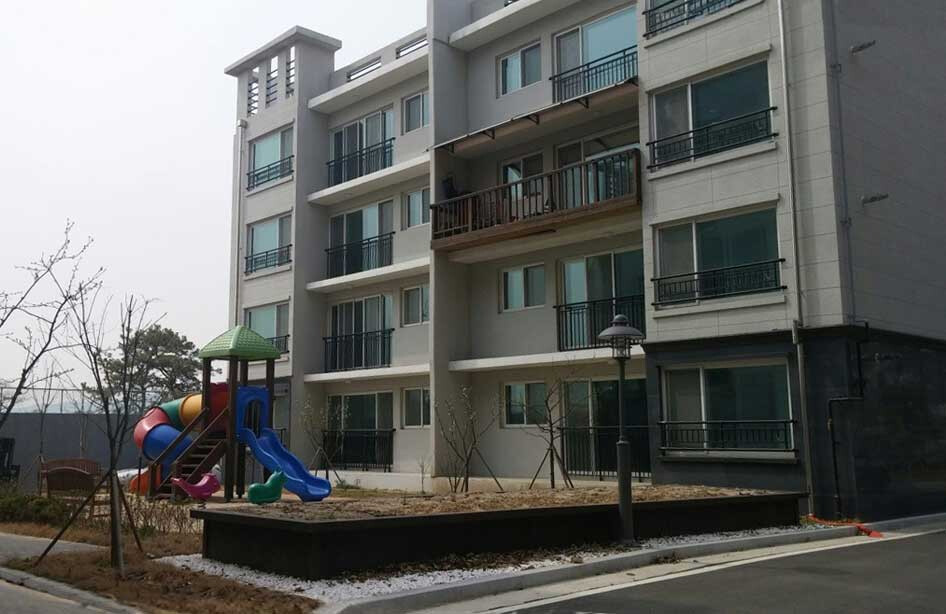
Seoul, South Korea – South Korea's Ministry of Land, Infrastructure, and Transport announced on January 20 that it will relax regulations on the construction area of urban living housing, effective January 21. This move is expected to increase the supply of mid-sized apartments to meet the growing needs of families with three or four members.

Urban living housing, typically found in urban areas, is defined as residential complexes with less than 300 households and units smaller than 85 square meters. Previously, only urban living housing units with a floor area of 60 square meters or less could be built five stories or higher. This restriction was aimed at catering to the increasing number of single-person and double-person households.

However, the revised regulations eliminate this floor area restriction. As a result, developers can now construct urban living housing complexes with units up to 85 square meters, which is equivalent to approximately 34 pyeong, and five or more stories. The goal is to provide more housing options for families of three or four members, resembling traditional apartments.

To further clarify the types of urban living housing, the term "small-sized housing" will be replaced with "apartment-type housing." Housing complexes with four stories or less will be categorized as either cluster-type row houses or cluster-type multi-family houses.

The government has also revised construction standards for apartment-type urban living housing. To ensure adequate parking spaces, households with a floor area of 60 to 85 square meters will be required to have at least one parking space per household, similar to general apartment complexes. Additionally, apartment-type housing complexes with 150 or more households with a floor area of 60 to 85 square meters will be mandated to provide communal facilities such as senior centers and children's playgrounds.

Kim Kyu-cheol, director-general of the Ministry's Housing and Land Bureau, stated, "This relaxation of floor area restrictions will enable the construction of larger urban living housing units, creating a more favorable environment for the supply of mid-sized apartments to accommodate families with three or four members."

[Copyright (c) Global Economic Times. All Rights Reserved.]

KO YONG-CHUL Reporter
Reporter Page

Popular articles

  • President Lee’s Approval Rating Hits Record High of 67% for Second Consecutive Week: Gallup Korea

  • The AI Tsunami: Meta to Slash 10% of Workforce Amid Global Tech Purge

  • ElevenLabs Partners with Caring to Support ‘Senior Emotional Care’ via Voice AI

I like it
Share
  • Facebook
  • X
  • Kakaotalk
  • LINE
  • BAND
  • NAVER
  • https://www.globaleconomictimes.kr/article/1065595137596134 Copy URL copied.
Comments >

Comments 0

Weekly Hot Issue

  • Samsung Electronics Shifts Strategy in China: Moving from Hardware Sales to Platform-Based Business
  • Banking War 2.0: South Korean Banks Race to Transition into 'AI-First' Institutions
  • Tesla Model Y Becomes First to Pass Grueling New U.S. Autonomous Safety Tests
  • Celltrion’s Zymfentra Sees Explosive 300% Growth, Hits Record Quarterly Prescriptions in the U.S.
  • BMW Korea Ignites May with Exclusive 9-Model Online Limited Edition Lineup
  • Hyundai Mobis Completes Independent EV 'Heart' Lineup: A Major Leap Toward Global Leadership in Power Electric Systems

Most Viewed

1
Iran Imposes Transit Fees on Strait of Hormuz Amid Escalating Maritime Tensions
2
Korea and Vietnam Forge Strategic Partnership in Science, Technology, and Innovation
3
80% of Enterprises Hit by 'AI Agent Anomalies': SailPoint Calls for Integrated Identity Governance
4
Kurly Abandons 'All-Paper' Packaging Strategy Amid Rising Cost Pressures
5
Tradition Meets the Public: Chungju’s Gugak Busking
광고문의
임시1
임시3
임시2

Hot Issue

Tensions Flare in Strait of Hormuz: U.S.-Iran Clashes Threaten Fragile Truce

Tesla Model Y Becomes First to Pass Grueling New U.S. Autonomous Safety Tests

U.S. Trade Court Strikes Down Trump’s ‘Global 10% Tariff,’ Citing Executive Overreach

Hyundai Motor Group Bets $700 Million on Mexico Amid Trade Policy Volatility

Fashion Runway Show 2026

Global Economic Times
korocamia@naver.com
CEO : LEE YEON-SIL
Publisher : KO YONG-CHUL
Registration number : Seoul, A55681
Registration Date : 2024-10-24
Youth Protection Manager: KO YONG-CHUL
Singapore Headquarters
5A Woodlands Road #11-34 The Tennery. S'677728
Korean Branch
Phone : +82(0)10 4724 5264
#304, 6 Nonhyeon-ro 111-gil, Gangnam-gu, Seoul
Copyright © Global Economic Times All Rights Reserved
  • 에이펙2025
  • APEC2025가이드북TV
  • 반달곰 프로젝트
Search
Category
  • All articles
  • Synthesis
  • World
  • Business
  • Industry
  • ICT
  • Distribution Economy
  • Well+Being
  • Travel
  • Eco-News
  • Education
  • Korean Wave News
  • Opinion
  • Arts&Culture
  • Sports
  • People & Life 
    • 전체
    • International Student Report
    • With Ambassador
  • Column 
    • 전체
    • Cho Kijo Column
    • Cherry Garden Story
    • Ko Yong-chul Column
    • Kim Seul-Ong Column
    • Lee Yeon-sil Column
  • Photo News
  • New Book Guide
  • Multicultural News
  • Jobs & Workers