![[등록] 2026-09-01 15:48:31](/support/_updata/banner2/tl181982910_6749.png)


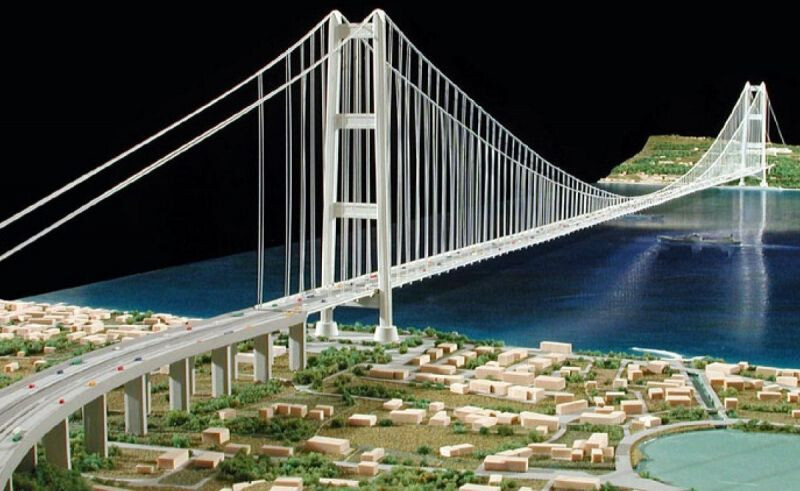
The Italian government, led by Infrastructure Minister Matteo Salvini, has reaffirmed its commitment to commence construction of the Messina Strait Bridge this year. This colossal project, aiming to connect Sicily to Calabria, has reignited a long-standing debate, marked by its staggering cost, technical complexities, and profound local opposition.
Project Overview:
World-Record Span: The bridge, with a planned central span of 3,300 meters, would be the world's longest suspension bridge.
European Corridor: It is intended to be a vital component of the EU's Scandinavian-Mediterranean Corridor, facilitating the movement of goods and people between Northern and Southern Europe.
Estimated Cost: The latest estimates place the project's cost at a substantial €13.5 billion, with limited EU funding currently allocated.
Historical Context: The concept of a Messina Strait crossing dates back to Roman times, but the project has remained in the planning stages for decades due to technical and financial challenges.
Key Points of Controversy:
Seismic Concerns: The region's high seismic activity raises significant safety concerns, with critics questioning the bridge's structural integrity.
Local Opposition: Residents express strong resistance, arguing that the allocated funds should be prioritized for essential services in Italy's economically disadvantaged southern regions, such as water infrastructure, healthcare, and education.
Environmental and Hydrological Concerns: Citizen committees, like "No Bridge" in Sicily, highlight the lack of comprehensive hydrological, seismic, and landscape surveys, challenging the project's public utility.
Infrastructure Priorities: Critics argue that existing infrastructure deficiencies, such as the reliance on diesel trains in Sicily and the lack of high-speed rail in Calabria, should be addressed before embarking on such a large-scale project.
Financial Management: Experts, like Adriano Giannola, emphasize that the issue is not the bridge itself, but the historical mismanagement of state infrastructure spending in Southern Italy. He points out that Italian law mandates 40% of state infrastructure spending for the South, but billions are consistently missing.
Technical Disagreements: Experts continue to disagree on the project's technical aspects, benefits, costs, and the government's procedural approach, further fueling public resentment.
Arguments for the Bridge:
Strategic Hub: Proponents argue that the bridge would transform Sicily into a crucial Mediterranean hub, attracting shipping traffic and boosting regional economies.
Economic Development: The project is seen as a catalyst for economic development in Southern Italy, creating jobs and stimulating growth.
Enhanced Connectivity: The bridge would significantly improve connectivity between Sicily and mainland Italy, facilitating trade and tourism.
Arguments Against the Bridge:
Misallocation of Funds: Opponents believe the massive investment would be better spent on addressing urgent social and infrastructure needs.
Environmental Impact: Concerns exist regarding the potential environmental impact on the Strait of Messina's unique ecosystem.
Safety Risks: The seismic risks and the complexity of the project raise concerns about potential safety hazards.
Current Situation:
Despite ongoing debates and local resistance, the Italian government remains determined to proceed with the bridge's construction. The project continues to be a focal point of national and international attention, highlighting the complex interplay of infrastructure development, economic priorities, and social concerns. The success of this immense project will ultimately depend on the Italian governments ability to address all of the concerns that have been raised.
[Copyright (c) Global Economic Times. All Rights Reserved.]