• 2025.12.13 (Sat)
  • All articles
  • LOGIN
  • JOIN
Global Economic Times
APEC2025KOREA가이드북
  • Synthesis
  • World
  • Business
  • Industry
  • ICT
  • Distribution Economy
  • Well+Being
  • Travel
  • Eco-News
  • Education
  • Korean Wave News
  • Opinion
  • Arts&Culture
  • Sports
  • People & Life
  • Column
    • Cho Kijo Column
    • Lee Yeon-sil Column
    • Ko Yong-chul Column
    • Cherry Garden Story
  • Photo News
  • New Book Guide
MENU
 
Home > World

Karnali Province: Poverty Persists Despite Development Efforts

Graciela Maria Reporter / Updated : 2024-12-28 16:16:51
  • -
  • +
  • Print

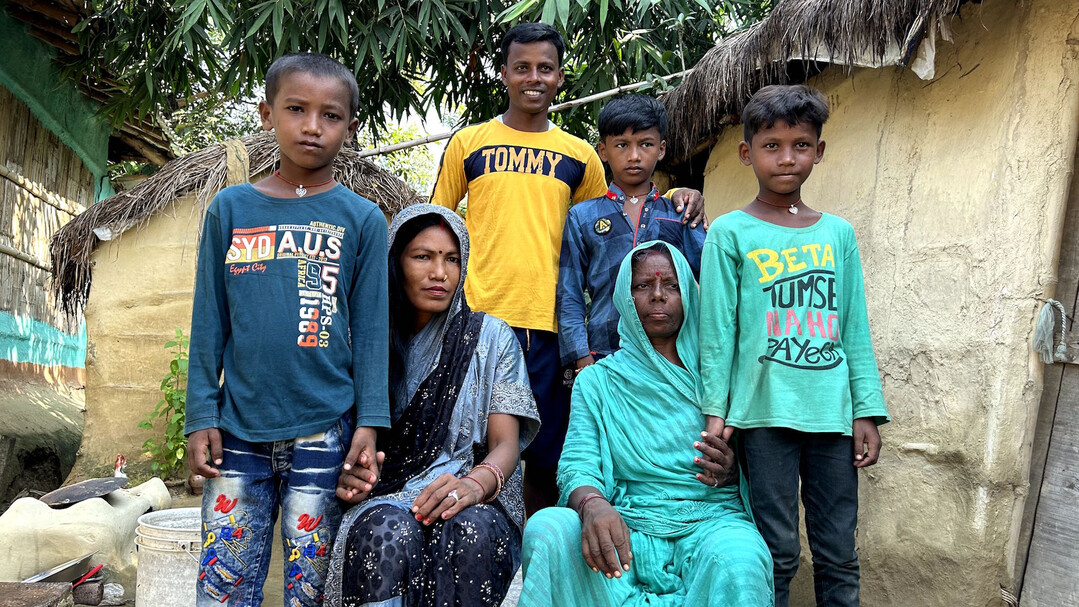
Surkhet, Nepal - In the remote and impoverished Karnali Province of Nepal, poverty remains a persistent challenge despite years of development efforts. Families like those of Harka Bahadur Mahar and Dirgha Badi exemplify the struggles faced by many in this region.

Mahar, a daily wage laborer in Jajarkot, supports his wife and seven grandchildren with meager earnings, while his sons work in India to repay a loan incurred after an earthquake destroyed their home. Badi, and his wife, crush stones for a living, earning barely enough to survive, as their sons who work in India send no remittances.

These are just two examples of the widespread poverty that forces thousands in Karnali to migrate, primarily to India, in search of work. This out-migration has severe social and economic consequences for the region, leaving behind a population dominated by women, children, and the elderly.

The Karnali provincial government has made significant investments, spending over Rs103 billion since its formation in 2017. However, its first five-year plan fell short of its ambitious targets, with poverty reduction, multidimensional poverty reduction, and per capita income growth lagging behind expectations.

Several factors contributed to these shortcomings:

Sluggish Development: Inadequate infrastructure, particularly in transportation, hinders economic growth and limits market access for local products.
Administrative Inefficiency: Poor planning, implementation, and monitoring of development projects have hampered their effectiveness.
Lack of Modernization: Agriculture, a primary sector in Karnali, remains largely subsistence-based, with limited access to modern farming techniques and markets.
Brain Drain: The continuous out-migration of skilled and unskilled labor further exacerbates the region's development challenges.
The National Statistics Office's 2022-23 report confirms the persistence of poverty in Karnali, with the province's poverty rate exceeding the national average.

While the provincial government acknowledges these challenges and is working on a new development plan with a renewed focus on poverty alleviation, the path to sustainable development remains fraught with obstacles.

[Copyright (c) Global Economic Times. All Rights Reserved.]

  • #globaleconomictimes
  • #koyongchul
  • #cherrylee
  • #seoulkorea
  • #periodicoeconomico
  • #글로벌이코노믹타임즈
  • #GET
  • #GETtv
  • #liderdel
Graciela Maria Reporter

Popular articles

  • EU Accelerates 'Battery Independence' with Multi-Trillion Won Public Fund Injection

  • Tragedy's Timepiece: Titanic Passenger's Watch Fetches Record-Breaking $2.5 Million at Auction

  • Hong Kong High-Rise Inferno Claims 128 Lives, Sparks Major Corruption Probe into Renovation Safety

I like it
Share
  • Facebook
  • X
  • Kakaotalk
  • LINE
  • BAND
  • NAVER
  • https://www.globaleconomictimes.kr/article/1065597276948044 Copy URL copied.
Comments >

Comments 0

Weekly Hot Issue

  • International Organizations Raise China's Growth Forecasts, Citing Stimulus and Exports
  • US-Japan Counteract Sino-Russian Drills with Joint Bomber Exercise in East Sea Airspace
  • Thailand-Cambodia Conflict Escalates: 22 Dead, Over 100 Injured as Border Clashes Spread
  • Swiss Economy Minister Guy Parmelin Poised to Lead as President in 2026
  • Russia Claims Downing Record 278 Ukrainian Drones Overnight, 40 Targeting Moscow Region
  • ZTE Faces Massive US Fine Over Alleged Foreign Bribery; Potential Settlement Could Exceed $2 Billion

Most Viewed

1
A Garden Where the City's Rhythm Stops: Dongdaemun's 'Cherry Garden', Cooking Consideration and Diversity
2
The Sudden Halt of Ayumi Hamasaki's Shanghai Concert: Unpacking the Rising Sino-Japanese Tensions
3
Choi Bun-do, Chairman of PTV Group, Assumes Presidency of the Korean Chamber of Commerce and Industry in South Central Vietnam
4
The Paradox of the 'Juvenile Offender' (Chokbeop Sonyeon): Impunity or Unfinished Rehabilitation?
5
South Korea Unveils 'K-Med': A Gigantic leap in Medical AI, Challenging Global Tech Giants
광고문의
임시1
임시3
임시2

Hot Issue

Mexico Hikes Tariffs on 'Strategic Goods' from South Korea, China, and Other Non-FTA Nations

Tech Tensions Flare: DeepSeek Allegedly Smuggles Banned NVIDIA Blackwell Chips for New AI Model

Netflix Stock Plummets 10% on Credit Downgrade Fears Following Blockbuster Warner Bros. Acquisition

LG Innotek Develops Eco-Friendly Next-Gen Smart IC Substrate, Reducing Carbon Emissions by Half

Let’s recycle the old blankets in Jeju Island’s closet instead of incinerating them.

Global Economic Times
korocamia@naver.com
CEO : LEE YEON-SIL
Publisher : KO YONG-CHUL
Registration number : Seoul, A55681
Registration Date : 2024-10-24
Youth Protection Manager: KO YONG-CHUL
Singapore Headquarters
5A Woodlands Road #11-34 The Tennery. S'677728
Korean Branch
Phone : +82(0)10 4724 5264
#304, 6 Nonhyeon-ro 111-gil, Gangnam-gu, Seoul
Copyright © Global Economic Times All Rights Reserved
  • 에이펙2025
  • APEC2025가이드북TV
  • 독도는우리땅
Search
Category
  • All articles
  • Synthesis
  • World
  • Business
  • Industry
  • ICT
  • Distribution Economy
  • Well+Being
  • Travel
  • Eco-News
  • Education
  • Korean Wave News
  • Opinion
  • Arts&Culture
  • Sports
  • People & Life
  • Column 
    • 전체
    • Cho Kijo Column
    • Lee Yeon-sil Column
    • Ko Yong-chul Column
    • Cherry Garden Story
  • Photo News
  • New Book Guide
  • Multicultural News
  • Jobs & Workers