• 2025.12.17 (Wed)
  • All articles
  • LOGIN
  • JOIN
Global Economic Times
APEC2025KOREA가이드북
  • Synthesis
  • World
  • Business
  • Industry
  • ICT
  • Distribution Economy
  • Well+Being
  • Travel
  • Eco-News
  • Education
  • Korean Wave News
  • Opinion
  • Arts&Culture
  • Sports
  • People & Life
  • Column
    • Cho Kijo Column
    • Lee Yeon-sil Column
    • Ko Yong-chul Column
    • Cherry Garden Story
  • Photo News
  • New Book Guide
MENU
 
Home > Synthesis

Webb Confirms Long-Lived Planet-Forming Disks in the Early Universe

Graciela Maria Reporter / Updated : 2024-12-18 16:22:14
  • -
  • +
  • Print

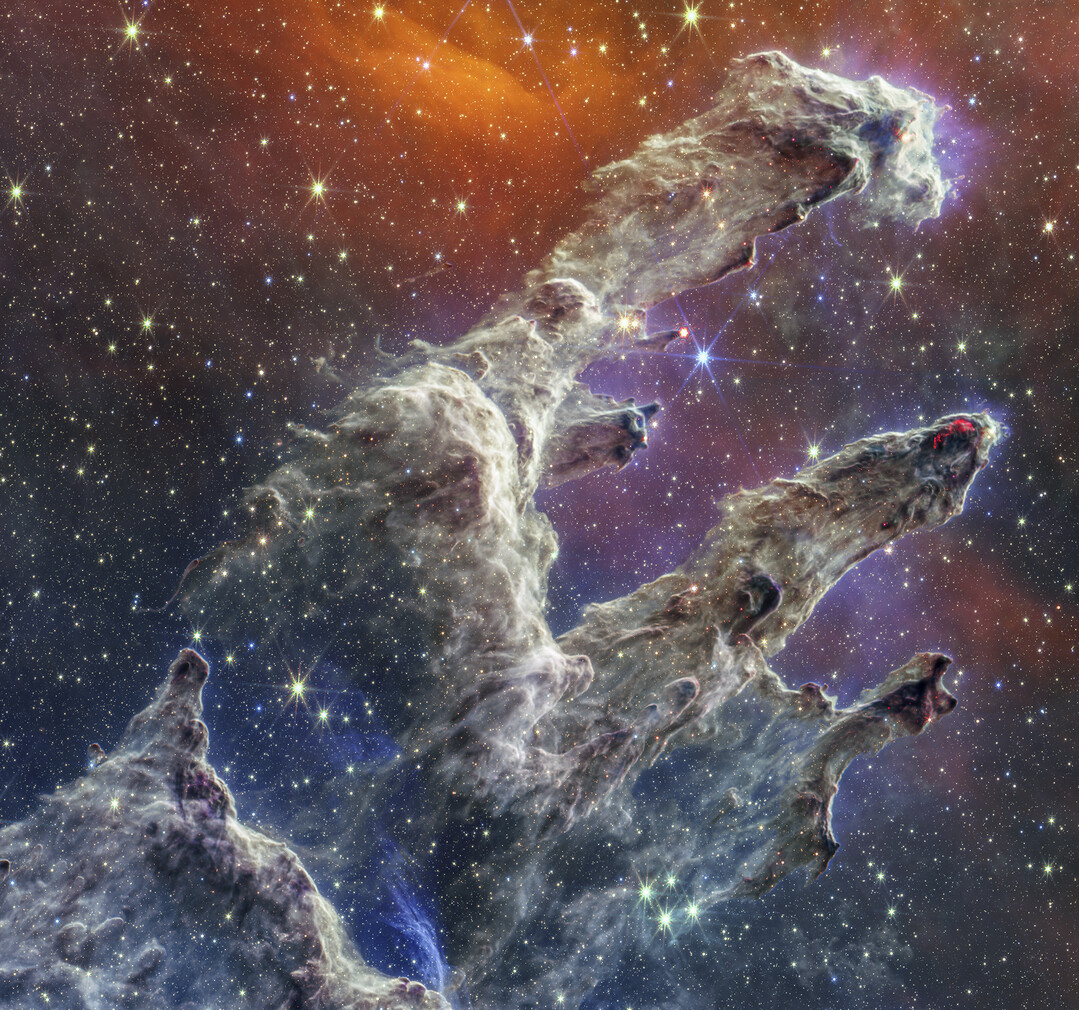
Washington D.C. - NASA's James Webb Space Telescope (JWST) has provided compelling evidence that planet-forming disks around stars in the early universe persisted for significantly longer durations than those observed around young stars in our own Milky Way galaxy. This finding challenges existing models of planet formation and sheds new light on the early evolution of planetary systems.   

In 2003, the Hubble Space Telescope made a groundbreaking discovery: a massive planet orbiting a very old star. This star, nearly as old as the universe itself, possessed a surprisingly low abundance of heavier elements, which are the essential building blocks for planet formation. This discovery suggested that planet formation could occur even in the early universe, when the abundance of heavy elements was significantly lower than it is today.   

These primordial planets, forming within their protoplanetary disks, could have grown to sizes exceeding Jupiter before the disks eventually dissipated.

To further investigate this intriguing possibility, researchers utilized the powerful capabilities of the JWST to study stars within a nearby galaxy that, like the early universe, exhibits a low abundance of heavy elements. The findings were remarkable: JWST not only confirmed the presence of planet-forming disks around these stars but also revealed that these disks exhibited significantly longer lifespans compared to those observed around younger stars in our Milky Way.   

"With Webb, we have robust confirmation of Hubble's earlier findings, compelling us to re-evaluate our existing models of planet formation and early evolution in the young universe," stated study leader Guido De Marchi of the European Space Research and Technology Centre in Noordwijk, Netherlands.

This research has profound implications for our understanding of planetary evolution. The extended lifetimes of these primordial disks suggest that planets in the early universe may have had more time to form and grow, potentially leading to the formation of planetary systems with unique characteristics compared to those found in the present-day universe.

[Copyright (c) Global Economic Times. All Rights Reserved.]

  • #globaleconomictimes
  • #koyongchul
  • #cherrylee
  • #seoulkorea
  • #periodicoeconomico
  • #글로벌이코노믹타임즈
  • #GET
  • #GETtv
  • #liderdel
Graciela Maria Reporter

Popular articles

  • EU Accelerates 'Battery Independence' with Multi-Trillion Won Public Fund Injection

  • The Tragedy on the High Seas: Royal Caribbean Sued Over Passenger Death After 33 Drinks and Fatal Restraint

  • Tragedy's Timepiece: Titanic Passenger's Watch Fetches Record-Breaking $2.5 Million at Auction

I like it
Share
  • Facebook
  • X
  • Kakaotalk
  • LINE
  • BAND
  • NAVER
  • https://www.globaleconomictimes.kr/article/1065597683287317 Copy URL copied.
Comments >

Comments 0

Weekly Hot Issue

  • 'AI' Dominates 2025 Book Titles in South Korea
  • End-of-Year Concert Extravaganza: Jo Sumi, Geum Nan-sae, and Danny Koo Headline Diverse Lineup
  • R.E.D. Sectors Poised for Growth in 2026, the Year of the 'Red Horse,' Driven by AI Investment Boom
  • South Korea Launches $115 Million Export Voucher Program to Boost SME Global Reach
  • Extension Granted for '2026 Honors for SME Contributors' Application
  • 44% of Recent Construction Projects Report Deficits, Industry Survey Finds

Most Viewed

1
Choi Bun-do, Chairman of PTV Group, Assumes Presidency of the Korean Chamber of Commerce and Industry in South Central Vietnam
2
From Court to Content: French Tennis Star Océane Dodin Trades Racquet for OnlyFans, Eyes $5M in a Year
3
Lee Dismisses Vice Minister Amid Allegations of Misconduct and Vetting Gaps
4
NVIDIA Lobby Succeeds? U.S. Bill Expected to Drop AI Chip Export Restrictions
5
US Layoffs Surge: Over 1.17 Million Job Cuts Announced in First 11 Months of 2025
광고문의
임시1
임시3
임시2

Hot Issue

South Korean AI Models Flunk College Entrance Math Exams, Lagging Far Behind Global Leaders

KRX Temporarily Slashes Stock Trading Fees by 20-40% to Counter ATS Rival

Israel Condemns Australia After Sydney Shooting, Citing 'Fueling' of Anti-Semitism

Lotte Mart Launches Major Imported Fruit Discount Event Amid High Prices

Let’s recycle the old blankets in Jeju Island’s closet instead of incinerating them.

Global Economic Times
korocamia@naver.com
CEO : LEE YEON-SIL
Publisher : KO YONG-CHUL
Registration number : Seoul, A55681
Registration Date : 2024-10-24
Youth Protection Manager: KO YONG-CHUL
Singapore Headquarters
5A Woodlands Road #11-34 The Tennery. S'677728
Korean Branch
Phone : +82(0)10 4724 5264
#304, 6 Nonhyeon-ro 111-gil, Gangnam-gu, Seoul
Copyright © Global Economic Times All Rights Reserved
  • 에이펙2025
  • APEC2025가이드북TV
  • 독도는우리땅
Search
Category
  • All articles
  • Synthesis
  • World
  • Business
  • Industry
  • ICT
  • Distribution Economy
  • Well+Being
  • Travel
  • Eco-News
  • Education
  • Korean Wave News
  • Opinion
  • Arts&Culture
  • Sports
  • People & Life
  • Column 
    • 전체
    • Cho Kijo Column
    • Lee Yeon-sil Column
    • Ko Yong-chul Column
    • Cherry Garden Story
  • Photo News
  • New Book Guide
  • Multicultural News
  • Jobs & Workers