• 2026.05.19 (Tue)
  • All articles
  • LOGIN
  • JOIN
Global Economic Times
fashionrunwayshow2026
  • Synthesis
  • World
  • Business
  • Industry
  • ICT
  • Distribution Economy
  • Well+Being
  • Travel
  • Eco-News
  • Education
  • Korean Wave News
  • Opinion
  • Arts&Culture
  • Sports
  • People & Life
    • International Student Report
    • With Ambassador
  • Column
    • Cho Kijo Column
    • Cherry Garden Story
    • Ko Yong-chul Column
    • Kim Seul-Ong Column
    • Lee Yeon-sil Column
  • Photo News
  • New Book Guide
MENU
 
Home > Industry

Man vs. Machine: Human Worker Edges Out Figure 03 Humanoid in Grueling 10-Hour Warehouse Showdown

Global Economic Times Reporter / Updated : 2026-05-18 16:50:35
  • -
  • +
  • Print


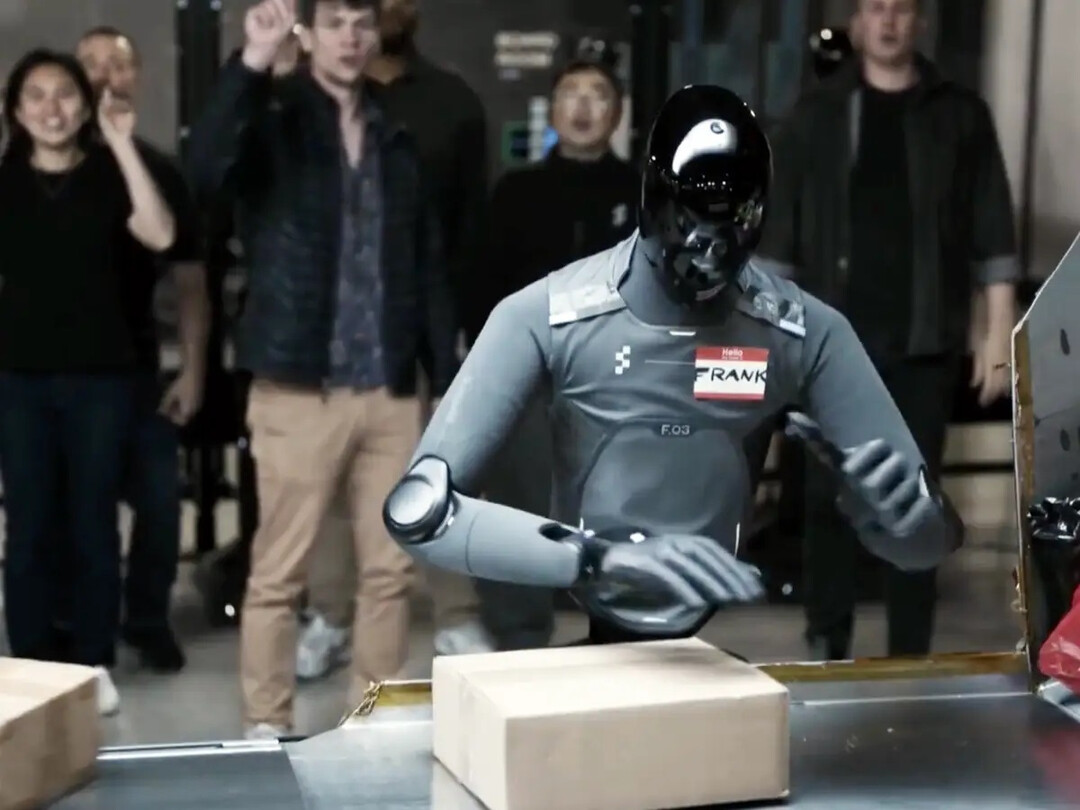
Silicon Valley — In a highly anticipated demonstration of the rapidly evolving capabilities of artificial intelligence and robotics, a human warehouse worker narrowly defeated a cutting-edge humanoid robot in a grueling 10-hour logistics challenge.

The battle, orchestrated and shared via social media by the prominent American robotics startup Figure AI, pitted a human warehouse veteran against the company’s flagship humanoid robot, "Figure 03." The contest aimed to test the real-world efficiency, endurance, and practicality of humanoids in a high-demand logistics environment—a sector currently facing massive labor shortages worldwide.

The Rules of Engagement
The parameters of the duel were simple yet physically demanding. Both the human and the robot were tasked with a repetitive sorting job: picking up incoming packages, orienting them so that the barcodes faced downward, and placing them neatly onto a moving conveyor belt. The competition was tracked continuously over a 10-hour shift to determine who could process the highest volume of cargo.

However, the operating conditions for the two competitors highlighted the fundamental differences between biological and mechanical workers:

The Human Worker: Bound by California labor laws, the human participant took necessary breaks to maintain stamina and focus. Over the 10-hour period, this included two paid 10-minute rest breaks and two 30-minute meal periods, totaling 1 hour and 30 minutes of downtime.
The Robot (Figure 03): Operated on a continuous, uninterrupted cycle. Whenever a robot’s battery drained, a fully charged twin was immediately swapped in, establishing a seamless three-shift rotation that kept the machine working at 100% uptime.

A Narrow Victory for Humanity
Despite spending an hour and a half away from the conveyor belt, the human worker proved that human dexterity, adaptability, and speed are still unmatched in nuanced physical tasks. By the end of the 10-hour shift, the human had successfully processed 12,924 packages.

Figure 03 followed remarkably close behind, completing 12,732 packages—falling short by a mere 192 units.

Industry analysts noted that while the human won the sprint, the robot’s performance signals a massive leap forward for automation. The humanoid maintained a highly consistent pace without suffering from the physical fatigue or cognitive decline that typically slows humans down toward the end of a long shift.

The Endurance of Silicon
While the human took the crown for the specific 10-hour window, Figure AI highlighted a critical caveat regarding mechanical endurance. Prior to the official showdown, the fleet of Figure 03 robots had already been working continuously for four days, handling an astonishing 119,000 packages without a single hitch. Furthermore, as soon as the 10-hour buzzer sounded and the human went home to rest, the robots continued their relentless pace into the next shift.

"This demonstration isn't just about who can move faster over a few hours," said a tech industry consultant. "It's about the math of 24/7 operations. A human cannot work 24 hours a day, but a fleet of humanoids can. That is where the commercial viability lies."

What Lies Ahead
The incredibly narrow margin of victory suggests that the gap between human capability and robotic automation is closing faster than previously anticipated. As Figure AI continues to refine the software and physical actuators of the Figure 03 model, robots are expected to soon surpass human speeds in standardized tasks.

For now, humanity holds the title. But as warehouses look toward an automated future, the line between human labor and robotic assistance is becoming thinner than ever.

[Copyright (c) Global Economic Times. All Rights Reserved.]

  • #Hormuz Impasse
  • #globaleconomictimes
  • #micorea
  • #mykorea
  • #nammidonganews
  • #singaporenewsk
  • #Samsung
  • #Daewoo
  • #Hyos
Global Economic Times Reporter
Reporter Page

Popular articles

  • Iran Imposes Transit Fees on Strait of Hormuz Amid Escalating Maritime Tensions

  • The Independence Hall of Korea has also finished its spring makeover, adorned with various flowers.

  • The cherry blossoms at Gakwonsa Temple in Cheonan are in full bloom, attracting tourists to the area.

I like it
Share
  • Facebook
  • X
  • Kakaotalk
  • LINE
  • BAND
  • NAVER
  • https://www.globaleconomictimes.kr/article/1065599345847583 Copy URL copied.
Comments >

Comments 0

Weekly Hot Issue

  • National Pension Service and U.S. SSA Partner for In-Person Consultations to Resolve Pension Delivery Issues 
  • K-Bank’s SOHO Loan Portfolio Surpasses 3 Trillion Won, Striking a Perfect Balance Between Growth and Financial Health
  • Iran Raises 'False Flag' Possibility Over Attack on South Korean Vessel, Blames US and Israel for Regional Instability
  • Will Samsung Finally Unlock the Smart Glasses Era After a Decade of Anticipation?
  • Survival of the Fittest: Global Automakers Enter Fierce 'AI Talent Arms Race'
  • Samsung Electronics Q1 Salaries Hit Record High, Averaging $9,000 a Month

Most Viewed

1
Gmarket’s Cinematic Ad Campaign Goes Viral, Sparking High Anticipation for ‘Big Smile Day’
2
Banking War 2.0: South Korean Banks Race to Transition into 'AI-First' Institutions
3
Hyundai Motor Group Bets $700 Million on Mexico Amid Trade Policy Volatility
4
"The Beast" Lands in Beijing: Massive Security Detail Precedes Trump’s High-Stakes Visit
5
World’s Largest IP Event ‘INTA 2026’ Concludes in London: Discussing AI Transformation and the Future of Intellectual Property
광고문의
임시1
임시3
임시2

Hot Issue

Korean Air to Slashing International Fuel Surcharges for June, Easing Burden on Long-Haul Travelers

FTC Slams Korea's Top 5 Courier Giants with 3 Billion Won Fine Over 'Unfair Contracts'

Iran Raises 'False Flag' Possibility Over Attack on South Korean Vessel, Blames US and Israel for Regional Instability

Samsung Electronics Union to Push Ahead with May 21 Strike Despite Court Injunction

Fashion Runway Show 2026

Global Economic Times
korocamia@naver.com
CEO : LEE YEON-SIL
Publisher : KO YONG-CHUL
Registration number : Seoul, A55681
Registration Date : 2024-10-24
Youth Protection Manager: KO YONG-CHUL
Singapore Headquarters
5A Woodlands Road #11-34 The Tennery. S'677728
Korean Branch
Phone : +82(0)10 4724 5264
#304, 6 Nonhyeon-ro 111-gil, Gangnam-gu, Seoul
Copyright © Global Economic Times All Rights Reserved
  • 에이펙2025
  • APEC2025가이드북TV
  • 반달곰 프로젝트
Search
Category
  • All articles
  • Synthesis
  • World
  • Business
  • Industry
  • ICT
  • Distribution Economy
  • Well+Being
  • Travel
  • Eco-News
  • Education
  • Korean Wave News
  • Opinion
  • Arts&Culture
  • Sports
  • People & Life 
    • 전체
    • International Student Report
    • With Ambassador
  • Column 
    • 전체
    • Cho Kijo Column
    • Cherry Garden Story
    • Ko Yong-chul Column
    • Kim Seul-Ong Column
    • Lee Yeon-sil Column
  • Photo News
  • New Book Guide
  • Multicultural News
  • Jobs & Workers