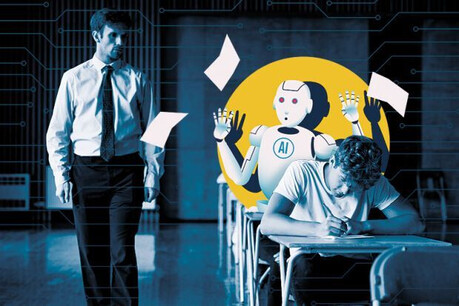


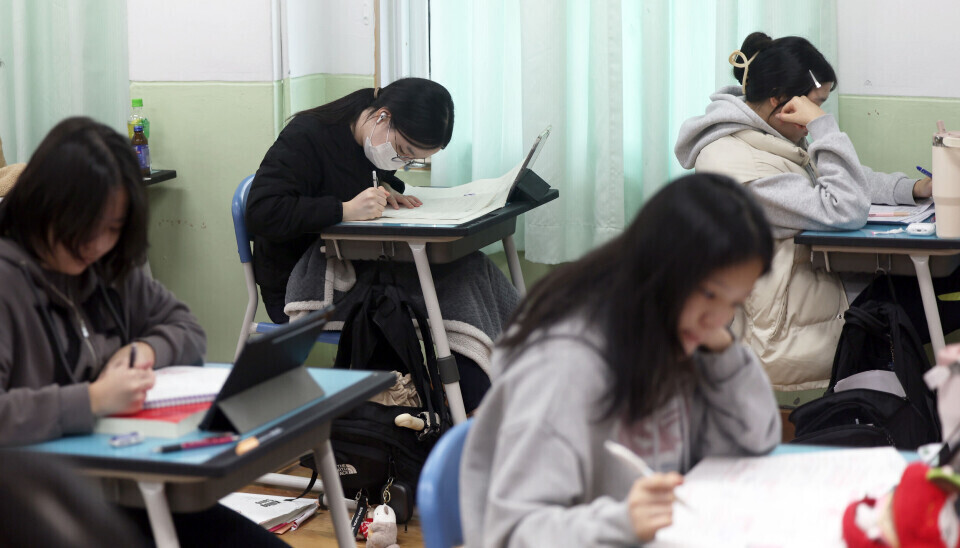
SEOUL — As the rise of artificial intelligence and smart devices exposes vulnerabilities in traditional standardized testing, the original architect of South Korea’s notoriously competitive college entrance exam is calling for the system to be dismantled.
Park Do-soon, 84, who helped design the College Scholastic Ability Test (CSAT)—locally known as the Suneung—more than three decades ago, argued that the exam has strayed far from its original purpose and is ill-suited for the modern technological landscape. Speaking in a recent interview with the South Korean daily Hankyoreh, the former head of the Korea Institute for Curriculum and Evaluation (KICE) questioned the very premise of current testing methods.
"Rather than focusing solely on how to prevent AI-assisted cheating, we need to ask whether it makes sense to test students on questions that an AI can easily answer," Park said.
A Departure from Original Intent
Introduced 33 years ago to replace an outdated system reliant on rote memorization, the Suneung was initially envisioned as a basic qualification exam, similar to the U.S. SAT, to ensure students possessed the foundational skills needed for university-level coursework.
However, according to Park, the test quickly morphed into a high-stakes ranking tool. Public pushback against early exams deemed "too easy," combined with universities seeking a convenient, seemingly objective metric for admissions, turned the Suneung into the ultimate arbiter of a student's academic fate.
The Illusion of 'Fairness'
Park also challenged the widespread belief that the Suneung is the fairest way to evaluate applicants. Pointing out that all standardized tests carry an inherent margin of error—which he estimates to be at least 20 points for the Suneung—Park criticized the practice of determining university admissions based on a single-point difference.
While such a system might appear procedurally "fair," Park argued it lacks educational validity, comparing high-stakes, razor-thin score cutoffs to deciding admissions via a game of rock-paper-scissors. True fairness, he noted, requires a clear justification of what is being measured and why it matters.
Shifting Focus to Human-Centric Skills
To fix the broken system, Park proposed returning the Suneung to a simple pass-or-fail qualification standard, or abolishing it altogether. He advocated for granting universities full autonomy—and accountability—to design their own admissions criteria tailored to their specific academic missions, backed by government funding and expertise.
Ultimately, Park believes the educational paradigm must shift away from competing with machines. He emphasized that 21st-century schools must cultivate uniquely human traits—such as critical thinking, creativity, and collaboration—by fostering environments centered on debate and teamwork rather than standardized test preparation.
[Copyright (c) Global Economic Times. All Rights Reserved.]