

WASHINGTON — Millions of Americans planning year-end holiday travel could face significant airport delays and flight cancellations as a congressional budget impasse threatens to trigger a partial federal government shutdown next month.
With temporary federal funding set to expire on December 11, lawmakers remain deadlocked over a new spending package. The legislative gridlock intensified following demands from the White House for hundreds of billions of dollars in supplemental defense funding—largely driven by ongoing military commitments involving Iran—sparking fierce debate on Capitol Hill over fiscal priorities and funding offsets.
If Congress fails to enact a full-year budget or pass another continuing resolution before the deadline, federal operations will lapse on December 12. While essential aviation personnel, including Transportation Security Administration (TSA) officers and Federal Aviation Administration (FAA) air traffic controllers, would be required to remain on the job, they would have to work without pay until the standoff is resolved.
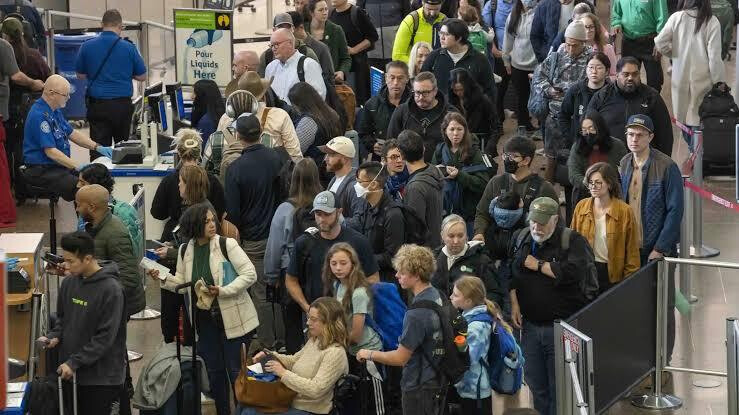
Historically, prolonged government shutdowns have strained the nation's aviation infrastructure, leading to severe staffing shortages, hours-long security checkpoints, and widespread flight disruptions.
Industry analysts warn that a funding lapse in mid-December would be uniquely hazardous. Air travel volume typically surges during the Christmas and New Year period, with daily passenger screenings historically jumping by well over 100,000 compared to regular travel days. Compounding the issue, major U.S. carriers have already trimmed less profitable routes this season to offset elevated fuel prices, leaving far fewer spare seats available to rebook stranded passengers if flights are grounded.
Despite the looming deadline, both Democratic and Republican leaders, alongside the administration, have signaled a desire to avert a shutdown, likely through another short-term funding extension. However, substantive bipartisan talks are effectively on hold until Senate Democrats conclude their internal leadership elections on December 1, leaving lawmakers with a narrow window to finalize a deal before the holiday rush begins.
Labor unions representing federal aviation workers have voiced strong opposition to the potential lapse, warning that forcing frontline staff to work without compensation during the busiest travel season of the year jeopardizes both worker morale and passenger convenience.
[Copyright (c) Global Economic Times. All Rights Reserved.]