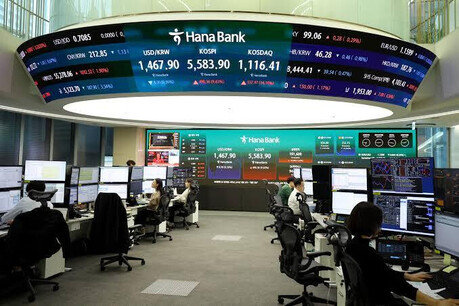


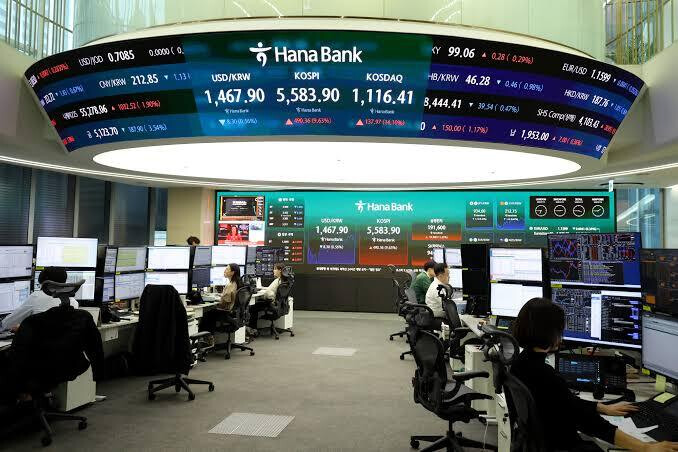
SEOUL — With South Korea’s benchmark KOSPI dipping below the psychologically critical 5,000 mark, hesitant retail investors are facing a familiar dilemma: whether to buy the dip or retreat to the sidelines. To navigate the turbulence, market strategists are recommending a diversified three-pillar approach for the coming year—combining selective artificial intelligence (AI) equities with high-grade corporate debt and gold.
Shifting Focus from AI Hype to Bottleneck Solvers
Despite heightened market jitters, institutional forecasts suggest the AI infrastructure boom still has substantial runway. According to Ha Jae-seok, an analyst at NH Investment & Securities, capital expenditures by major U.S. hyperscalers are projected to surge 44% next year to $1.1 trillion, largely insulated from high interest rates and near-term monetization doubts.
However, analysts warn against indiscriminate buying. Mirae Asset Securities researcher Kim Seok-hwan noted that investors must look beyond broad industry tailwinds and prioritize firms with proven business models and clear monetization paths. As rapid AI expansion creates severe bottlenecks in electricity, real estate, and capital, companies resolving these constraints stand to benefit most.
Key areas highlighted by analysts include:
Cybersecurity: Driven by the spread of autonomous AI agents, favoring firms such as Palo Alto Networks, CrowdStrike, and South Korea’s AhnLab.
Grid & Strategic Minerals: Essential for power infrastructure expansion, spotlighting copper producer Freeport-McMoRan, rare-earth miner MP Materials, and Korea Zinc.
Data Center Real Estate: Benefiting from tight power and space supply, with Digital Realty and Equinix cited as standout operators.
Tapping into AI via Fixed Income
Rather than relying solely on equity appreciation, strategists advise capturing the AI growth theme through fixed-income markets. High-grade corporate bonds issued by cash-rich tech giants—including Alphabet, Amazon, Meta, and Microsoft—offer an attractive alternative for generating steady yield with lower volatility.
KB Securities strategist Lee Eun-taek pointed out that short- to medium-term investment-grade bonds are offering compelling returns, with U.S. BBB-rated corporate debt yielding near 6% and select long-term blue-chip bonds reaching the 7% range. "Even if certain AI ventures underperform, the balance sheets of these tech titans remain robust enough to easily service their debt," Lee noted.
On the sovereign debt front, analysts also see potential capital gains in South Korean long-term government bonds, anticipating that cooling domestic growth expectations could push local yields lower—and bond prices higher—with less inflationary pressure than their U.S. counterparts.
Hedging Second-Half Risks with Gold
To round out the portfolio, gold remains a consensus pick as a hedge against macroeconomic and geopolitical shocks. With real interest rates nearing their peak and central banks continuing to accumulate bullion, analysts expect gold to maintain its upward trajectory as a safeguard against currency debasement.
Market watchers emphasize that portfolio defense will become increasingly vital in the second half of next year. While disinflation and solid corporate earnings are expected to buoy risk assets during the first half, persistent borrowing costs, AI financing pressures, and upcoming U.S. fiscal negotiations could trigger renewed volatility later in the year—making early diversification essential for anxious investors.
[Copyright (c) Global Economic Times. All Rights Reserved.]