![[등록] 2026-09-01 15:48:31](/support/_updata/banner2/tl181982910_6749.png)


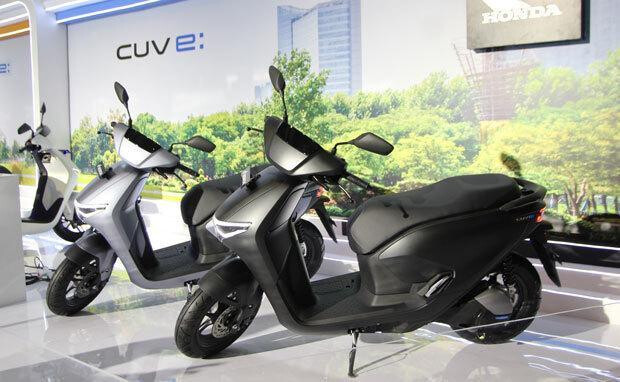
Facing headwinds in its automotive division, Honda Motor Co. is aggressively pursuing a new growth engine in India's burgeoning electric two-wheeler market. The world's largest motorcycle manufacturer is employing a dual strategy, leveraging its renowned engine technology while simultaneously accelerating its electrification efforts to capture a leading position in the vast Indian market, Nikkei Asia reported on April 18th.
"We are upgrading in all directions, including electric products, and working to solidify our No. 1 share position," stated Minoru Kato, head of Honda's motorcycle operations, during a briefing in late January, underscoring the company's commitment to maintaining its dominance in the two-wheeler segment.
Honda's prowess in engine technology was recently showcased with the unveiling of the CB300F flex-fuel sports bike in India in October 2024. This innovative engine is designed to run on gasoline and E85 fuel, a blend containing up to 85% ethanol. The model is slated for an official launch in the Indian market this year, highlighting Honda's strategy to cater to diverse fuel preferences while the electric transition unfolds.
Meanwhile, India's electric two-wheeler market is experiencing rapid expansion, fueled by government incentives and increasing environmental awareness. According to a KPMG Consulting report, electric two-wheeler sales in India surged by 35% year-on-year in 2023, reaching 930,000 units. Electric vehicles now constitute approximately 6% of total two-wheeler sales in India, a significant 5.3 percentage point increase over the past three years, indicating a strong and accelerating adoption rate.
Currently, the Indian electric motorcycle and scooter market is primarily dominated by domestic players. Ola Electric Mobility has gained significant traction with its electric scooters priced around 100,000 rupees ($1,165). Hero MotoCorp, a former partner of Honda, has also established a dedicated electric vehicle brand, offering electric bikes like the one with a 165km range priced at 115,300 rupees, demonstrating the competitive landscape Honda is entering.
Honda, a relative latecomer to India's electric two-wheeler segment, launched its first electric scooter in February of this year. This entry was approximately two years behind the initial schedule, partly due to delays in obtaining necessary certifications. Priced at around 100,000 rupees, Honda's electric scooter aligns with local competitors in terms of cost. However, its claimed maximum range of 102km is somewhat lower than some competing products, presenting an initial challenge in a market where range anxiety is a key consumer concern.
Despite this initial lag, Honda is demonstrating a strong commitment to capturing a significant share of the Indian electric market. "We are aiming for No. 1 in the electric area as well," emphasized Daiki Mihara, head of Honda's electrification unit for motorcycles and power products, signaling the company's ambitious goals.
To achieve this, Honda plans to establish a dedicated electric motorcycle factory in Bengaluru, India, by 2028. This new facility will focus on streamlining production by standardizing component designs and reducing the assembly line footprint to about half the size of conventional plants, aiming for enhanced efficiency and cost competitiveness. Furthermore, Honda intends to insource the production of key components and forge collaborative agreements with battery manufacturers to further drive down the cost of its electric two-wheelers.
Honda's strategy involves initially focusing on the Indian market, with a long-term vision of transforming India into a global export hub for its electric two-wheelers. A crucial advantage for Honda in this endeavor is its established customer service network. Local competitors like Ola have faced criticism regarding malfunctioning batteries and inadequate after-sales service, creating an opportunity for Honda to differentiate itself through superior customer support.
With approximately 6,000 sales and service touchpoints across India, Honda is well-positioned to offer comprehensive after-sales service and battery swapping facilities, addressing a key pain point for electric vehicle owners. The company also plans to leverage its competitive advantages in development, procurement, and manufacturing, honed in India, to expand into other growing markets such as the Philippines and Indonesia.
"China is strengthening brands and launching offensives in Europe, posing a threat," Kato cautioned, acknowledging the increasing global competition in the motorcycle industry. He added, "Their prices are lower than ours, but we have no room to lose."
Motorcycles represent a core pillar of Honda's business. In the three quarters leading up to December 2024, the motorcycle division generated an operating profit of 501.6 billion yen ($3.5 billion), surpassing the automotive division's profit by 99 billion yen. The motorcycle division's operating margin of approximately 19% significantly outstrips the automotive sector's 4%, highlighting the profitability and strategic importance of the two-wheeler business to Honda's overall financial health. Honda currently holds a commanding global market share of around 40% in the two-wheeler segment.
Honda has set an ambitious target of capturing roughly half of the global two-wheeler market by 2030, anticipating a global demand of 60 million units by that year. Achieving significant growth in the Indian market is crucial to realizing this global ambition.
Currently, Hero MotoCorp leads the Indian motorcycle market with a 29% share. Hero was originally a joint venture with Honda, established in 1984, but the partnership ended in 2010, leading both companies to pursue independent growth strategies. Now, Hero is also expanding into the electric two-wheeler segment, positioning itself as a formidable competitor for Honda in the evolving landscape.
"For Honda, motorcycles are the starting point of monozukuri," Kato stated, using a Japanese term that encapsulates the art of manufacturing with dedication and precision. Honda's founder, Soichiro Honda, began by attaching an engine to a bicycle, eventually leading to the development of the iconic Super Cub motorcycle. Now, Honda aims to build upon this legacy and spearhead the electric two-wheeler era, striving for global market leadership once again. The battle for dominance in India's electric motorcycle market is set to intensify, with Honda poised to leverage its technological expertise, manufacturing prowess, and extensive network to challenge existing players and shape the future of mobility in the subcontinent.
[Copyright (c) Global Economic Times. All Rights Reserved.]