![[등록] 2026-09-01 15:48:31](/support/_updata/banner2/tl181982910_6749.png)


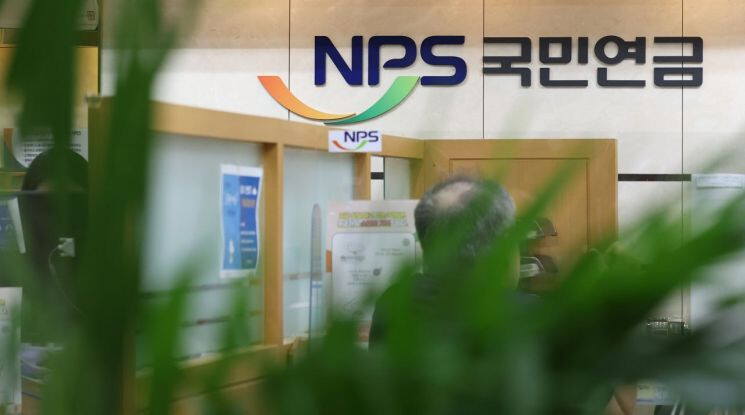
Seoul, South Korea - Amid growing concerns over a continued surge in the won-dollar exchange rate, the National Pension Service (NPS) is facing criticism for its decision to engage in foreign exchange hedging. Critics argue that using public pension funds for potential loss-making foreign exchange policies, even considering the NPS's public nature and market influence, is inappropriate.
According to the financial investment industry on February 5, a high-ranking official at the Bank of Korea stated, "We expect the NPS to soon release foreign exchange hedging volumes following an internal decision." The NPS's foreign exchange hedging involves selling a portion of its foreign assets as forward contracts, effectively selling dollars and thus putting downward pressure on the won-dollar exchange rate. This move is welcomed by the Bank of Korea, which is eager to stabilize the exchange rate.
The NPS generally avoids hedging foreign exchange exposure from its overseas investments. However, it has discretion to hedge up to 5% of its foreign assets. Under specific conditions, the NPS can implement additional strategic hedging of up to 10% after deliberation by the Investment Management Committee. While the specific conditions for strategic hedging have not been disclosed, market observers believe that it triggers when the won-dollar exchange rate falls below 1,450 won and remains below that level for more than five trading days. In essence, the NPS's basic principle is to remain open to exchange rate fluctuations, with the flexibility to hedge up to 15% of its total overseas assets.
However, questions are being raised about whether the NPS's foreign exchange hedging is truly based on its own judgment. This is because the prevailing view is that the high exchange rate trend will continue this year. According to data submitted by the Korea Institute for International Economic Policy (KIEP) to Rep. Kim Hyun-jung of the Democratic Party, the median forecast among major global investment banks for the won-dollar exchange rate at the end of the first quarter of 2025 (as of December 24, 2024) is 1,435 won.
Furthermore, investment banks predict that the exchange rate will continue to rise, reaching 1,440 won by the end of the second quarter and 1,445 won by the end of the third quarter. Nomura Securities even forecasts that the exchange rate will soar to 1,500 won during the second quarter and remain at that level until the end of the third quarter. If these global investment banks' forecasts are correct, the NPS's current foreign exchange hedging would be a decision to forgo potential foreign exchange gains.
Consequently, there is criticism in the market that it is unfair for the government to use public pension funds for foreign exchange policies that may result in losses. This is not the first time the government has mobilized the NPS for exchange rate defense. In November 2022, when the won-dollar exchange rate exceeded 1,400 won, the government requested that the NPS increase its foreign exchange hedging ratio. At that time, the NPS increased its tactical foreign exchange hedging by more than $7.3 billion and raised its strategic hedging ratio from 0% to 10%.
An anonymous financial industry official stated, "While it's premature to make a definitive assessment as it's difficult to predict the direction of the exchange rate, we need to consider whether it is appropriate for the NPS, which should focus on maximizing returns and delaying fund depletion, to be frequently involved in government policies."
Meanwhile, there are concerns in the market that the prolonged high exchange rate could burden the NPS, which is continuously increasing its overseas investment ratio. This is because the NPS's increased overseas investment could further weaken the won and increase exchange rate volatility.
Lee Seung-ho, a senior research fellow at the Capital Market Research Institute, stated in a report titled "Analysis of Korea's Overseas Securities Investment and Its Impact on the Foreign Exchange Market" released last August, "The won-dollar exchange rate has a statistically significant positive correlation with both overseas equity and bond investments." He added, "As overseas securities investment continues to expand, it is necessary to be cautious about the possibility that the resulting increase in foreign exchange demand will put upward pressure on the exchange rate."
Currently, the NPS invests 35.6% of its fund, amounting to 416.14 trillion won (as of the end of October 2024), in overseas equities. Of this, 70% is concentrated in North America. Considering overseas bonds (83.824 trillion won) and overseas alternative investments, the NPS's overseas investment ratio exceeds 50%. The NPS's overseas investment ratio is expected to expand to 60% by 2028.
Regarding this, Professor Park Sun-young of Dongguk University's Department of Economics said, "While the NPS's increased overseas investment may have some impact on exchange rate trends, it is an inevitable choice given that the fund is increasing by 100 trillion won annually. The best solution is to continue the current approach of using foreign exchange swap transactions with the Bank of Korea."
[Copyright (c) Global Economic Times. All Rights Reserved.]