• 2026.08.11 (Tue)
  • All articles
  • LOGIN
  • JOIN
Global Economic Times
fashionrunwayshow2026
  • Synthesis
  • World
  • Business
  • Industry
  • ICT
  • Distribution Economy
  • Well+Being
  • Travel
  • Eco-News
  • Education
  • Korean Wave News
  • Opinion
  • Arts&Culture
  • Sports
  • People & Life
    • International Student Report
    • With Ambassador
  • Column
    • Cho Kijo Column
    • Cherry Garden Story
    • Ko Yong-chul Column
    • Kim Seul-Ong Column
    • Lee Yeon-sil Column
  • Photo News
  • New Book Guide
MENU
 
Home > Synthesis

Is the AI Investment Frenzy a Giant Warning Sign? Wall Street Raises Concerns About Potential Bubble

Graciela Maria Reporter / Updated : 2026-06-22 17:09:51
  • -
  • +
  • Print


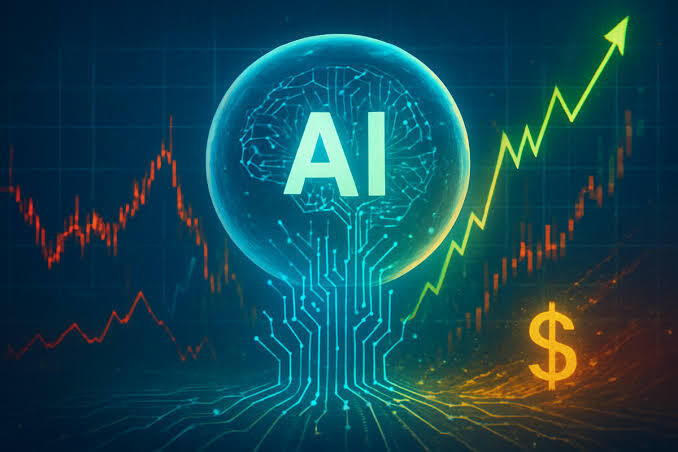
The fervor surrounding artificial intelligence (AI) has reached a fever pitch, with capital flooding into the sector at an unprecedented scale. However, a recent report by the Wall Street Journal (WSJ) has issued a sobering warning: the current market behavior may be a classic precursor to a bubble burst, mirroring the historical patterns of past financial manias.

The "Warning Sign" of Market Overheating

In an article titled "The Money Pouring Into AI Is a Giant Warning Sign," the WSJ highlights that corporations are increasingly relying on equity issuance to raise capital and utilizing stock—rather than cash—for massive mergers and acquisitions. According to market analysts, this trend is a telltale sign that stock prices have become significantly overvalued, as firms deem their own shares to be a more advantageous currency than cash or debt.

A prime example cited is SpaceX’s acquisition of the AI coding startup 'Cursor' through a $60 billion stock-based transaction. Such moves suggest that companies are leveraging their inflated valuations to fuel expansion, a strategy that historically gains momentum when money flows too easily into a single sector.

Historical Parallels and the Expectation Gap

The WSJ draws sharp parallels between the current AI boom and previous market bubbles, such as the late 1990s dot-com bubble and the SPAC frenzy of 2020–2021. In those eras, the promise of revolutionary technology triggered massive capital inflows, only for many companies to fail to meet investor expectations, leading to significant losses.

The core of the issue is not whether AI is a promising technology, but whether its potential justifies the current astronomical valuations. As major players like Alphabet announce $85 billion stock issuance plans and AI cloud firms like CoreWeave secure billions in funding, the market is effectively "pre-calculating" years, or even decades, of future earnings. The discrepancy between this optimistic market sentiment and the actual, yet-to-be-proven cash flow from infrastructure investments—such as data centers and AI semiconductors—is where the danger lies.

Why This Time Might Be Different, Yet Risky

Despite these warnings, it is important to distinguish the current AI era from the dot-com bubble. Unlike many companies during the internet boom that lacked revenue altogether, the leaders of the current AI ecosystem—including NVIDIA, Microsoft, Google (Alphabet), Amazon, and Meta—are massive enterprises that already generate robust cash flows. Because these companies have strong balance sheets, an AI investment failure is less likely to trigger an existential crisis for the firms themselves.

However, this does not insulate the market from volatility. If AI fails to integrate into physical infrastructure and robotics to produce a tangible "productivity revolution" that translates into bottom-line growth, the market will face a reality check.

The Crucial Next 2–3 Years

The next two to three years will be the defining period for the AI industry. If corporations can successfully pivot from massive capital expenditure to demonstrating clear, profit-driven ROI, the current high valuations may be justified. Conversely, if the actual earnings fail to keep pace with the hyper-optimistic market expectations, the current flood of money will undoubtedly be recorded as the prologue to an AI bubble. Investors are now being cautioned to look beyond the hype and monitor whether the "AI revolution" can deliver the financial substance required to sustain its current valuation.

[Copyright (c) Global Economic Times. All Rights Reserved.]

  • #Hormuz Impasse
  • #globaleconomictimes
  • #micorea
  • #mykorea
  • #nammidonganews
  • #singaporenewsk
  • #Samsung
  • #Daewoo
  • #Hyos
Graciela Maria Reporter

Popular articles

  • "Do Not Return to the U.S. Mainland"... Another American Ebola Patient Evacuated to Germany 

  • EUROPE DEVASTATED BY RECORD WILDFIRES: OVER 90,000 EVACUATED AS SPAIN DECLARES STATE OF EMERGENCY

  •  U.S. Moves to Sever Chinese Materials and Components from Defense Supply Chains

I like it
Share
  • Facebook
  • X
  • Kakaotalk
  • LINE
  • BAND
  • NAVER
  • https://www.globaleconomictimes.kr/article/1065600507316155 Copy URL copied.
Comments >

Comments 0

Weekly Hot Issue

  • Riot Games Hosts Largest-Ever TFT Festival at The Hyundai Seoul to Launch 'Sylvan Secrets' Set
  • MINISTRY OF EMPLOYMENT AND LABOR DIRECTS IMMEDIATE EXPANSION OF REST FACILITIES AT GIMPO AIRPORT AFTER UNANNOUNCED HEATWAVE INSPECTION
  • XAVIS Secures Contract to Supply Advanced X-Ray Inspection Systems to European Lines of Global Food Sauce Brand
  • Emma Expands Collaboration with Interior Design Experts to Present Sleep Space Solutions
  • Trump Criticizes U.S. Congressional AI Regulations as Threat to Tech Industry
  • Memory Chips Become Dominant Force in Global Semiconductor Industry, Expected to Account for 60% of Total Market This Year

Most Viewed

1
Planting Hope: Ethiopia’s Green Legacy and the Power of National Transformation
2
Japan Estimated to Have Spent ¥6–7 Trillion in Fresh Yen-Buying Intervention as US Joint Action Hints Emerge
3
The 16th Ethiopia-gil World Festival & Meskel Festival
4
South Korea’s Top Three Mobile Carriers Launch Pre-Orders for Samsung’s Galaxy Z Series with Aggressive Subsidies and Service Bundles
5
KT and Amorepacific Complete ‘Data Highway’ Project, Unveiling AI-Specialized Research Platform
광고문의
임시1
임시3
임시2

Hot Issue

MINISTRY OF EMPLOYMENT AND LABOR DIRECTS IMMEDIATE EXPANSION OF REST FACILITIES AT GIMPO AIRPORT AFTER UNANNOUNCED HEATWAVE INSPECTION

Riot Games Hosts Largest-Ever TFT Festival at The Hyundai Seoul to Launch 'Sylvan Secrets' Set

Nable Communications Secures 5G Private Network Upgrade Deal with LG Uplus

Ansan City Pay-as-You-Throw Trash Bag Abandoned in Japan Sparks Controversy in Kamikochi

Fashion Runway Show 2026

Global Economic Times
korocamia@naver.com
CEO : LEE YEON-SIL
Publisher : KO YONG-CHUL
Registration number : Seoul, A55681
Registration Date : 2024-10-24
Youth Protection Manager: KO YONG-CHUL
Singapore Headquarters
5A Woodlands Road #11-34 The Tennery. S'677728
Korean Branch
Phone : +82(0)10 4724 5264
#304, 6 Nonhyeon-ro 111-gil, Gangnam-gu, Seoul
Copyright © Global Economic Times All Rights Reserved
  • 향기네무료급식
  • BCB부천방송
  • 반달곰 프로젝트
Search
Category
  • All articles
  • Synthesis
  • World
  • Business
  • Industry
  • ICT
  • Distribution Economy
  • Well+Being
  • Travel
  • Eco-News
  • Education
  • Korean Wave News
  • Opinion
  • Arts&Culture
  • Sports
  • People & Life 
    • 전체
    • International Student Report
    • With Ambassador
  • Column 
    • 전체
    • Cho Kijo Column
    • Cherry Garden Story
    • Ko Yong-chul Column
    • Kim Seul-Ong Column
    • Lee Yeon-sil Column
  • Photo News
  • New Book Guide
  • Multicultural News
  • Jobs & Workers