![[등록] 2026-09-01 15:48:31](/support/_updata/banner2/tl181982910_6749.png)


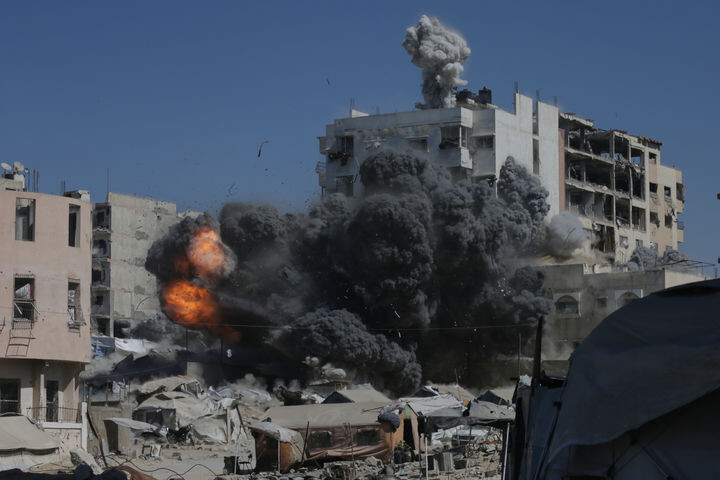
WASHINGTON/GAZA CITY — Despite the Israeli Cabinet's formal approval of a Phase One ceasefire deal with Hamas—a crucial step toward exchanging hostages for Palestinian prisoners and a partial Israeli military withdrawal—tensions remain dangerously high. The agreement, largely brokered by the US, is being met with cautious optimism and stark warnings, highlighted by continued Israeli military action in the Gaza Strip even after the approval.
Airstrikes Cast Shadow on Ceasefire Dawn
Hours after the Israeli government ratified the initial truce outline late Thursday, Israeli forces launched airstrikes and drone attacks on the southern Gaza city of Khan Yunis. CNN reported that military jets and drones struck the area around 5:45 a.m. local time (11:45 a.m. KST) on Friday, October 10, with artillery fire also targeting the city's center. These military operations, confirmed by WAFA, resulted in casualties and the recovery of bodies from earlier strikes, underscoring the volatility of the situation as the ceasefire is set to take effect.
The first stage of the agreement, which provides for a temporary halt to fighting, the release of an estimated 20 remaining living hostages in exchange for a significant number of Palestinian prisoners (potentially around 2,000), and a partial Israeli troop pullback, is anticipated to see the first hostage releases around Monday, October 13.
US "Maximum Pressure" Credited for Breakthrough
The White House has touted the breakthrough as a triumph of President Donald Trump's "maximum pressure" strategy. Senior administration officials revealed that the US applied intense diplomatic pressure on its ally, Israel, to finalize the deal and even provided direct assurances to Hamas via Arab mediating nations to ensure compliance.
Key architects of the deal, including US Special Envoy for the Middle East Steve Witkoff and Jared Kushner, were present at the Israeli Cabinet meeting to push for approval. President Trump reportedly granted them full authority to negotiate and personally engaged in phone calls with intermediary nations to secure the agreement.
The US is so invested in the implementation that it plans to deploy a team of approximately 200 US service members to Israel to establish a joint civil-military coordination center. This team, which includes experts in logistics and security, will oversee the truce, monitor compliance, facilitate humanitarian aid surges into Gaza, and assist in the eventual transition to a civilian government—though no US troops are slated to enter Gaza itself.
The Real Hurdle: A Truce, Not a Peace Treaty
Despite the relief accompanying the Phase One agreement, analysts and international bodies emphasize that the hardest problems lie ahead. As the BBC noted, "This is a truce, not a peace treaty," and the most challenging long-term issues remain unresolved.
The successful implementation of Phase One sets the stage for future negotiations on Phase Two, which would address thornier issues such as the disarmament of Hamas, granting amnesty and potential exile for its leaders, and the establishment of an interim government for the shattered Gaza Strip.
The New York Times highlighted that the key difficulties include the question of whether Hamas will relinquish governance of Gaza and the broader, decades-long challenge of Palestinian statehood. Observers worry that without a clear path forward for these complex, deep-rooted issues, the temporary truce may not translate into lasting stability.
In other news from Washington, President Trump met with Finnish President Alexander Stubb on Thursday, where they discussed NATO, Arctic security, and Trump’s promise to "vigorously" defend Finland. Stubb suggested that the Ukraine conflict would be Trump's next major peace-making focus after the Gaza agreement.
[Copyright (c) Global Economic Times. All Rights Reserved.]