• 2026.10.23 (Fri)
  • All articles
  • LOGIN
  • JOIN
Global Economic Times
[등록] 2026-09-01 15:48:31
  • Synthesis
  • World
  • Business
  • Industry
  • ICT
  • Distribution Economy
  • Well+Being
    • Pet Life
    • Halal Horizon
  • Travel
  • Eco-News
  • Education
  • Korean Wave News
  • Opinion
  • Arts&Culture
  • Sports
  • People & Life
    • International Student Report
    • With Ambassador
  • Column
    • Cho Kijo Column
    • Cherry Garden Story
    • Ko Yong-chul Column
    • Kim Seul-Ong Column
    • Lee Yeon-sil Column
  • Photo News
  • New Book Guide
MENU
 
Home > World

Brazil's Presidential Election D-2... 'Lula vs. Bolsonaro' in Unpredictable Ultra-Tight Race

Eugenio Rodolfo Sanabria Reporter / Updated : 2026-10-23 17:44:51
  • -
  • +
  • Print


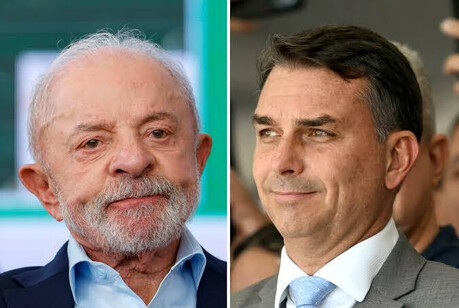
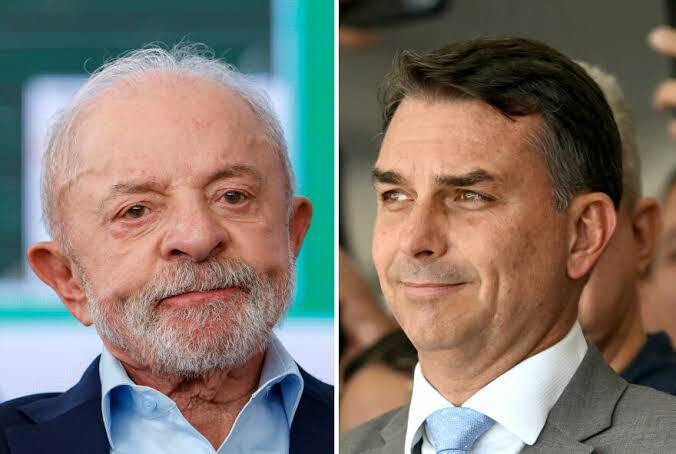
With just two days left until Brazil's presidential runoff election on the 25th (local time), incumbent President Luiz Inácio Lula da Silva, seeking his fourth non-consecutive term, and right-wing candidate Flávio Bolsonaro are locked in a fierce, neck-and-neck race until the very end.

While Bolsonaro, who emerged victorious in the initial first-round vote, was initially expected to have the upper hand, Lula has mounted a fierce late-stage surge, resulting in an unpredictable, ultra-tight contest.

According to a presidential candidate preference poll released on the 22nd (local time) by the polling firm Datafolha, right-wing Liberal Party (PL) candidate Flávio Bolsonaro recorded 47% support, narrowly leading incumbent President Lula of the Workers' Party (PT) at 46% by a mere 1 percentage point.

In last week's poll, Bolsonaro registered 47% and President Lula 45%, showing that the gap has narrowed even further from 2 percentage points to 1 percentage point within a single week. Consequently, the two candidates' approval ratings are virtually tied within the margin of error (±2 percentage points).

The survey showed that only 2% of voters have yet to decide on a candidate, while 5% of respondents stated they would cast blank ballots. Bloomberg reported that, excluding invalid and blank votes, the two candidates' support levels stand at around "50-50."

Bolsonaro emerged as the leading candidate after unexpectedly defeating incumbent President Lula in the first round of the presidential election on October 4.

However, President Lula capitalized on his "incumbent premium" to mount an aggressive chase. The Brazilian government recently increased the welfare allowance for low-income families, the "Bolsa Família," by 15% and decided to disburse the funds ahead of the election. Furthermore, the Brazilian Senate passed a "40-hour workweek bill"—reducing working hours from 44 to 40 hours per week—in alignment with President Lula's campaign pledges. Simultaneously, Lula's support base rallied strongly at the final hour, making the outcome impossible to call until the very end.

On the other hand, stubbornly high inflation and worsening security issues are pointed out as President Lula's weaknesses. He also faces personal judicial risks, including corruption allegations involving his son.

Bolsonaro has gained momentum by attacking the missteps of the leftist government amid the broader conservative wave sweeping Latin America. Since the democratization of Brazil in 1989, no candidate who won the first round of a presidential election has ever lost the runoff.

However, critics point out that a Bolsonaro presidency evokes a sense of repulsion among voters as a "dynastic succession." Bolsonaro is the son of former President Jair Bolsonaro, who is currently under house arrest after being sentenced to a 27-year prison term on charges of plotting a coup. Flávio Bolsonaro has also publicly vowed to pardon his father immediately if elected president.

Moreover, Bolsonaro himself has been embroiled in various corruption allegations. He recently faced severe backlash after showing up to a TV debate with the word "corruption" written on the palm of his hand to attack President Lula.

The showdown between these two candidates holds significant meaning as an indicator of the direction of Latin America’s "Blue Tide" (the wave of right-wing governments coming to power). If Bolsonaro ultimately wins, Brazil—Latin America's largest economic powerhouse—will join other nations like Argentina, Ecuador, Bolivia, Chile, Colombia, and Peru in the conservative wave.

The two candidates will face off in their final TV debate on the 23rd.

[Copyright (c) Global Economic Times. All Rights Reserved.]

  • #Cherry Garden
  • #HalalFood
  • #Halal
  • #Petlife
  • #Halalhorizone
  • #Hormuz Impasse
  • #globaleconomictimes
  • #micorea
  • #mykor
Eugenio Rodolfo Sanabria Reporter

Popular articles

  • AMD CEO Lisa Su Meets with Samsung and SK Hynix Chiefs, Sparking HBM Partnership Hopes

  • "Targeting Chinese Consumer Tastes" Beijing Hyundai to Launch 'Ioniq V' in China on the 29th

  • AI Companies Rush to Go Public, But Face Sudden Brakes Amid Cooling Investor Sentiment

I like it
Share
  • Facebook
  • X
  • Kakaotalk
  • LINE
  • BAND
  • NAVER
  • https://www.globaleconomictimes.kr/article/1065602538733763 Copy URL copied.
Comments >

Comments 0

Weekly Hot Issue

  • South Korea and Indonesia Forge Partnership to Expand Halal Certification Cooperation
  • HSBC to Review Islamic Fund’s $38M Stake in Palantir Amid British Muslim Backlash
  • Indonesia Delays Halal Cosmetic Mandate to 2028, Balancing Compliance with SME Support
  • Pakistan Eyes Expanded Ties with Maldives in Halal Food, Agriculture, and Tourism
  • Cambodia Eyes Malaysia's Halal Expertise to Tap into $5 Trillion Global Market
  • Halal Investments Under Scrutiny: How HSBC’s Sharia-Compliant Fund Flowed Millions into Israel-Linked Military Firms

Most Viewed

1
US Pushes to Deploy Special Task Force to the Korean Peninsula—Is It Also Targeting China?
2
Samsung Electronics Enters the 100 Trillion Won Quarterly Operating Profit Era
3
McDonald's Korea Expands and Relocates Headquarters to Booyoung Taepyeong Building in Taepyeong-ro
4
HMM Relocates Headquarters to Busan: A New Era for South Korea's Flagship Carrier
5
Cheonan Secures 'Excellence' Award at South Chungcheong Province's 13th Cadastral and Drone Surveying Competition
체리가든 스토리
nutri huevos
로타리
동포저널

Hot Issue

Brazil's Presidential Election D-2... 'Lula vs. Bolsonaro' in Unpredictable Ultra-Tight Race

'Space Debris' Frequently Falling from the Sky... Growing Concerns Over Casualties

Moderna and Merck's Cancer Vaccine Cuts Melanoma Recurrence and Death Risk by 42%… Phase 3 Results Released 

Fashion Runway Show 2026

Let’s recycle the old blankets in Jeju Island’s closet instead of incinerating them.

Global Economic Times
korocamia@naver.com
CEO : LEE YEON-SIL
Publisher : KO YONG-CHUL
Registration number : Seoul, A55681
Registration Date : 2024-10-24
Youth Protection Manager: KO YONG-CHUL
Singapore Headquarters
5A Woodlands Road #11-34 The Tennery. S'677728
Korean Branch
Phone : +82(0)10 4724 5264
#304, 6 Nonhyeon-ro 111-gil, Gangnam-gu, Seoul
Copyright © Global Economic Times All Rights Reserved
  • 향기네무료급식
  • APEC2025
  • 반달곰 프로젝트
Search
Category
  • All articles
  • Synthesis
  • World
  • Business
  • Industry
  • ICT
  • Distribution Economy
  • Well+Being 
    • 전체
    • Pet Life
    • Halal Horizon
  • Travel
  • Eco-News
  • Education
  • Korean Wave News
  • Opinion
  • Arts&Culture
  • Sports
  • People & Life 
    • 전체
    • International Student Report
    • With Ambassador
  • Column 
    • 전체
    • Cho Kijo Column
    • Cherry Garden Story
    • Ko Yong-chul Column
    • Kim Seul-Ong Column
    • Lee Yeon-sil Column
  • Photo News
  • New Book Guide
  • Overseas Koreans
  • Multicultural News